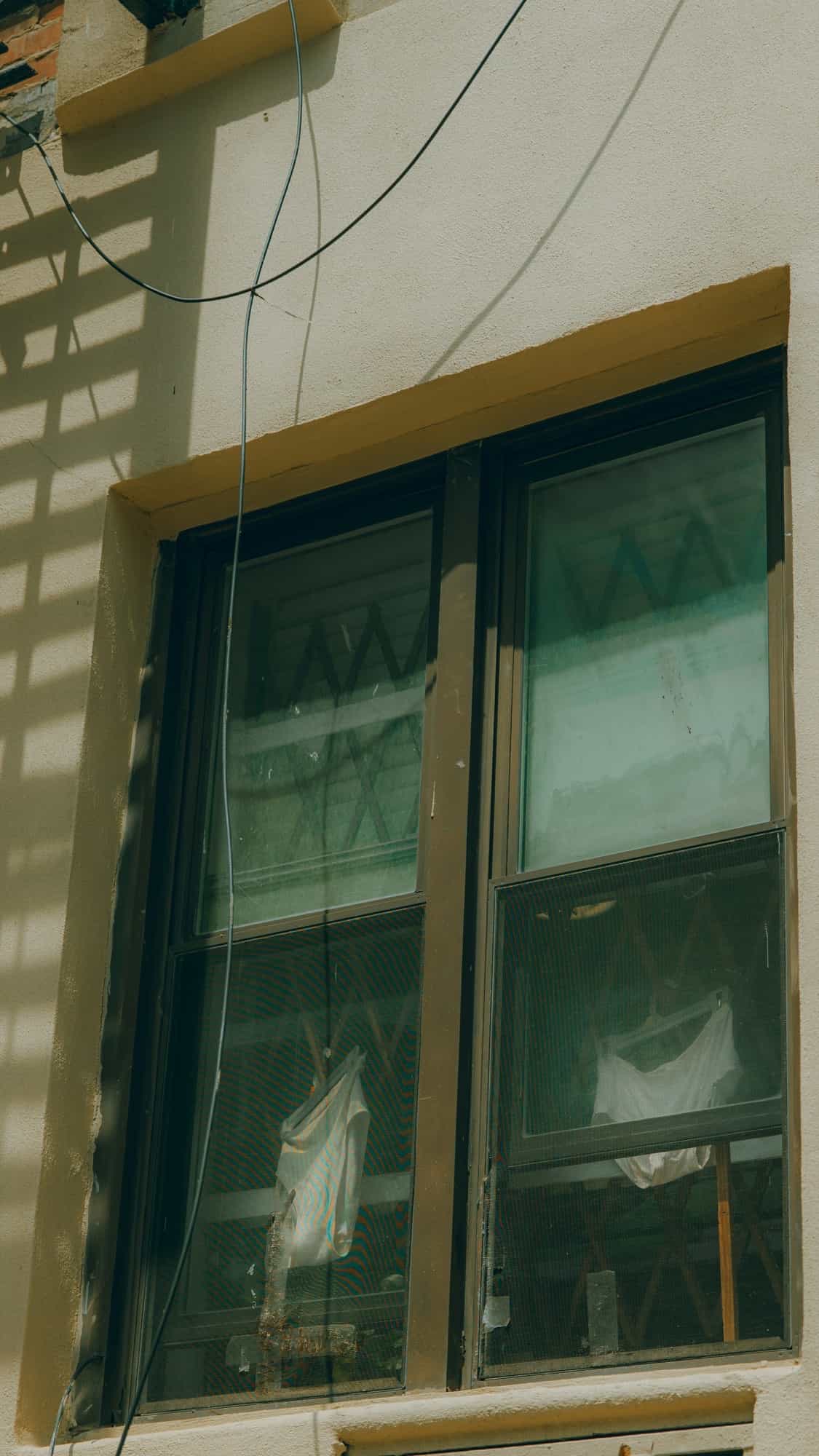
The New York City window guard law is one of the oldest and most aggressively enforced child-safety rules in the city's housing code, and one of the most misunderstood by the owners and boards responsible for following it. Most people know the sticker on the glass: window guards required, children 10 or younger. Far fewer know that the Department of Health and Mental Hygiene (DOHMH) adopted a top-to-bottom rewrite of the operative rulebook in 2025, effective January 1, 2026, moving every construction spec, testing rule, and notice deadline into a new chapter of the rules. If you manage a covered building, the rule you memorized a decade ago is no longer the whole picture.
This is a reference explainer for NYC landlords, property managers, and co-op and condo boards. It walks through which buildings are covered, who counts as a child, where guards are mandatory versus prohibited, the annual January notice you must send, what tenants owe you in return, and how the Department of Housing Preservation and Development (HPD) enforces all of it. Every requirement below is tied to the specific code section it comes from.
What the NYC window guard law actually requires
The core mandate lives in the Housing Maintenance Code. Under NYC Administrative Code section 27-2043.1(a), the owner of a multiple dwelling, and, explicitly, a condominium unit owner, must provide, install, and maintain window guards on every window of any dwelling unit in which a child 10 years of age or under resides, and on any windows in the public areas of a multiple dwelling in which such a child resides. This is the provision HPD enforces, and the legal spine of the window guard requirement.
Running parallel to it is the Health Code obligation, NYC Health Code section 131.15, which governs window guards in multiple dwellings. Almost no online summary reflects this: in 2025, DOHMH repealed and replaced Chapter 12 of Title 24 of the Rules of the City of New York in its entirety, consolidating all of the construction, testing, and notice specifications into the new rule, 24 RCNY Chapter 12, titled "Window Falls Prevention," effective January 1, 2026. Chapter 12 section 12-01 expressly ties itself back to both Admin Code section 27-2043.1 and Health Code section 131.15, and it is now the operative source for guard specs and the annual-notice process. People still commonly cite only "section 131.15" when they talk about the NYC window guard law, but the detailed, current requirements, the ones an HPD inspector will hold you to, now live in Chapter 12.
Which buildings and which children the window guard requirements cover
The most common mistake owners make is guessing at the trigger. Two definitions decide whether the law applies to you.
First, the building. A "multiple dwelling" under 24 RCNY §12-02(j) means a residential building consisting of three or more dwelling units or apartments. Buildings with one or two units are not covered. Note what the trigger is not: it has nothing to do with the number of stories. A three-family walk-up is covered; a two-family house four stories tall is not. Count units, not floors.
Second, the child. Under section 12-02(b), a "child" is a person 10 years of age or under, meaning through age 10. This is where careful reading matters: the rule is frequently described as covering children "under 10" or "under 11," and both are wrong. A 10-year-old is covered. The obligation attaches to any unit where such a child resides, where the owner knows or should know one does, or where an occupant has requested guards.
Third, and this is the part boards get wrong, who counts as the "owner." Section 12-02(l) defines the term expansively: an owner, landlord, lessor, managing agent, mortgagor, receiver, condominium unit owner, cooperative board, and any agent otherwise responsible for management or control of the building or unit. Co-op boards and individual condo unit owners are directly on the hook. A board cannot treat window guards as the shareholder's private business, and a condo owner cannot assume the association handles it.
Where window guards are required in NYC, and where they are prohibited
Once the law applies, it applies comprehensively. Under 24 RCNY §12-07, guards must be installed on every qualifying window of a unit where a child resides, and "every" is meant literally. That includes balcony and terrace windows, bathroom windows, and first-floor apartment windows. Selective installation is prohibited: you cannot guard the living room and skip the bathroom because "no child goes in there." In a building where a covered child resides, Admin Code section 27-2043.1(a) separately requires guards on the windows in the building's public areas as well.
There is also a separate, independently enforceable duty to install on request. Under Admin Code section 27-2043.1(d) and section 12-07, an owner must install guards at the written request of any tenant or occupant, even if no child lives in the unit. Grandparents with visiting grandchildren, a parent with part-time custody, an in-home child-care provider, any of them can submit a written request, and the owner may not refuse it.
Then there are the windows where guards are banned. Under 24 RCNY §12-07(a), guards "must not be installed" on (1) any window that gives access to a fire escape and (2) any "secondary egress" window, the designated emergency-escape window in a first-floor unit of a building equipped with fire escapes. In those first-floor units, the owner gets to choose which window serves as the secondary egress. The warning label the rule requires (section 12-08) states the principle in blunt terms: "NO WINDOW GUARD MAY BE INSTALLED IN WINDOWS PROVIDING ACCESS TO FIRE ESCAPES OR OTHER MEANS OF EMERGENCY ESCAPE AND RESCUE." Blocking an egress path to prevent a fall simply trades one life-safety hazard for another.
Two edge cases round this out. Guards are not required where a window's exterior sill sits at or below ground level with less than six inches of drop (section 12-07(b)); there is no meaningful fall to prevent. And for windows that are required emergency escape and rescue openings under the NYC Building Code and Fire Code, section 12-07(c) requires a different device entirely: a fall-prevention device with an emergency release mechanism compliant with ASTM F2090-21, rather than a fixed traditional guard, so the window still opens for escape or rescue. That distinction, fixed guard versus releasable device, is one of the most important technical points in the rule.
The annual window guard notice landlords must send every January
The annual window guard notice is the compliance obligation owners most often botch, usually on timing. Under 24 RCNY §12-03(a)(3), between January 1 and January 16 each year, the owner must deliver an annual window-guard notice to every dwelling unit. Acceptable delivery methods: first-class mail, hand delivery, electronic delivery (only if the occupant gave prior written consent), or enclosure with the January rent bill, and that last option is allowed only if the rent bill itself is delivered between December 15 and January 16. One nuance to flag: many nyc.gov summary pages still say the window closes on "January 15," but the adopted rule text sets the outer date at January 16.
The annual mailing is not the only notice. Under section 12-03(a)(1)-(2), every new lease offered to a prospective or current tenant in a multiple dwelling must contain a window-guard notice; where no lease is used, the notice must be given at the commencement of occupancy. And under section 12-03(b), owners must also send or post an annual reminder between January 1 and February 15, by any practical means, including electronic messaging or posting in common areas, telling occupants they must return the notice by February 15, that the owner must inspect if it is not returned, and that the owner is obligated to install and maintain guards.
Two formatting rules trip people up. First, per section 12-03(d), you may not alter the wording of the DOHMH-provided form, and the notice must be printed in English, Spanish, and any other language the owner knows is commonly spoken in the building's community. Second, owners of buildings constructed before January 1, 1960 may, under section 12-03(c), combine the window-guard notice with the annual lead-based-paint notice required by Local Law 1 of 2004 (28 RCNY section 11-03) on a single DOHMH/HPD-approved combined form. Both go out in the same January window.
Tenant response, and the owner's duty to inspect
The law is a two-way street, and tenants have enforceable obligations too. Under 24 RCNY §12-06(a), an occupant who receives the annual notice must complete, sign, date, and return it by February 15. An occupant who receives the notice at lease signing or the start of occupancy must return it immediately. Failing to return the notice, and failing to give the owner access to inspect or install, are each breaches of the occupant's own obligations under the law, not just the owner's. Owners are sometimes blamed for non-compliance that a tenant's refusal actually caused.
If a completed notice is not returned by February 15, the owner's duty does not end; it escalates. Section 12-04 requires the owner, at a reasonable time, to inspect the unit to determine whether a child resides there and whether compliant guards (and any air-conditioner installations) are present and in good condition. Owners must also annually inspect and test any ornamental or security bars being used as guards, since a decorative bar that has loosened is no longer a guard. If an occupant refuses access, the owner must keep a record of that refusal for at least two years and may report it through 311. Keep that record — and note that DOHMH goes further than the rule text: its guidance for building owners says that if you cannot get in to inspect or install by March 1, you must notify the Health Department of each such unit and of at least three attempts at contact.
Approved window guard types and HPD enforcement
Not every bar across a window qualifies as a compliant guard. The construction and testing specifications now live in 24 RCNY Chapter 12, and a guard has to meet them: height, strength, and installation all matter. Ornamental grilles and security bars can serve double duty as window guards, but only if they satisfy the spec and are inspected and tested annually under section 12-04. For a window that doubles as a required emergency escape and rescue opening, the compliant device is the ASTM F2090-21 releasable fall-prevention device under section 12-07(c), not a fixed guard.
Enforcement runs through HPD under Admin Code section 27-2043.1. Failing to provide, install, or maintain guards where they are required is a Housing Maintenance Code violation the department can cite, and under section 27-2043.1(e) it is a Class C immediately hazardous violation, the most serious classification HPD issues, precisely because the hazard is a child falling from height. The practical takeaway for owners and boards: this is not a paperwork formality to defer. Send the January notice on the DOHMH form, act on every written request, inspect the units that do not respond, and keep the records.
How window guards intersect with window replacement and lead paint
Window guards and window replacement collide more often than owners expect, with a few predictable failure points. First, replacing a window in a covered unit does not pause the obligation. The moment the new sash is in, compliant guards have to go back on every qualifying opening, and a fresh installation is exactly when guards get "temporarily" left off and forgotten. Second, mind the egress interplay: if the window you are replacing serves as a fire-escape access window or the designated secondary-egress window, it must stay unguarded under section 12-07(a); and if it is a required emergency escape and rescue opening, it needs the ASTM F2090-21 releasable device under section 12-07(c), not a fixed guard. Specifying the wrong device on a replacement is a common and avoidable mistake.
Lead paint is the other overlap. In buildings built before January 1, 1960, the same threshold that governs Local Law 1 lead obligations, the window-guard and lead-paint notices can travel together on the combined form under section 12-03(c). Beyond the notice, disturbing old painted window components during a replacement can release lead dust, which is governed by New York City's separate lead-safe work rules. The point for owners is simple: in a pre-1960 building, a window job is rarely just a window job, because the guard rule and the lead rule both attach to it.
A note on licensing and who can perform this work in NYC
One honest, practical point to close on. Installing window guards or replacing windows as home-improvement work in New York City requires a contractor licensed by the NYC Department of Consumer and Worker Protection (DCWP). Before hiring anyone to do this work on an NYC building, verify the contractor's DCWP license number directly. It protects you, and using an unlicensed contractor can complicate both liability and any later HPD proceeding.
Precision Windows & Roofing is a registered New Jersey home-improvement contractor (HIC reg.# 13VH13970900) serving New Jersey; we are not a licensed NYC home-improvement contractor, and this article is published purely as a reference resource on how the NYC window guard law works, not as an offer to perform work in New York City. If you own or manage property in New Jersey, the state's own window-fall and egress rules fall under the NJ Uniform Construction Code, a separate topic from the NYC Health Code rules covered here. For NYC-specific compliance questions, HPD and DOHMH publish the official forms and guidance.
This article is general information about New York City requirements as of its last update — it is not legal advice. Rules change, and the agency that administers each one (HPD, DOHMH, LPC, or DOB) is the authoritative source. Confirm current requirements with that agency, your managing agent, or your attorney before relying on anything here.