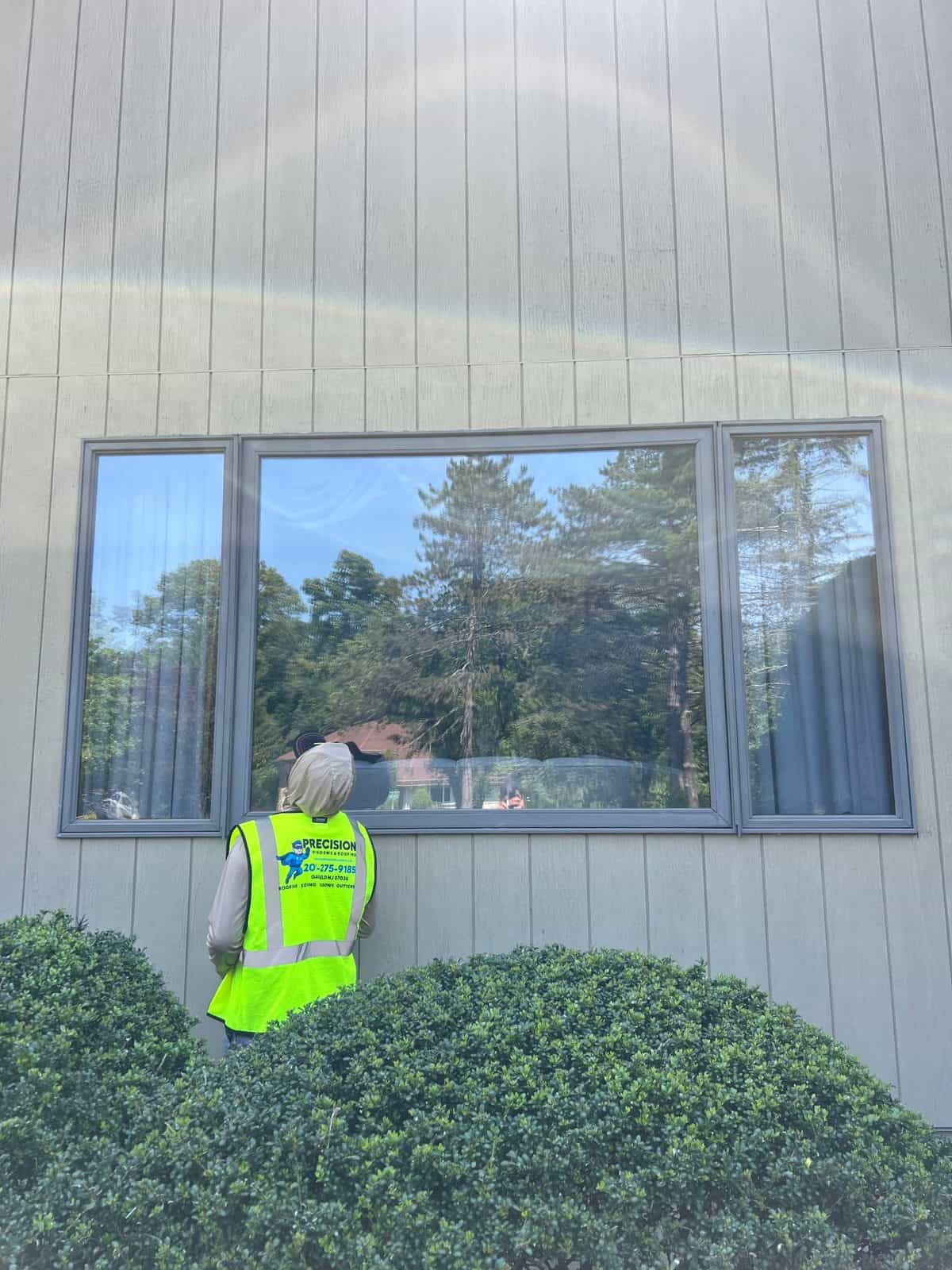
Standard Window Installation
Professional installation of double-hung, single-hung, and slider windows.
Standard Window Installation
Professional installation of double-hung, single-hung, and slider windows. We ensure a perfect fit, superior insulation, and flawless operation for every unit we install.
Standard window installation in New Jersey is not the same job it was twenty years ago. The 2024 IECC energy code, the IRC's tightened safety-glazing triggers, and the EPA's lead RRP rule for pre-1978 housing have turned what used to be a half-day swap into a regulated trade with documented procedures, and a permit and inspection on the jobs that change an opening. We handle full-frame, pocket (insert), and new-construction installs across all 21 NJ counties — vinyl, fiberglass, aluminum-clad wood, and all-wood sashes — and we do it to current code, with the paperwork that proves it.
Most of the homes we work on were built between 1900 and 1995. That window of construction means we deal with everything from balloon-framed 1920s colonials in Montclair and Maplewood, to brick Cape Cods in Bergen County, to vinyl-sided splits across Middlesex and Monmouth. Each calls for a different nailing-flange and flashing strategy. The single biggest cause of failed installs we see when we tear out other contractors' work is missing or mis-lapped sill-pan flashing — which is exactly what IRC R703.4 has required for two code cycles now and what most pre-2015 installs skipped entirely.
How NJ code shapes a standard install
New Jersey enforces the IRC and IECC through the Uniform Construction Code (N.J.A.C. 5:23). For window installation that means three pieces have to line up: structural attachment per IRC R609 (nailing-flange windows fastened per the manufacturer's installation instructions, typically 16" on center with corrosion-resistant fasteners penetrating the framing a minimum of 1-1/4"), flashing per R703.4 (sill pan, side jamb flashing lapped over the pan, head flashing lapped over the side jambs — shingle-fashion, always), and energy performance per IECC Table R402.1.2 (NFRC-labeled fenestration meeting a U-factor of 0.28 in the Zone 5A counties we mostly work in, 0.30 in Zone 4A).
Every bedroom needs an egress-compliant window. On a replacement in an existing house the governing document is the Rehabilitation Subcode (N.J.A.C. 5:23-6), which allows a window to be replaced with one like the existing unit without meeting the size rules — but the moment the opening size changes, or the work creates a bedroom, the opening has to give at least 5.7 sq ft measured from head to sill and side to side, at least 24" of height, at least 20" of width, and a sill no more than 44" off the finished floor, with no reduced grade-floor allowance — the model code's 5 sq ft grade-floor break sits in the new-construction section and stays there. One rule does follow a straight swap: a same-opening replacement of an egress window “shall not reduce the required height, width, or net clear opening of the previous window or door assembly” (N.J.A.C. 5:23-2.7(c)1v). That is a code prohibition, not a courtesy check, which is why we verify the net clear opening of the new unit against the old one before we order — replacing a 32" double-hung with the same nominal-size casement can shrink the opening below what was there because of the operator hardware and frame thickness.
Safety glazing under R324 catches a lot of bathroom and stair windows: any pane within 24" of a door's vertical edge and within 60" of the floor must be tempered or laminated; bathroom windows with the bottom edge less than 60" above the standing or walking surface must be tempered; windows on stairways and landings within 36" of the walking surface, tempered. We flag every opening that triggers safety glazing at quote time and write the tempered upcharge into the line item rather than absorbing it mid-job.
Lead-safe RRP work on pre-1978 homes
Roughly 60% of NJ's housing stock was built before 1978 — the cutoff for residential lead-based paint. The EPA's Renovation, Repair and Painting (RRP) rule (40 CFR 745 Subpart E) applies to any project disturbing more than six square feet of interior or twenty square feet of exterior painted surface on a pre-1978 dwelling. Window replacement almost always exceeds the exterior trigger because removing a window disturbs the exterior trim, brickmold, or stucco return around the opening.
On every pre-1978 job we follow the EPA RRP lead-safe containment protocol: 6-mil poly drop cloths extending 10 feet from the opening at grade or full window-well containment on upper stories, HEPA-vacuumed cleanup after each window, no power sanding or open-flame paint removal, and a wet-wipe verification at job completion. The homeowner signs the EPA's Renovate Right pamphlet acknowledgment before work starts. We keep RRP project documentation for three years per the rule.
If a pre-1978 home wants a non-lead-safe install because the homeowner thinks it's cheaper, we decline the job. The EPA's per-violation fine is up to $40,000 and the rule is enforced — NJ DEP has done compliance sweeps in Newark, Paterson, and Camden in the last five years.
Pocket vs full-frame: which install you actually need
Pocket (insert) replacement leaves the existing window frame in place and fits a new sash assembly inside the old frame. It's faster, less invasive, and preserves interior and exterior trim. It works when the existing frame is structurally sound, square, and dry — which we verify on the measure visit with a moisture meter and a 4-foot level. Pocket installs lose roughly 1" of glass area per side because the new frame nests inside the old one. For a 36" double-hung that's about a 12% reduction in daylight — usually acceptable in a primary bedroom, often a problem in a tight kitchen or basement.
Full-frame replacement removes the entire window — sashes, jambs, sill, brickmold — down to the rough opening, and installs a new nailing-flange window with new flashing and trim. Required when the existing frame is rotted, when sill-pan flashing was never installed and water damage is visible on the interior wall below the window, or when the homeowner is upgrading to a different window style (replacing a fixed picture with an operable casement, for instance). Full-frame is the only way to get a proper R703.4 flashing detail on a retrofit — pocket installs depend on whatever flashing the original installer did or didn't do.
We quote both options on every estimate where pocket is viable and explain the tradeoff in writing. Most of our installs are full-frame because most of the homes we see have failed sill flashing.
Our Process
- 1Free quote, then measureMost window quotes are given by phone, and we come out in person for bigger issues. Before anything is ordered: every opening measured at three points width and height, sill condition probed with a moisture meter, existing flashing assessed where visible, interior wall checked for water staining below the sill. Pre-1978 homes get a quick paint-condition walk-through to scope RRP containment.
- 2Written spec and final quoteWithin 48 hours: window manufacturer and model, glass package (Low-E coating, gas fill, grid pattern), NFRC U-factor and SHGC, install type (pocket or full-frame), flashing scope, interior and exterior trim scope, RRP containment if applicable, permit cost if the scope needs one, total turnaround. We list the manufacturer NFRC sticker SKU so the rating can be verified on site.
- 3Permit and orderIf the scope needs a building permit — an opening enlarged, moved or newly cut — we pull it through the local Construction Official (one permit covers multiple windows); a same-opening replacement needs none. Manufacturer lead times: stocked Andersen 100/200, Pella 250, Marvin Essential — 2-3 weeks. Custom sizes and clad-wood from Marvin Elevate or Pella Reserve — 4-6 weeks. Historic-district replication: 6-10 weeks.
- 4Install dayCrew arrives in branded vans with drop cloths, HEPA vacuums, and full RRP containment if applicable. One window pulled at a time so the house is never fully open. Sill pan installed (Vycor V40 self-adhered or back-pan with end dams), window set, shimmed plumb and square, fastened per manufacturer spec, side and head flashing installed shingle-fashion, exterior trim returned, interior trim caulked and painted to match. Two-window-per-day pace is typical for full-frame; four to six per day for pocket inserts.
- 5Inspection and closeoutOn a permitted job, the local Construction Official inspects after install; we coordinate the inspection visit and meet the inspector on-site. RRP documentation handed to homeowner. NFRC labels left on the glass until inspection or walkthrough, then removed. Warranty paperwork: lifetime workmanship + manufacturer warranty (Andersen 20-year, Pella limited lifetime, Marvin lifetime on wood/clad).
Materials We Use
The Precision Difference
About Standard Window Installation in NJ
Do I need a permit to replace windows in NJ?+
How long does window installation take per window?+
What's the difference between U-factor and SHGC and which matters more in NJ?+
Is my pre-1978 home subject to lead-paint rules even if I never had lead tested?+
Can you match my historic windows in a designated district?+
Will new windows actually save me money on energy bills?+
Do you remove and dispose of the old windows?+
Can windows be installed in winter or cold weather?+
Standard Window Installation by City
Serving All 21 New Jersey Counties
We service Atlantic County, Bergen County, Burlington County, Camden County, Cape May County, Cumberland County, Essex County, Gloucester County, Hudson County, Hunterdon County, Mercer County, Middlesex County, Monmouth County, Morris County, Ocean County, Passaic County, Salem County, Somerset County, Sussex County, Union County, Warren County. From our Garfield, NJ shop we cover the entire state, same-day in Bergen County, and elsewhere depending on the job and how booked we are that day.
Explore More
ENERGY EFFICIENT REPLACEMENTS
Low-E and argon-filled windows that lower heating and cooling bills.
DetailsHISTORICAL SASH RESTORATION
Preserve the character of your historic home with sash restoration.
DetailsSLIDING GLASS DOOR INSTALLATION
New sliding patio door installation — XO/OX, multi-slide and pocket systems, custom sized.
Details