Roofing, Gutters & Siding in Essex County, NJ
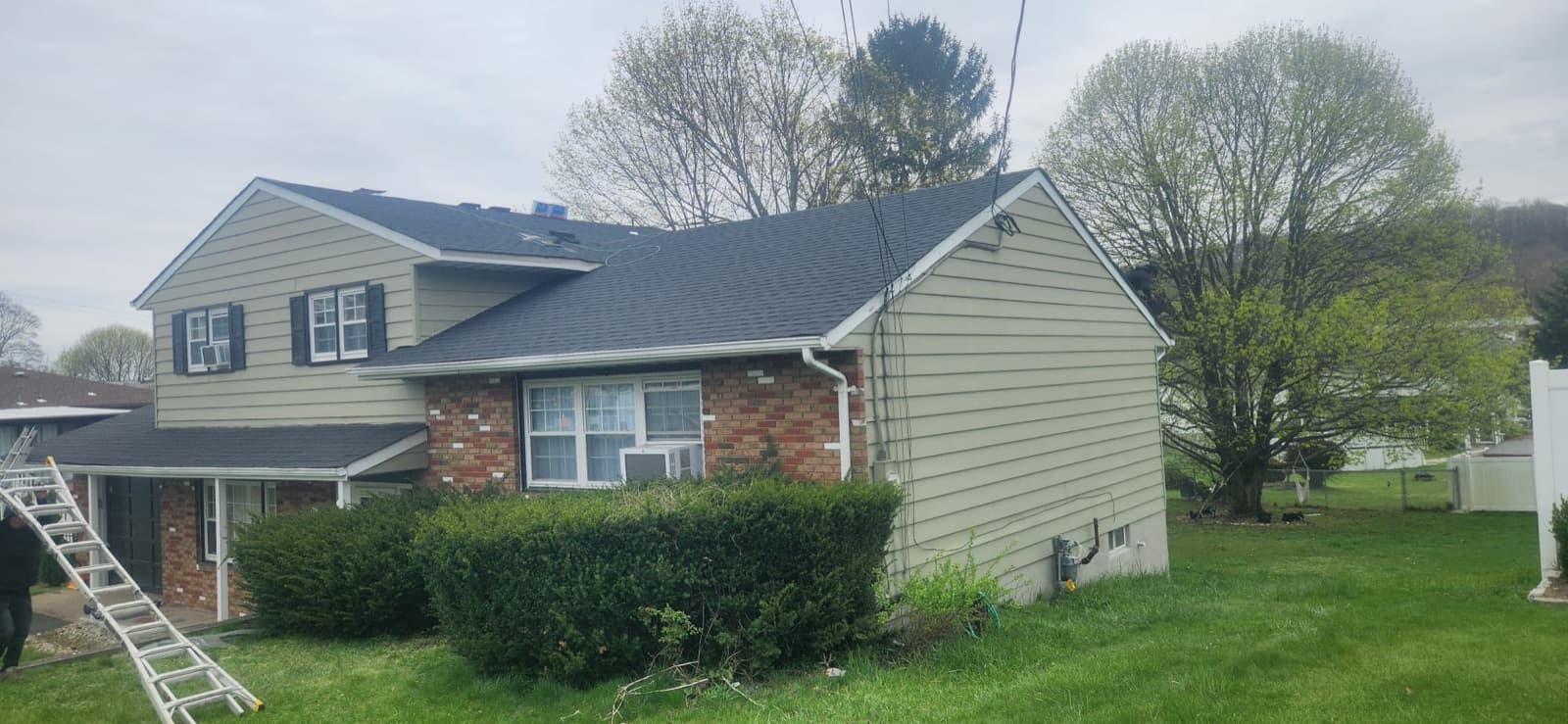
Essex is small, dense, and roofed three completely different ways — flat and low-slope multi-family across Newark and the Oranges, steep slate-and-shake Victorians up on the Montclair and Glen Ridge ridge, and post-war capes and colonials out in west Essex. We work all three: repair, replacement, leaks, gutters, siding, and chimney flashing, dispatched from our Garfield shop with 24/7 emergency response. NJ-registered, quoted line-item.
Want a range for your own house? Our Instant Roof Estimate finds your roof on New Jersey's aerial photos.
Get my Instant Roof EstimateEssex is one of New Jersey's smallest counties by land and one of its most densely built, and that shows up on the roofline. Within a few miles you go from Newark — the state's largest city, block after block of two- and three-family brick homes with flat or low-slope roofs — up onto the First Watchung ridge, where Montclair, Glen Ridge, and West Orange are full of steep, cut-up Victorians still wearing century-old slate. Keep going west and the stock turns suburban: the post-war capes, colonials, and ranches of Livingston, the Caldwells, and Nutley. The First Watchung ridge is the hinge in all of it — flat multi-family below it to the east, slate and shake on the climb itself, and plain shingle on the suburban plateau to the west, three roofs that each ask for a different crew.
That mix is why an Essex roof crew can't be a one-trick shingle operation. A flat rubber or modified-bitumen roof over a Newark or East Orange multi-family is a completely different discipline from a steep slate field in Upper Montclair, which is different again from a straightforward architectural-shingle reroof in Livingston. We run all three, and just as important, we read which one you actually have before quoting — because pricing a flat multi-family roof like a sloped suburban one is how homeowners get burned.
The other thing that makes Essex distinct is history. Montclair and Glen Ridge carry some of the most protected housing stock in the state, and a lot of it is still wearing slate and cedar shake. Whether a given address actually needs a Certificate of Appropriateness turns on local designation — a municipal ordinance naming that district or that house — and not on National Register listing, which is a different map drawn for a different purpose. Our slate, cedar and copper page works that distinction through town by town, and we check it for your address before anything is ordered. Not sure where your roof fits? Call (201) 275-9185 and walk us through it — we'll size up the problem on the phone and confirm it with a free on-site look before quoting.
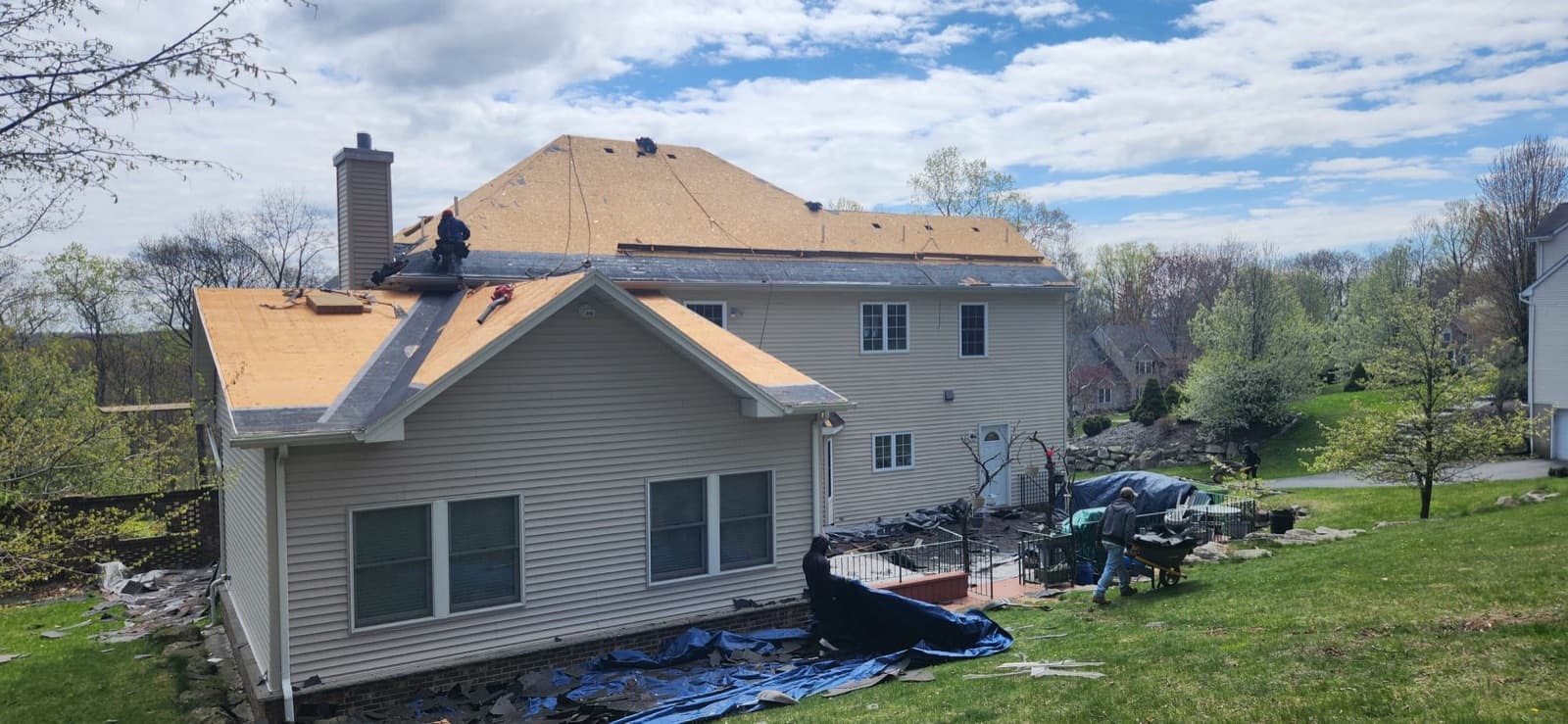
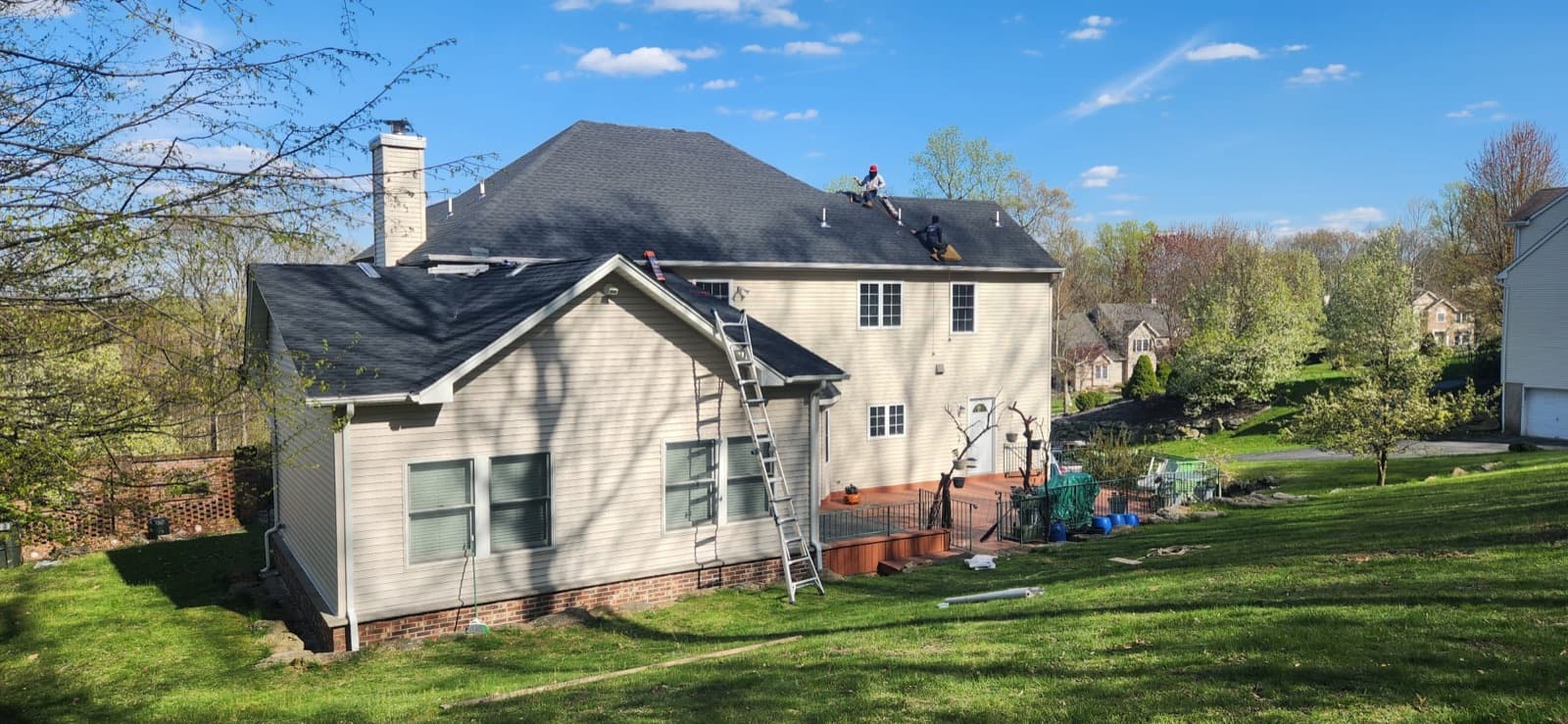
Recent work in New Jersey
One county, three completely different roofs
Most roofing companies treat a county as one market. Essex refuses to cooperate. The eastern half — Newark, East Orange, and the older parts of Bloomfield and Belleville — is dense, urban, and dominated by attached and semi-attached multi-family homes, where flat and low-slope roofs are the rule, not the exception. The center — Montclair, Glen Ridge, and the lower slopes of West Orange — is a museum of 1880s-to-1930s architecture on steep, complicated rooflines. The west — Livingston, the Caldwells, Essex Fells, and much of Nutley — is comfortable mid-century suburbia where a clean shingle reroof is the typical job.
Running all three out of one shop means we don't force your roof into the only system a crew happens to know. We match the method to the house.
- Newark & the Oranges — flat and low-slope multi-family and rowhouse roofs in EPDM rubber, TPO, or modified bitumen, plus the parapet and drain details those roofs live or die on.
- Montclair & Glen Ridge — steep, cut-up Victorians where the flashing and valley work decides the roof, and where we check the town's own designation list before assuming any review applies.
- West Orange — a spread from the National Register-listed Llewellyn Park estates on the Watchung slope to standard suburban colonials, so access and material both vary lot to lot.
- Livingston, the Caldwells & Nutley — architectural-shingle tear-offs and reroofs, largely on post-war capes, colonials, and ranches, though Nutley is the mixed one: its older streets are shaded pre-war stock that behaves more like Montclair than like Livingston, which is why the gutter and chimney notes below apply there too. Built to IRC-2021 code.
- Everywhere — leak tracing, gutters, siding, and chimney flashing, because water finds the same seams whatever the roof is made of.
The Newark and Oranges multi-family roof is its own trade
A huge share of Essex's housing is the two-, three-, and four-family home — East Orange has one of the densest concentrations of multi-family stock in the county, a mix of prewar apartment houses and older Victorians long since cut into flats, and Newark's neighborhoods run block after block of brick multis. Most of those roofs are flat or nearly flat, and a flat roof doesn't shed water the way a pitched one does; it holds it, drains it deliberately, and fails at the seams, the parapet walls, and the drains when the membrane ages out.
Shingles don't belong on that roof, and neither do a shingle crew's habits. We install and repair the systems these roofs actually need — single-ply EPDM and TPO membrane and modified bitumen — and we chase flat-roof leaks the right way, at the seams, flashings, and drain collars, rather than guessing from a stain. On a multi-family a slow roof leak is also a tenant problem and a liability problem, so getting a dependable roof back over occupied units fast is the priority, not an upsell to a full tear-off you may not need yet.
Roof leaking right now? We answer 24/7.
Slate and shake on the Montclair and Glen Ridge ridge
Montclair and Glen Ridge are overwhelmingly pre-war, and plenty of those houses still carry original or century-old slate and cedar shake — a sound slate field is a genuine asset worth restoring rather than ripping off. The roofs are also steep and cut up, with turrets, dormers, multiple valleys, and wall intersections, which is exactly the geometry where leaks begin, so the flashing and valley work matters far more than the open field.
Whether an address needs a Certificate of Appropriateness before any of that starts depends on local designation rather than National Register listing, and the two are not the same map. Our slate, cedar and copper page carries the town-by-town detail; we confirm your address against it before quoting.
- Slate and cedar shake — the pre-war stock on the ridge still carries both; the repair-versus-replace threshold, how a match is documented, and the lead times are set out on our slate, cedar and copper page.
- Historic-district approvals — Certificate of Appropriateness prep in Montclair, and exterior-review coordination in Glen Ridge and West Orange's Llewellyn Park, before we start.
- Steep-roof flashing — step flashing, valley metal, and chimney counter-flashing rebuilt on the complicated rooflines where these homes actually leak.
Drainage and walls for Essex's tree cover and mixed stock
Essex's older neighborhoods are heavily shaded — the same mature oaks and maples that make Montclair, Glen Ridge, Llewellyn Park, and Nutley beautiful drop enough debris to overwhelm an undersized or clogged gutter several times a year. Gutters that overflow don't just annoy; on these lots the runoff pours straight down against foundations and into basements that already sit low. We hang seamless aluminum gutters matched to the roof's real load, add guards where the mature-tree canopy justifies them, and aim the downspouts so runoff actually leaves the property instead of circling back against a low Essex basement wall.
Siding runs the same range as the roofs. On a Newark or East Orange multi-family it's often vinyl or aluminum over a century-old wood frame; on a west Essex colonial it's vinyl, fiber-cement, or insulated siding; on a landmarked Victorian, any visible material change may itself need historic review. The detail that ties siding to roofing is the wall-to-roof flashing and house-wrap where the two planes meet — the seam we care about most, because on a cut-up Victorian that's where water slips behind the wall and surfaces far from the valley or turret joint it actually entered.
Roof leaking right now? We answer 24/7.
Old chimneys, and the water Essex takes from above and below
Two water problems hit Essex hard. The first is the chimney: the county's older housing means tens of thousands of tall masonry chimneys, and the leak almost never comes from the bricks — it comes from failed flashing where the chimney passes through the roof, and from crumbling mortar and a missing or cracked crown. We set new counter-flashing down into the raked-out mortar joints — not a skim of roof cement over spent step flashing — which is what actually holds on a Montclair or Nutley Victorian instead of buying a single season.
The second is storms and flooding. Essex sits along the Passaic River and Newark Bay and has absorbed the worst the region hands out — when the remnants of Hurricane Ida stalled over the county on September 1, 2021, record rain overwhelmed the Passaic and put Newark's low-lying Ironbound under water. Up on the exposed Watchung slope the damage runs the other way: wind creases shingles and lifts flashing, and the next downpour works every seam it loosened. Our job after any of it is to look before you have to decide anything — we get up on the roof and photograph the condition even when no claim is coming. If you do file, we assemble the packet an adjuster works from — a measured scope, dated images, a plain written summary — and we're there when they walk the roof. What we don't do is tell you the claim is a lock; approval rests on your policy and the cause of loss, and a contractor who guarantees it is promising something that was never his to promise.
What affects the cost
| Flat vs. pitched | A flat or low-slope multi-family roof is a membrane job (EPDM, TPO, or modified bitumen); a pitched suburban roof is shingles. The two price on completely different terms. |
|---|---|
| Historic-district review | In Montclair, Glen Ridge, or on any landmarked home, a Certificate of Appropriateness and material-matching add process and lead time on top of the roof work itself. |
| Slate and specialty materials | Repairing or matching original slate or cedar shake on a protected Victorian is skilled, material-specific work, not a standard shingle swap. |
| Roof access and pitch | Steep Watchung-slope roofs in West Orange and cut-up Montclair rooflines need staging and slow the crew; tight urban lots complicate setup in Newark and the Oranges. |
| Decking condition | Century-old board sheathing under Essex's older roofs often hides soft spots that only appear at tear-off, and replacing it can pull a permit into the job. |
| Tree load on drainage | Heavily shaded lots in Montclair, Glen Ridge, and Nutley shed debris that drives gutter sizing, guard choice, and cleaning frequency. |
We don't bundle a mystery number — you get a firm, free on-site quote, approved before any work starts.
Monthly payment options
We work with Hearth, which shops several lenders on a single application. See your personalized options in minutes — checking does not affect your credit score, and there is no commitment.
- Loan amounts up to $250,000
- Funding in as little as 1–3 days
- No prepayment penalties
- No home equity required
Financing is provided by Hearth's lending partners, not by Precision Windows & Roofing. Rates and terms depend on your credit and the lender making the offer, and all financing is subject to credit approval.
Common questions
Do I need historic-district approval to replace a roof in Montclair or Glen Ridge?
Sometimes — and what decides it is local designation, not National Register listing. In Montclair, roofing has an express carve-out for repair or exact replacement that changes nothing about appearance; in Glen Ridge the local district covers most of the borough, so most exterior work is reviewed. Our slate, cedar and copper page sets out both towns' rules, the roofing carve-outs and the meeting calendars in full. We check your address against them before we quote and carry any approval through as part of the job.
Do you do flat roofs on Newark and East Orange multi-family homes?
Yes — that's a core Essex job for us. Two-, three-, and four-family homes with flat or low-slope roofs get a membrane system, not shingles: single-ply EPDM or TPO, or modified bitumen, with the parapet, seam, and drain details those roofs depend on. We also trace flat-roof leaks properly — at the seams, flashings, and drains rather than guessing — and we move fast, because a leak over an occupied multi is a tenant and liability issue as much as a roofing one.
Can you match the slate or cedar shake on my Victorian?
Yes, and it is our own crew's work rather than a sub's. On Montclair and Glen Ridge homes we lean toward repair and salvage rather than stripping a field that still has decades in it. The detail — how a match gets documented, which slates can no longer be bought at all, and the lead times a slate order actually runs — is on our slate, cedar and copper page.
Essex flooded badly during Ida — do you handle storm and flood damage?
Yes, on the roof and inside the house. The remnants of Hurricane Ida in September 2021 showed how hard Essex gets hit, especially the low-lying Ironbound near the Passaic and Newark Bay. After wind or a downpour we get on the roof, photograph what we find, and if you file, hand you the documentation a claim runs on. We won't tell you it'll be approved — that's your carrier's decision on your policy — and any roofer who guarantees otherwise is worth steering clear of. Standing floodwater inside the home is restoration work rather than roof work, and our own crews do that too: water extraction and drying, floodwater and sewage cleanup, mold remediation, and the rebuild afterward.
Do you cover all of Essex County, and how fast?
Yes — from Newark and the Oranges to Montclair, Bloomfield, Nutley, Livingston, the Caldwells, and West Orange. We dispatch from our Garfield shop just over the county line. A roof that is open with more weather on the way, or storm damage, is an emergency and gets a truck the same day, around the clock. Inspections and non-emergency leak diagnosis are usually within a few days, and the repair is then scheduled for a dry roof so the flashing and shingles go back correctly; full replacements and siding run on scheduled dates.
Do I need a permit to reroof an older Essex home?
For a detached one- or two-family home, replacing just the covering has been classified as 'ordinary maintenance' in New Jersey since 2018 — no construction permit. N.J.A.C. 5:23-2.7(c)1x carries the word detached, so an attached or three-family building is outside it from the start. But two Essex realities pull permits back in: century-old board decking that turns out to need replacement once we tear off, which touches structure, and historic-district homes that need a Certificate of Appropriateness regardless. Between the two, an Essex reroof lands in permit territory more often than a suburban one — so we pin down which side of those limits your building and scope fall on, and any historic-district requirement, before quoting, and every job goes in writing under our registration, HIC reg.# 13VH13970900.
Explore
Roof repair by town in Essex County
Get your free roofing quote
Free, no-obligation on-site assessment anywhere in New Jersey — and we answer the phone 24/7.