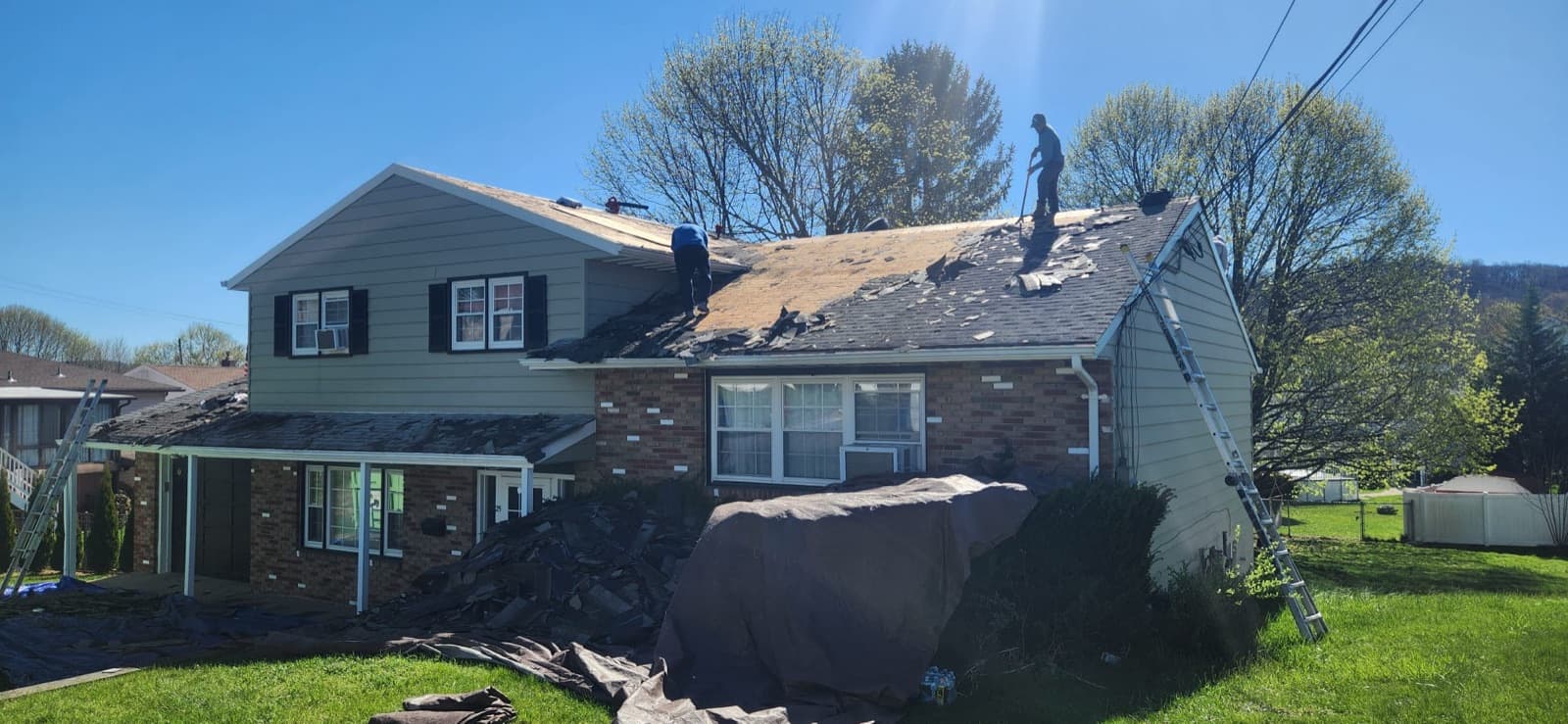
Roof Repair & Replacement in Clifton, NJ
Clifton still prints its own roofer-licensing chapter, inspects the house when it changes hands, and writes down the hours a crew may work and how long a container may sit. It is also finished building: 34,064 housing units, close to a third of them pre-war and nearly a quarter raised in the 1950s. Tear-offs, leak tracing, low-slope and gutters, run to the rules this city actually publishes. NJHIC #13VH13970900.
Clifton still prints a roofer-licensing chapter, though the state has since overridden it. Chapter 199 of the city code, on the books since 1968, says no person shall engage in the business of reroofing or residing a building for which a City permit is required until licensed by Clifton's Building Inspector — and § 199-4 sets out the classes, one of which is, in those exact words, a roofing and siding contractor. Most towns here stop at the state registration. Clifton wrote a municipal layer on top, with one exception in the same section: an owner or occupant who performs and supervises his own work needs no license.
The rest of the city is a numbers problem. Clifton's 2026 Master Plan Reexamination counts 34,064 housing units on 2023 American Community Survey estimates — 15,417 detached single-family and 7,167 units in two-unit buildings — with 8,105 built between 1950 and 1959, the largest single decade in the city's history, against 10,162 dating to 1939 or earlier. The city is also done growing: 23,730 tax parcels, under one percent of them vacant, and only 501 new units certified from 2013 through 2023, most of the single-family ones tear-downs of older single-family houses. Eleventh-largest municipality in New Jersey by population, and essentially every roof it will ever have is already on.
Our shop is in Garfield, just across the Passaic, so this is a same-day city for anything urgent — a roof left open, a storm that has just come through, water already inside. A leak that can wait gets diagnosed quickly and put on the calendar for a dry roof. Call (201) 275-9185.
- Roof leak repair — Close to a third of Clifton's housing is pre-war. On those roofs the leak is a tired detail rather than a worn field, and replacing the field would not have fixed it.
- Emergency roof repair — Across the Passaic from our shop. An open roof gets a truck at any hour — which is a different thing from the daytime hours the city sets for ordinary work.
- Roof flashing repair — Chimney, sidewall and valley metal on Clifton's pre-war and 1950s roofs, where the shingles routinely outlive the flashing that was tucked under them.
- Roof inspection — A written condition report on what the roof has left — worth having in hand before a Clifton house changes hands and gets looked at by somebody else.
- Roofing in Passaic County — The rest of our Passaic County work, and which neighbouring towns run their own contractor licensing the way Clifton does.
Recent work in New Jersey
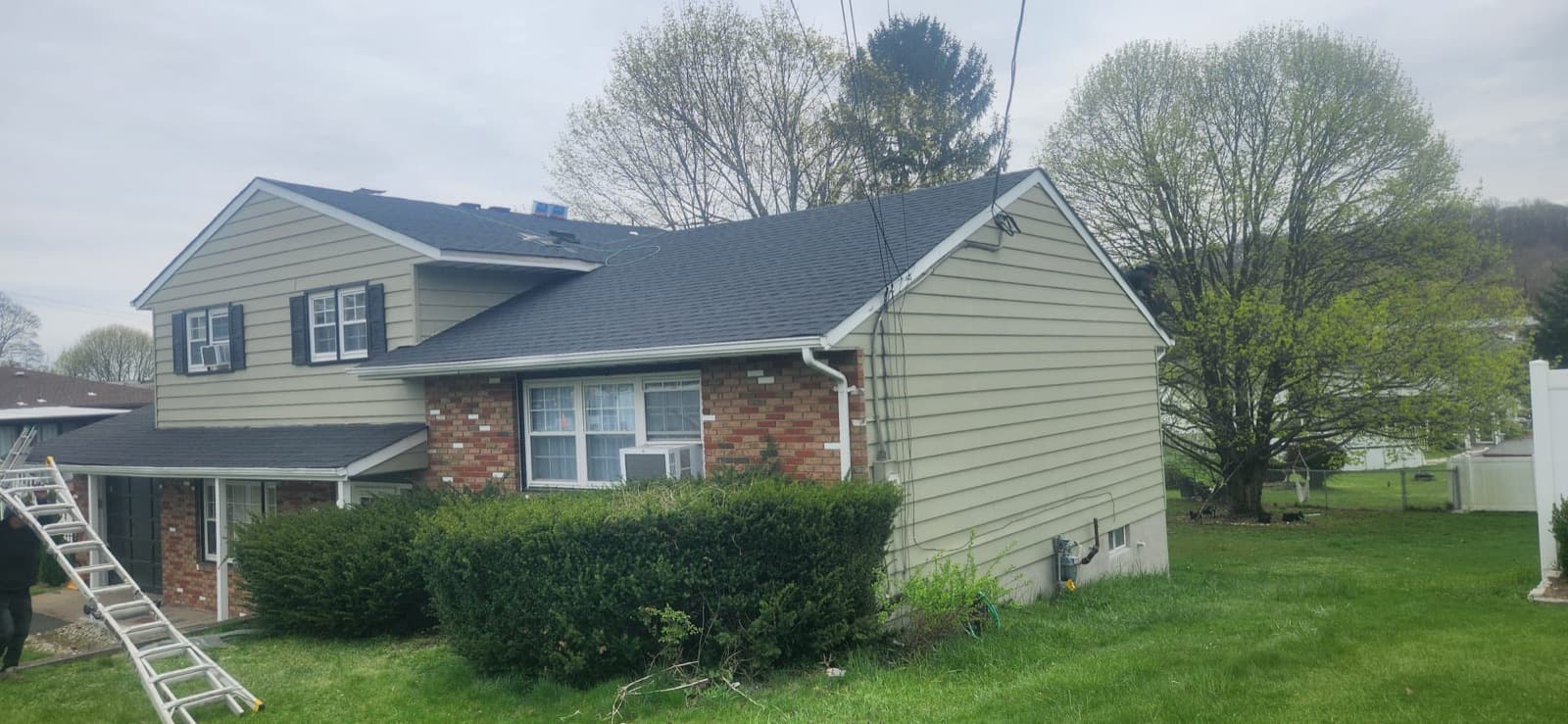
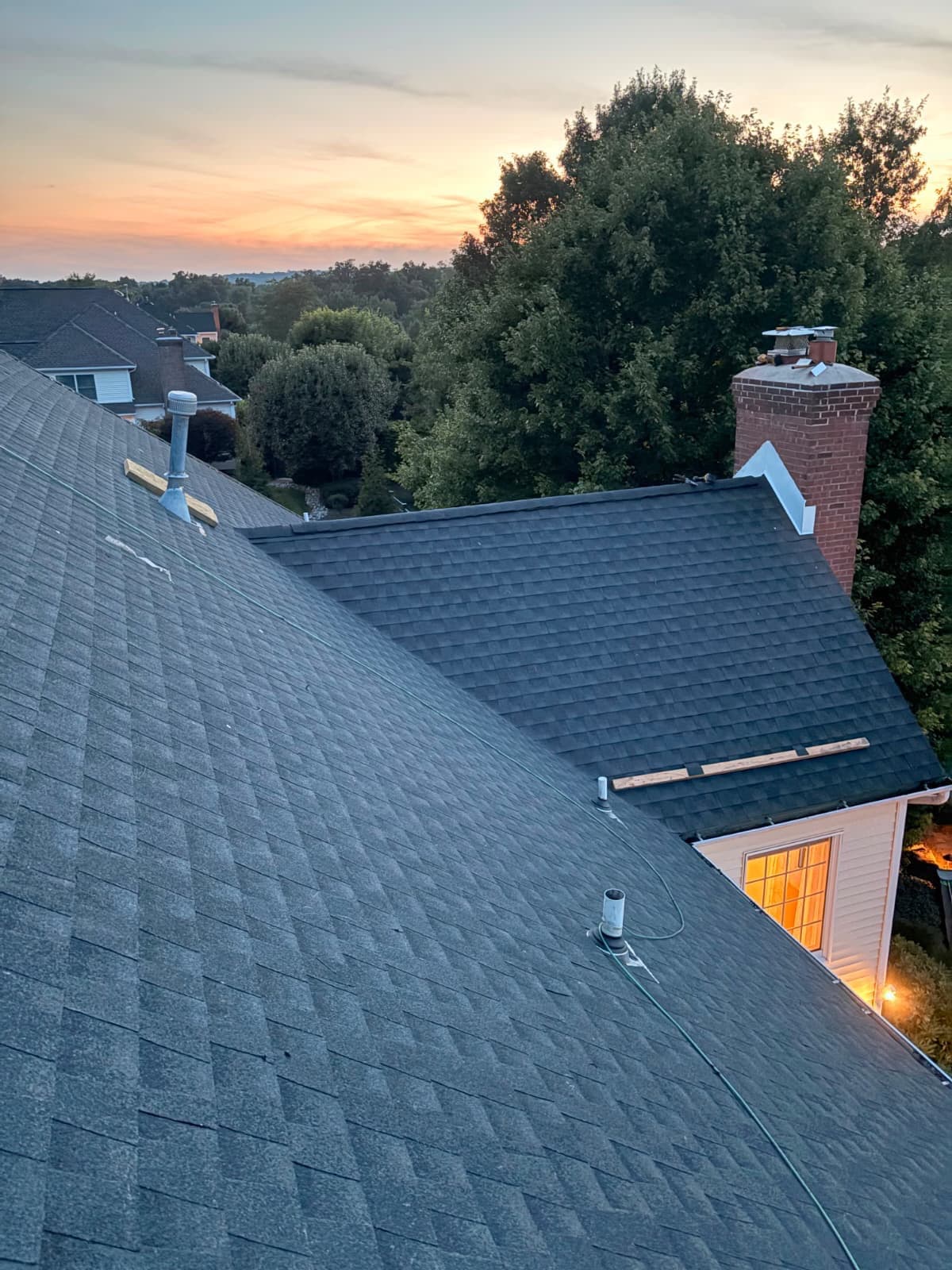
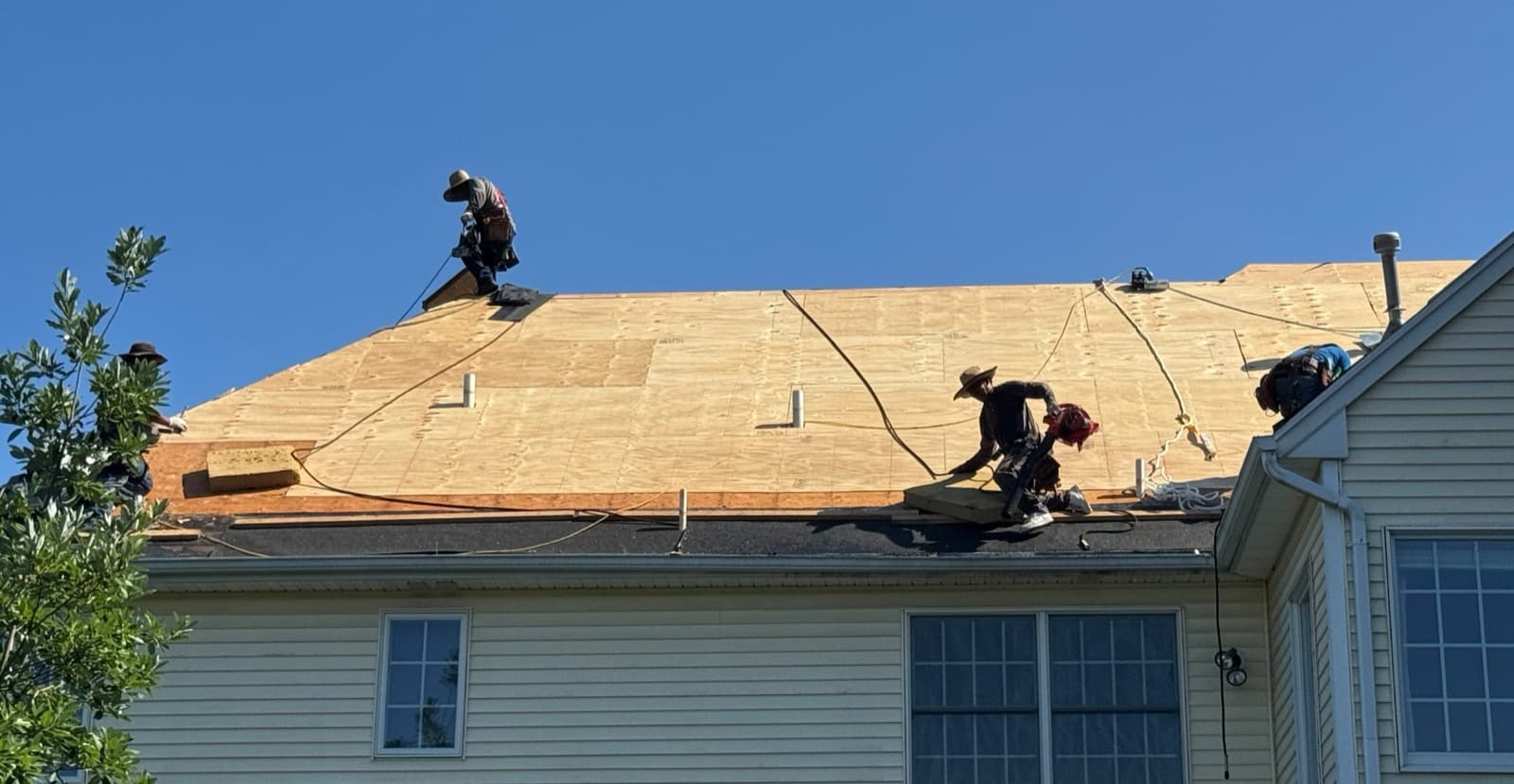
A pre-war city and a postwar city, replacing their roofs in place
Clifton is two housing stocks wearing one name, and they age differently. 10,162 units — close to a third of the city — date to 1939 or earlier, weighted toward the older neighborhoods the Master Plan singles out, Botany Village above all, and running down through Lakeview and Delawanna. Then 5,623 units from the 1940s and 8,105 from the 1950s, the belt of capes, ranches and split-levels through Allwood, Athenia and the tracts around them. Pre-war means steeper pitch, tall brick chimneys, cut-up geometry and a deck of gapped one-by boards. Postwar means shallower planes, fewer penetrations, and sheathing laid in the years the industry was switching over to panel.
What both share is the arithmetic in the Reexamination: 23,730 parcels, 216 of them vacant, 501 units certified across eleven years. Nobody is adding roof area in Clifton. Everything gets recovered in place, so most houses here are already carrying their second or third covering. The honest unknown on both eras is the same, and it is not the shingle: it is whether the boards underneath still take a fastener, which cannot be read from the street or from a photograph. We open the roof, look at the deck, and carry sheathing as its own line so the number does not move once the job has started.
In Clifton the roof comes back at closing, and again at most tenant turnovers
Most towns leave a roof between an owner and the weather. Clifton does not. Chapter 210 requires a dwelling certificate filed no more than 60 days before any conveyance of title, and again no more than 60 days before any change of occupancy. Section 210-3 then requires a city inspection on that change — unless the unit was already certified within the previous six months — with access to the premises, common areas, the basement or cellar and the attic. Section 210-5 is blunt: a transfer of title shall not take place unless a dwelling inspection has been conducted.
What that inspection is measured against is the part worth knowing. Chapter 210 defines a dwelling inspection as a check for compliance with the smoke detector article and Chapter 273, Housing Standards — and § 273-11A requires every roof to be reasonably weathertight, watertight and kept in good repair, while § 273-12 makes it the owner's duty to keep roof, gutters and leaders sound and free from leakage of rainwater. In a city where 41.3% of occupied units are rented and 7,167 units sit in two-unit buildings, that turns a slow leak into a recurring municipal event rather than a private annoyance. The practical consequence for an owner is timing: the cheap moment to deal with a stain is between tenants, not with a certificate inspection booked and a signed contract waiting on it.
Roof leaking right now? We answer 24/7.
Two credentials, and a state exemption that misses a third of the city
The state's ordinary-maintenance item, N.J.A.C. 5:23-2.7, lets a roof be re-covered with no filing and no inspection, and the qualifier attached to it is that the building has to be freestanding and no bigger than a two-family. The word doing the work is detached, and it does not stretch. Clifton's own census of itself shows where the line falls: against 15,417 detached single-family units and 7,167 units in two-unit buildings sit 2,335 attached single-family units, 3,072 in buildings of three or four units, and 5,974 in buildings of five or more. Roughly a third of the stock is outside the exemption before you count a single attached two-family. Apartment buildings are the clearest case — one roof over many households, permitted and inspected every time — and the exemption stops at the covering in any event, so the moment rotted decking or a rafter is replaced, the job becomes permitted work no matter what the building is.
The second credential is local, and the state one overrides it. Chapter 199 attaches to work for which a permit is required by the applicable ordinances of the City — but N.J.S.A. 56:8-147 supersedes any municipal ordinance providing for the licensing or registration of contractors, and the Division of Consumer Affairs confirms it in its own FAQ. What Clifton keeps is the permit and the inspection. Chapter 199 is still printed in the code, and § 199-5 obliges the Building Inspector to revoke a licence on conviction for an ordinance — and § 199-5 obliges the Building Inspector to revoke that license outright if the holder is convicted of an ordinance violation in permitted work. There is a useful test for an owner buried in that: a contractor who cannot tell you whether your job is permitted work does not know whether he is licensed to do it. We establish the answer with the Building Department at 900 Clifton Avenue, (973) 470-5809, before a price is written, and anything requiring a permit gets filed under NJHIC #13VH13970900.
Clifton writes down when a crew may start and how long the container may sit
Chapter 271 sets hours of construction, and it bites in any residential zone or on any tract adjacent to one — very nearly everywhere a Clifton house stands. No tools, equipment or vehicles before 8:00 a.m. or after 7:00 p.m. on weekdays and Saturdays; Sundays narrow to 9:00 a.m. through 7:00 p.m. and to work the homeowner performs personally. Deliveries have their own rule: nothing from 7:00 p.m. Saturday until 8:00 a.m. Monday, or on holidays. Emergencies are excepted, which is what makes a night tarping lawful. So a July crew cannot start at 6:30 ahead of the heat — 7:00 a.m. is the earliest the City Manager and City Engineer can jointly allow — and shingles cannot land Sunday morning for a Monday roof. On a large tear-off that is a genuine constraint on the schedule, and it belongs in the conversation before a date is agreed rather than after.
The container has its own chapter. Under Chapter 209 the hauler must be registered with the City Clerk before providing a dumpster anywhere in Clifton, and no container may be placed more than 24 hours before construction starts or left more than 24 hours after it finishes — the Construction Official gives twelve hours' oral notice and the Police Department can impound it. Put it on the street and the placement rules stack up: nothing within five feet of an adjacent owner's driveway, nothing taking more than a third of the roadway width, front and rear surfaces reflectorized for night, and the street swept clean when it goes. On a postwar block with a driveway every forty feet, that usually decides the only lawful spot.
Roof leaking right now? We answer 24/7.
One New Jersey county requires the eave membrane, and it is not this one
Read enough North Jersey quotes and you will be told that code here compels a membrane at the eaves. DCA Bulletin 07-3 is where the state answered that question, and the answer runs to a single county in the far north-west: Sussex. The trigger is the average January temperature, which has to come in at 25°F or colder, and Clifton is at the wrong end of the state for that. We install the membrane at eaves and valleys regardless, and we bill it as our specification rather than as anybody's requirement.
Clifton's reason for wanting it is not a hill town's. On a two-family or an apartment building the eave that grows the dam is usually the one over a shared entry walk or a common stair, so what finally lets go lands on ground other households cross. The discharge side is in the code too: § 273-12J puts the owner under a duty to convey roof drainage so as to prevent it dripping onto the ground or onto adjacent property. On Clifton's narrow side yards, where a leader ends is a lot-line question, and it is one the city can be asked to take a view on.
Ridge on one side, flats on the other — and nobody here reviews your shingle
Clifton is not flat, and it shows up in the quote. The Master Plan Reexamination asks the city to preserve the Garret Mountain area running from the Paterson border to the Montclair border, defines a steeply sloped area as any grade of at least fifteen percent, and calls for strict enforcement of the steep-slope overlay in the zoning ordinance and for development not to break the ridgeline. A roof on that western edge is more wind-exposed and stages differently for a hoist and a container than a ranch on the Allwood flats. On the low ground along the Passaic and Weasel Brook we will be plain: roofing manages what lands on the building, not a brook that comes up.
One thing Clifton owners do not have to manage is approval of the material. The Chapter 51 body here is a Historical Commission created under N.J.S.A. 40:81-13 to serve the Municipal Council in an advisory capacity, charged with discovering and memorializing the city's history rather than reviewing exterior work — and the 2026 Master Plan Reexamination concedes that to date limited regulations have been adopted to protect historically significant structures. The state and national registers list Clifton one building at a time rather than by residential district: the John and Anna Vreeland/Hamilton House at 971 Valley Road, listed in 1982, and the Garritse/Doremus/Westervelt House at 794 Park Drive inside Weasel Brook Park, listed in 2023.
Monthly payment options
We work with Hearth, which shops several lenders on a single application. See your personalized options in minutes — checking does not affect your credit score, and there is no commitment.
- Loan amounts up to $250,000
- Funding in as little as 1–3 days
- No prepayment penalties
- No home equity required
Financing is provided by Hearth's lending partners, not by Precision Windows & Roofing. Rates and terms depend on your credit and the lender making the offer, and all financing is subject to credit approval.
Common questions
Does Clifton make a roofer hold a city license as well as the state registration?
Not in practice, and the reason is worth knowing. Chapter 199 does say no person shall engage in the business of reroofing or residing a building for which a City permit is required until licensed by Clifton's Building Inspector, and § 199-4 sets out a distinct class for a roofing and siding contractor — but that chapter dates to 1968 and New Jersey's Contractors' Registration Act now supersedes it. N.J.S.A. 56:8-147 provides that the Act "shall supersede any municipal ordinance or regulation that provides for the licensing or registration of contractors," and the Division of Consumer Affairs says the same in its own FAQ. The state registration is the credential that governs; what Clifton retains is the construction permit and the inspection. Section 199-5 requires the Building Inspector to revoke that license on a conviction for an ordinance violation in permitted work. One exemption is written in: an owner or occupant doing and supervising his own work needs none. Because this is a municipal layer sitting on top of the state registration, it is worth confirming current practice for your address with the Building Department at (973) 470-5809.
Does my Clifton re-roof need a permit?
It turns on the building and on what comes off. The state exemption at N.J.A.C. 5:23-2.7 treats a covering-only replacement as ordinary maintenance on a house that stands alone and holds no more than two units. It does not reach attached houses, three-family and up, or anything larger — roughly a third of Clifton's stock. And it stops at the covering: once rotted decking or a rafter is replaced, the work is structural and a permit is required on any building. We confirm your address with the Building Department, 900 Clifton Avenue, (973) 470-5809.
I'm selling and the city inspects the house. Can the roof hold up my closing?
It can be raised, so get ahead of it. Chapter 210 requires a dwelling certificate no more than 60 days before a conveyance of title, and § 210-5 says a transfer of title shall not take place unless a dwelling inspection has been conducted. That inspection reaches the attic and is measured against Chapter 273, which requires every roof to be reasonably weathertight and watertight. Inspectors concentrate on detectors in practice, so an old but sound roof rarely stops a sale; a live leak is another matter.
What hours will your crew work, and when can the dumpster show up?
Both are set by ordinance here, not by preference. Chapter 271 bars construction before 8:00 a.m. and after 7:00 p.m. on weekdays and Saturdays in or next to a residential zone, limits Sundays to 9:00 a.m. through 7:00 p.m. and to work the homeowner does personally, and blocks deliveries from 7:00 p.m. Saturday to 8:00 a.m. Monday and on holidays, emergencies excepted. Chapter 209 keeps a street container five feet clear of a neighbor's driveway, off more than a third of the roadway, and out no more than 24 hours before or after the work.
Is my Clifton house in a historic district? Does anyone approve the shingle?
No, and no. Clifton has no residential historic district on the state or national registers — its listings are individual buildings, such as the Vreeland/Hamilton House on Valley Road and the Garritse/Doremus/Westervelt House in Weasel Brook Park, and the one district that reaches the city, the Dundee Canal Industrial Historic District, is industrial and filed under Passaic City. The Historical Commission exists under N.J.S.A. 40:81-13 to advise the Municipal Council on local history, not to review exterior work, and the 2026 Master Plan Reexamination says only limited regulations protect historically significant structures. Material and color are your call.
Explore
Get your free roofing quote
Free, no-obligation on-site assessment anywhere in New Jersey — and we answer the phone 24/7.