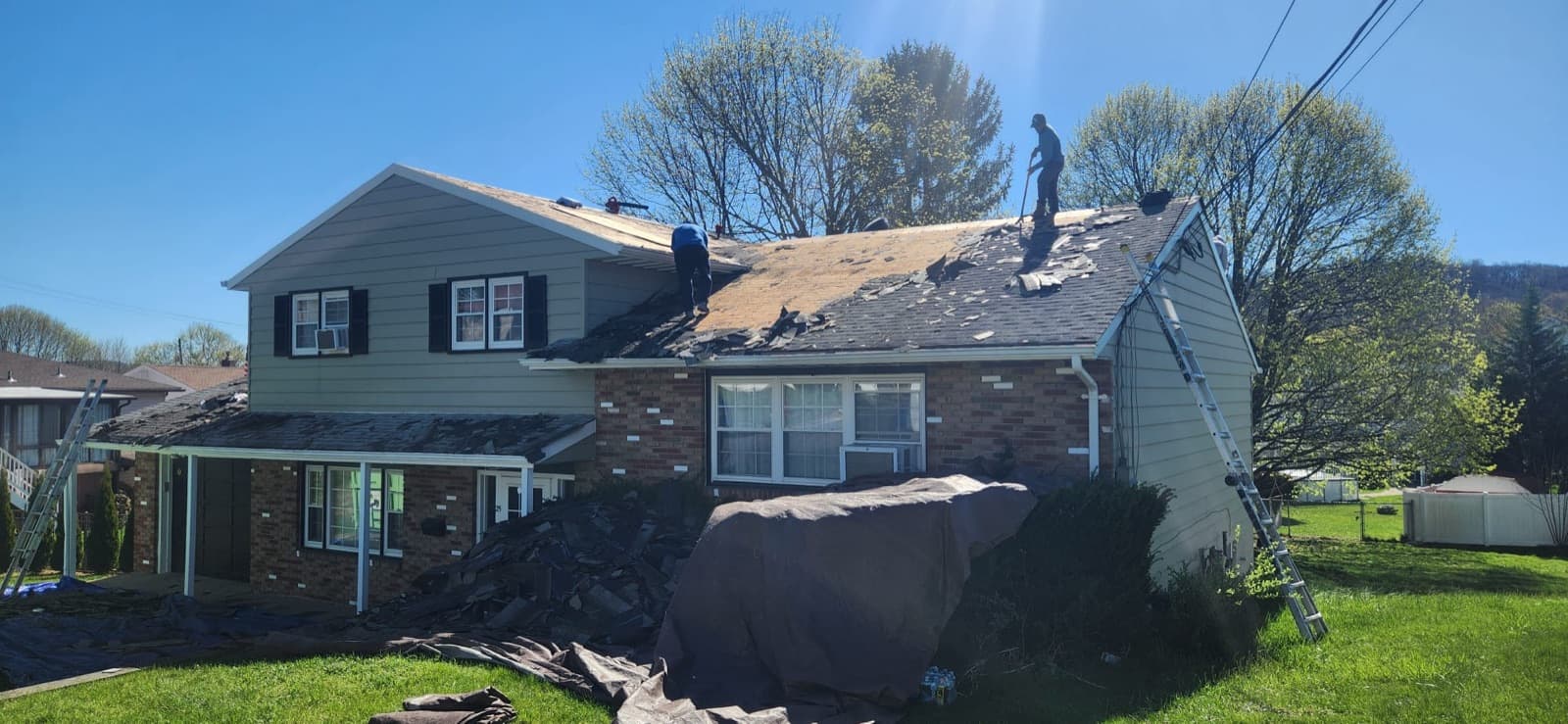
Roof Inspection in North New Jersey
A roof inspection is only worth having if the person doing it actually gets on the roof and into the attic — and has no incentive to invent a problem. Ours is free across New Jersey: a hands-on read of the shingles, flashing, valleys, decking, and ventilation, with an honest written summary and no pressure. NJ-registered.
A good roof inspection answers one question honestly: how much life does this roof really have, and what — if anything — needs attention now. A bad one is a sales call in a ladder-and-clipboard costume, built to find a reason to sell you a roof you don't need. We do the first kind, free, across New Jersey — because the fastest way to earn a roofing job in North Jersey is to be the contractor who told you honestly that you didn't need one yet.
Precision came to roofing from the water-intrusion side of the trade — years of chasing leaks around windows, glass, and wall flashing before we ever framed a roof. That background changes where we look. Most of a roof is engineered to shed water and rarely fails; leaks start at the interruptions — the flashing at chimneys and walls, the valleys, the pipe boots, the skylight curbs. Our inspection spends its time exactly there, on the details that fail first, instead of glancing at the shingle field and calling it done.
You get a hands-on inspection — on the roof and into the attic wherever it's safe to go — a plain written summary of what we found with photos, and a straight repair-or-replace read with no scare tactics. It's free, there's no obligation, and if your roof is fine we'll tell you that and leave you a note for the file. Call (201) 275-9185 to book one — or if you're staring at a fresh stain or a post-storm mess and want it looked at today.
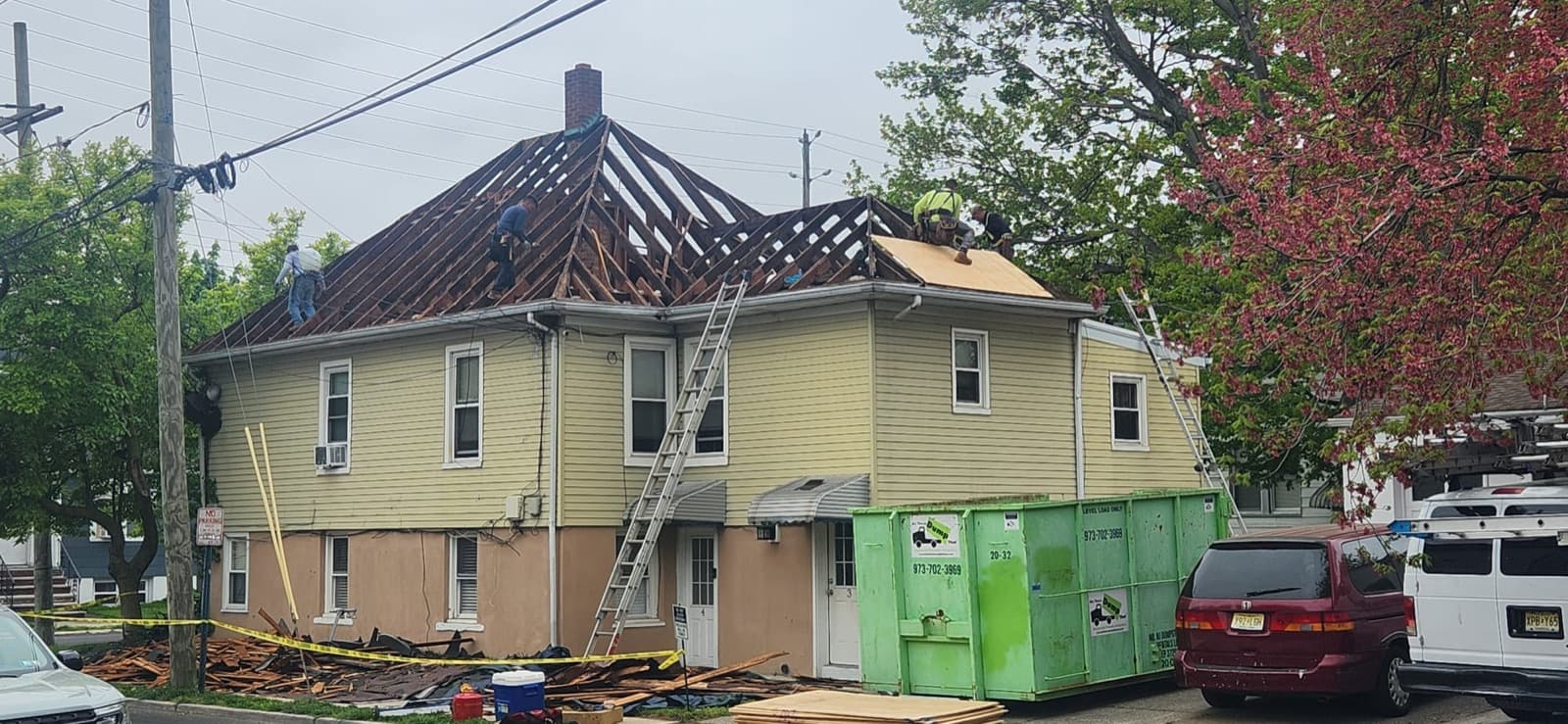
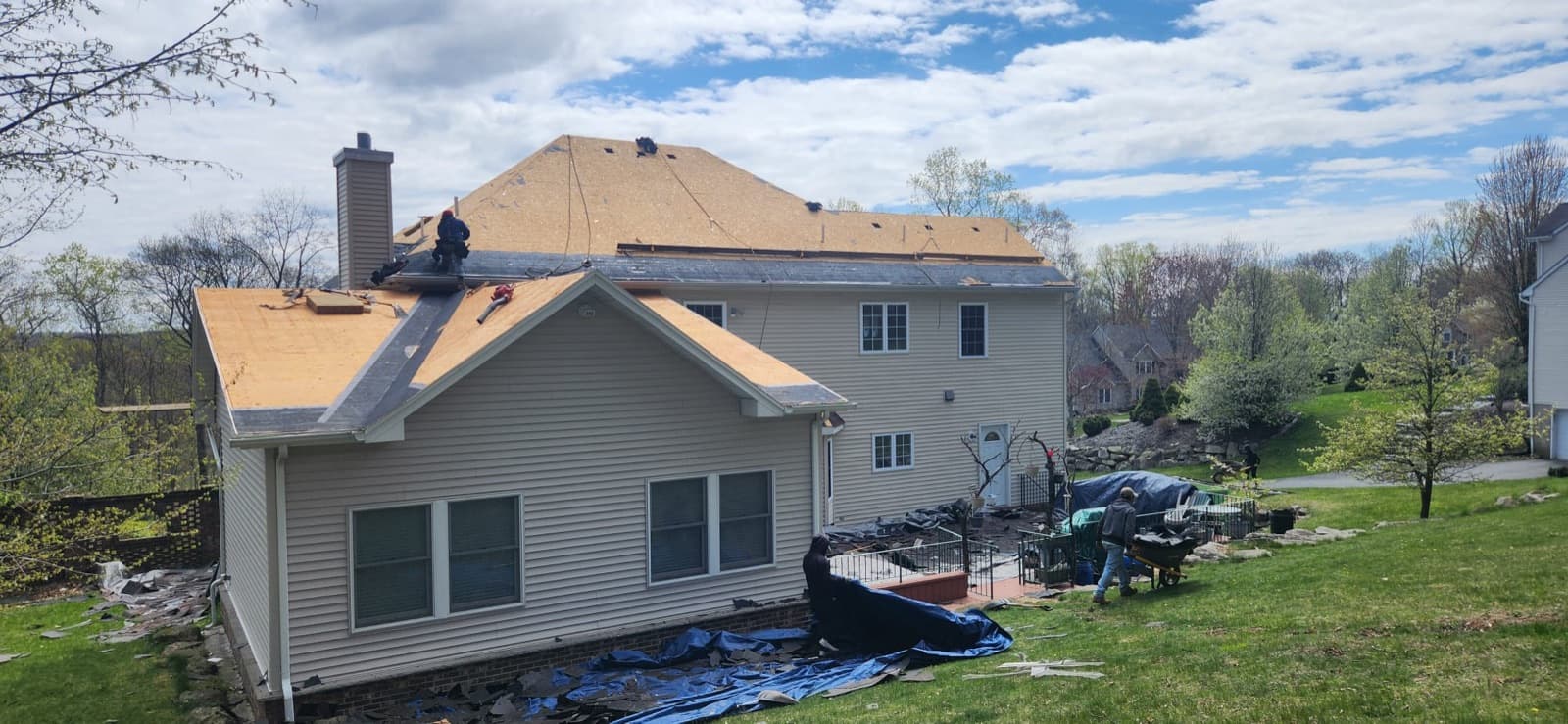
Recent work in New Jersey
What a Precision roof inspection actually checks
A real inspection is a system-by-system walk of everything that keeps water out — not a squint from the driveway. We start on the roof surface where it's safe to walk, move to the penetrations and transitions where leaks actually begin, then go inside to the attic, because half of what a roof is doing shows up on the underside of the deck long before it reaches a ceiling. Here's the checklist we work through:
- Shingle field — cracking, curling, blistering, lifted or missing tabs, exposed nail heads, and granule loss (the sandpaper grit washing into your gutters is the asphalt layer wearing thin).
- Flashing — chimney step and counter flashing, sidewall and dormer step flashing, valley metal, and the flashing at every vent. This is the number-one serious leak source on North Jersey roofs, so it gets the most attention.
- Penetrations — plumbing-vent pipe boots (the neoprene collars dry out and split within a decade), skylight curbs and seals, and exhaust vents.
- Valleys and drainage — the channels where two planes meet carry the most water on the roof; we check the metal, the underlayment, and that debris isn't pushing water sideways under the shingles.
- Gutters, downspouts, and drip edge — pitch and seams, granule sediment, and whether the code-required drip edge is present at the eaves and rakes or the fascia is rotting from the edge in.
- Attic and decking — from inside, with a light: moisture, active or old stains, mold, daylight through the deck, and soft, spongy, or sagging sheathing that signals rot.
- Ventilation — whether soffit intake and ridge exhaust are actually balanced, or the soffits are painted shut or stuffed with insulation so the ridge vent has nothing to pull, a hidden shingle-killer.
When you should get your roof inspected
The widely-cited baseline from the roofing industry is twice a year — spring and fall. Spring catches what a North Jersey winter did: the freeze-thaw cycling, ice dams, and wind that work on flashing and shingles from December through March. Fall gets the roof ready before it starts again. Beyond that calendar, a few specific moments are worth an inspection on their own:
- After any major storm — a nor'easter, a summer downburst, hail, or a fallen limb — even when there's no leak inside yet. Wind damage is often invisible from the ground and gets worse with the next rain.
- When the roof reaches the back half of its life — roughly 15–20 years for 3-tab, longer for architectural — or whenever you simply don't know how old it is.
- When you're buying or selling — the roof is one of the most negotiated line items in a North Jersey home sale.
- At the first interior sign — a ceiling stain, a musty attic, peeling paint at the top of a wall, or granules collecting at the bottom of a downspout.
- Before you spend money on top of the roof — a solar array, satellite mount, or a refinance or insurance renewal that asks for proof of condition.
Roof leaking right now? We answer 24/7.
Pre-purchase and real-estate roof inspections
When a house changes hands in New Jersey, the roof is one of the first things a buyer worries about and one of the biggest bargaining chips at the table. A standard home inspection includes the roof — but it's a limited look. Most NJ home inspectors, by the standards they work under, evaluate a roof from a ladder at the eave or with binoculars from the ground rather than walking it, and their report covers the whole house, not the roof in depth. When that report flags the roof, or estimates only a few years of service life left, it usually triggers a call for a roofing specialist to take a closer look.
That closer look is the inspection we provide. We're roofing contractors, not licensed home inspectors, so a Precision inspection isn't the general point-of-sale home inspection — it's the dedicated roof evaluation that goes deeper on the one system a home inspector can only glance at: hands-on where the roof is walkable, into the attic, and focused on remaining service life and what it would actually take to repair or replace. Buyers use it to negotiate with real findings instead of a guess; sellers use it to fix or price the roof before it becomes a deal-killer at closing. Either way you get a written summary you can hand to the other side.
Post-storm inspections and insurance claims
North Jersey takes nor'easters, the remnants of tropical systems, and the occasional hail event, and wind is the usual culprit — lifted or creased shingles, torn ridge caps, and flashing peeled back by a gust. A lot of that damage isn't visible from the ground and won't show inside until the next heavy rain, which is exactly why a post-storm inspection is worth doing before you have a leak, not after. If we find an active opening, we can tarp it the same day to stop the loss.
Timing matters for a claim. New Jersey sets no single statutory filing deadline, but nearly every homeowners policy requires prompt notice — 'as soon as practicable' — and expects you to mitigate further damage once you know about it, so getting the damage inspected and documented early protects both the house and the claim. When it looks like a covered event, we photograph and measure it the way an adjuster needs to see it and write a clear scope. What we won't do is promise the claim will be approved or tell you we can 'make insurance pay' — that's the carrier's decision, based on your policy and the cause of loss. Our job is to hand you and the adjuster an accurate, well-documented picture. The full process is on our storm-damage and insurance-claim page.
Roof leaking right now? We answer 24/7.
The written report you walk away with
An inspection is only useful if you can act on it, so you don't just get a verbal 'looks fine' or 'you need a roof.' You get a plain-language written summary of what we found, with dated photos of the specific problems — the cracked boot, the rusted step flashing, the soft spot in the deck — so nothing is a matter of taking our word for it. Where we flag a concern, we show you the photo of it.
The report gives you an honest repair-or-replace read with the reasoning behind it: whether a targeted fix buys you years, or the roof is genuinely at the end and a patch just buys months. If work is warranted, the quote is separate, free, and line-itemed — the shingle, underlayment, ice-and-water shield, flashing, and labor broken out — so you can compare it honestly against any other bid. And if the roof is simply fine, the report says that too, with an estimate of the life left in it, which is worth having on file for a sale or an insurer.
A roofer's eye and NJ code — without the storm-chaser routine
After every big storm, out-of-state 'storm chasers' fan out across North Jersey knocking on doors, offering free inspections, and finding catastrophic damage on nearly every roof they climb. The free inspection is real; the objectivity isn't. Their model depends on turning every inspection into a claim and every claim into a job, and plenty of the 'damage' is chalk-circled exaggeration or, worse, freshly made. We're a local, registered New Jersey contractor — HIC reg.# 13VH13970900 — with a shop in Garfield you can drive to, and our inspection is free precisely so there's no pressure to manufacture a reason to sell you a roof.
What a knowledgeable inspection does catch is the code detail a quick look-over misses. New Jersey builds roofs to the 2024 IRC, and the failures that matter here are specific: a missing or undersized ice-and-water barrier at the eaves — New Jersey compels one only in the state's coldest corner, up in Sussex, per DCA Bulletin 07-3 rather than the model text of R905.1.2, but its absence anywhere in North Jersey lets ice-dam meltwater back up under the shingles — drip edge installed in the wrong sequence, reused or face-nailed step flashing, and attic ventilation below the code minimum (R806.2) that cooks shingles from below and quietly voids the warranty. We read a roof against what it's supposed to be built to — then tell you plainly whether it's holding up or not.
What affects the cost
| Repair vs. replacement | The single biggest variable. A localized flashing or pipe-boot fix is a fraction of a full tear-off — our report tells you honestly which one your roof actually needs. The inspection itself is free. |
|---|---|
| Extent and location of the findings | One wind-lifted slope versus several leak points, or a full valley rebuild versus a single boot, are very different-sized jobs. |
| Roof size, pitch, and height | Steep and multi-story roofs need staging and fall protection, which adds labor to whatever the fix turns out to be. |
| Hidden decking or structural damage | If the inspection finds rotted sheathing or framing under a long-run leak, that has to be replaced before the surface goes back — and can pull a municipal permit into the job. |
| Flashing and penetration count | Chimneys, skylights, valleys, and every vent boot each need their own flashing detail; the more penetrations, the more skilled labor. |
| Emergency vs. scheduled | A post-storm same-day inspection and tarp run differently than a planned repair booked on a dry-weather route. |
We don't bundle a mystery number — you get a firm, free on-site quote, approved before any work starts.
Monthly payment options
We work with Hearth, which shops several lenders on a single application. See your personalized options in minutes — checking does not affect your credit score, and there is no commitment.
- Loan amounts up to $250,000
- Funding in as little as 1–3 days
- No prepayment penalties
- No home equity required
Financing is provided by Hearth's lending partners, not by Precision Windows & Roofing. Rates and terms depend on your credit and the lender making the offer, and all financing is subject to credit approval.
Common questions
Is the roof inspection really free?
Yes — the on-site inspection and the written summary are free, with no obligation. We inspect the roof, get into the attic where it's safe, and give you an honest read and photos of anything we find. If work is warranted, the quote is also free and line-itemed. Our inspection is free specifically so there's no pressure to invent a reason to sell you a roof — the honest answer costs you nothing.
How often should I have my roof inspected?
The roofing-industry baseline is twice a year — spring and fall. Spring catches what a North Jersey winter did with freeze-thaw and ice dams; fall preps the roof before it starts again. On top of that, get an inspection after any major storm, once a roof is past the halfway mark of its life (roughly 15–20 years for 3-tab), when you're buying or selling, and at the first interior sign like a stain or granules in the downspout.
Do you actually get on the roof, or just look from the ground?
We get on the roof wherever it's safely walkable and into the attic — that's the whole point of a roofing contractor's inspection. Most NJ home inspectors, by the standards they work under, assess a roof from a ladder at the eave or with binoculars from the ground rather than walking it. On a roof too steep or fragile to walk, we assess it safely from a ladder and vantage points rather than risk damaging it or ourselves.
I'm buying a house and already getting a home inspection — do I need this too?
Often, yes. A general home inspection covers the whole house and gives the roof a limited, mostly-visual look; when it flags the roof or estimates only a few years of life left, that's usually the cue to bring in a roofing specialist. We're roofing contractors, not licensed home inspectors, so our inspection isn't the point-of-sale home inspection — it's the deeper, roof-specific evaluation of remaining service life and repair-or-replace cost that buyers use to negotiate and sellers use to get ahead of a deal-killer.
Will you find 'damage' that isn't there just to sell me a new roof?
No — and being free is how we keep that honest. Storm-chasing outfits offer free inspections because their model needs every roof to 'need' work; ours is free because the contractor who tells you your roof is fine is the one you call when it isn't. If a small flashing or boot repair buys you years, we'll say so and show you the photo. We only raise replacement when a roof is genuinely at the end, and we show you the repair-versus-replace math either way.
Can you inspect and document a roof for a storm insurance claim?
Yes. We inspect after wind, hail, or a fallen-limb event — including damage that isn't visible from the ground — photograph and measure it the way an adjuster needs, and write a clear scope. Most NJ policies expect prompt notice and that you mitigate further damage, so early documentation helps. What we won't do is promise a claim will be approved or claim we can 'make insurance pay' — that's the carrier's call. See our storm-damage and insurance-claim page for the full process.
Explore
Get your free roofing quote
Free, no-obligation on-site assessment anywhere in New Jersey — and we answer the phone 24/7.