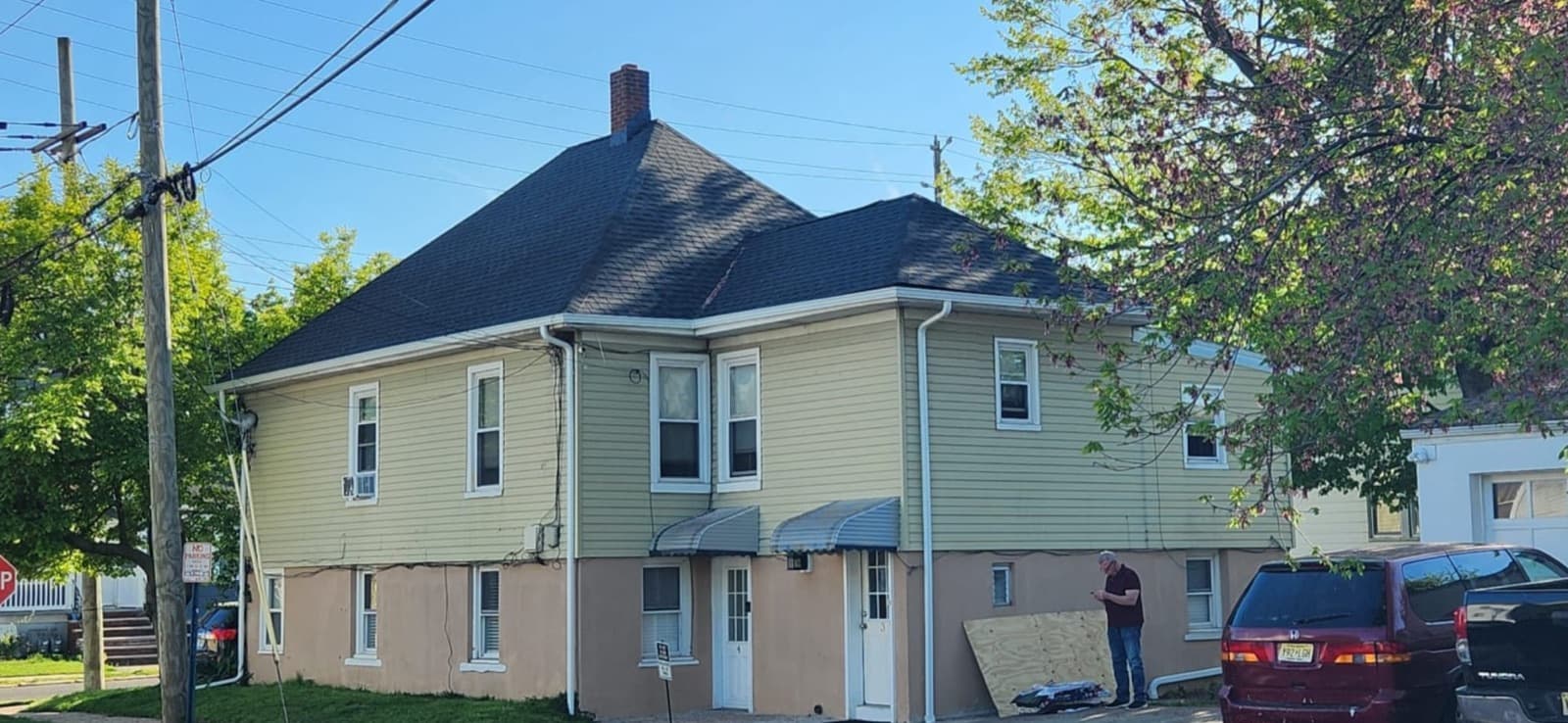
Roof Replacement & New Roof Installation in North NJ
Full tear-off asphalt roofing across New Jersey — built to New Jersey's 2024 IRC, with the ice-and-water shield, ventilation, and flashing done the way roofs actually last. Line-itemed quotes, no high-pressure pricing, NJ-registered.
A new roof is the biggest single repair most North Jersey homeowners ever buy, and it's the one where the gap between a good job and a bad one stays invisible for years — until a leak shows up on a bedroom ceiling. We install asphalt roofs across New Jersey the way the 2024 International Residential Code New Jersey adopted on August 17, 2026, together with the state's amendments at N.J.A.C. 5:23-3.21, says they have to be built, and we itemize the quote so you can see exactly what you're paying for.
We came to roofing from the water-intrusion side of the trade. Our crews spent years chasing leaks around windows, flashing, and wall transitions — so when we build a roof, the flashing, the ice-and-water shield, and the valleys get the same attention most companies save for the shingles they lead with. That's where roofs actually fail, and it's where we spend our time.
No high-pressure 'today only' number, no vague bundled total. You get a free on-site measurement, a line-itemed written quote, and a straight answer on tear-off versus overlay. Dollar figures live on our separate cost guide; this page is about how the roof gets built and why it lasts.
- Storm damage & insurance claims — When a carrier is paying for part of the roof, the documentation is most of the job.
- Roof replacement cost guide — The dollar figures this page deliberately leaves out — 2026 North Jersey market ranges to hold a bid up against.
- Ice dam removal — Why eaves grow a wall of ice here, what the membrane under the shingles is actually for, and how a dam gets cleared safely.
Recent work in New Jersey
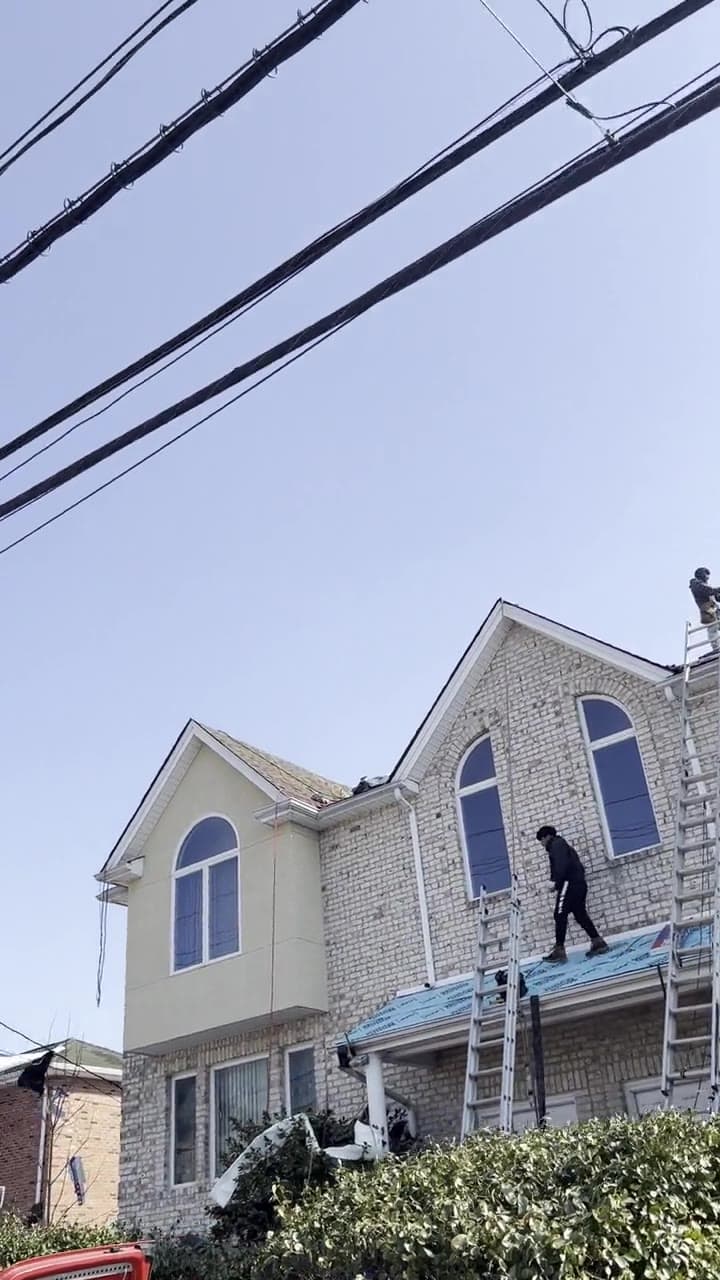
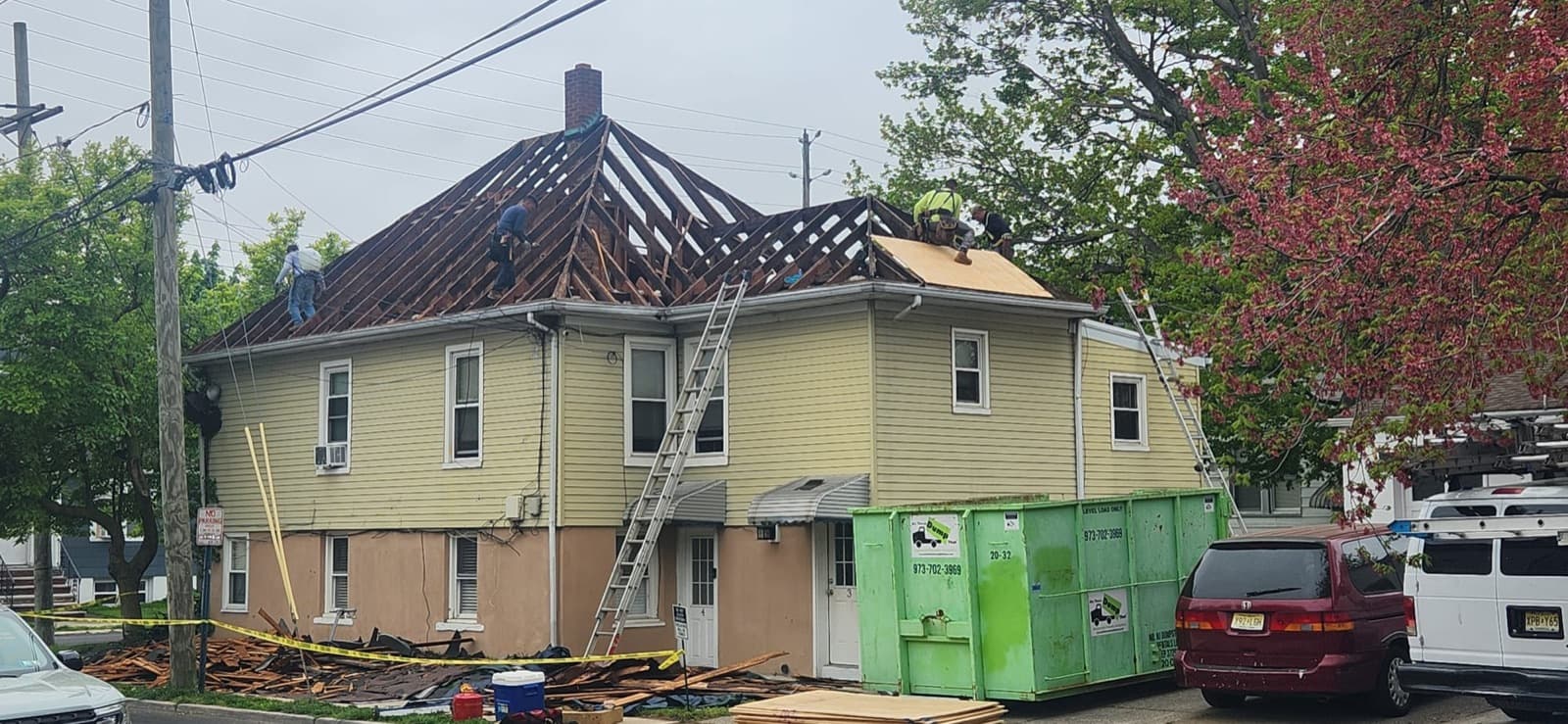
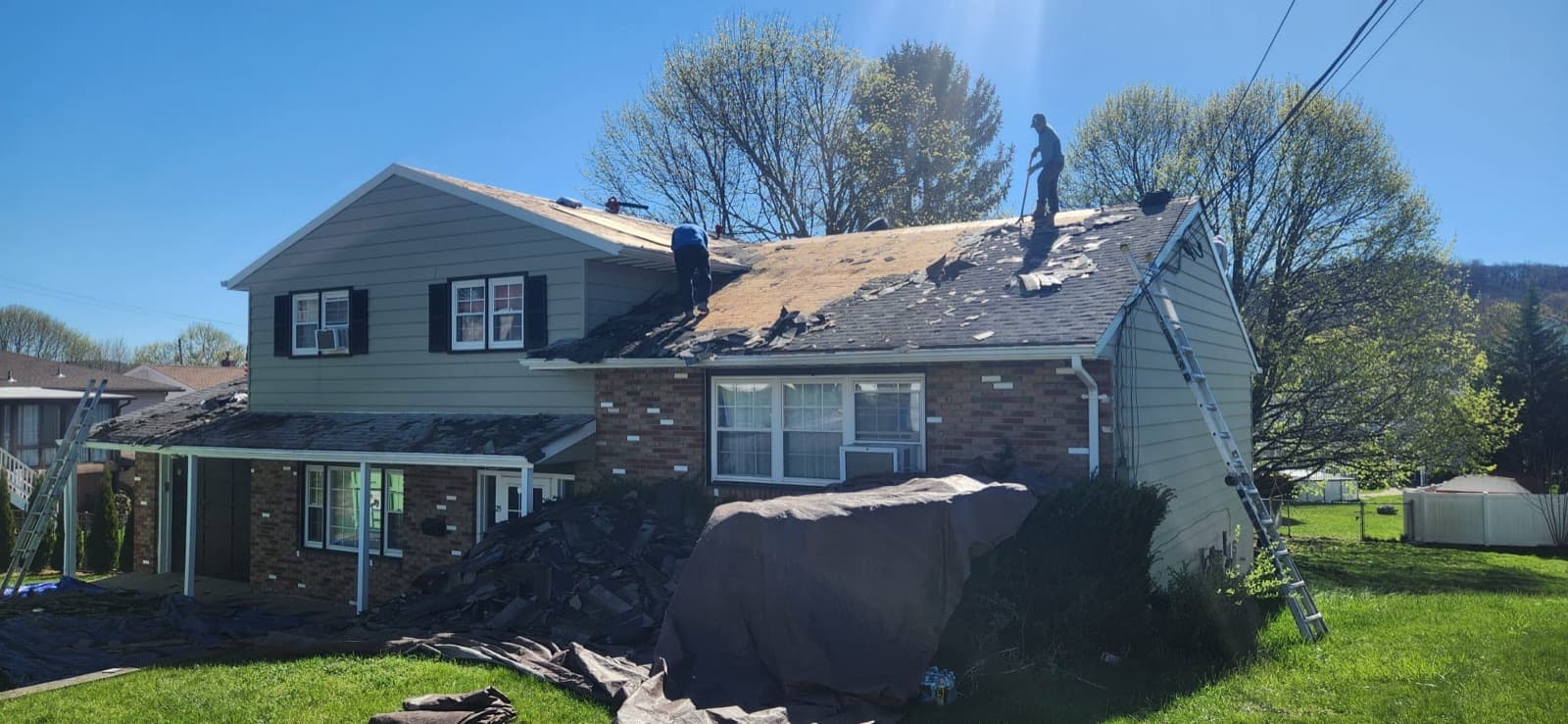
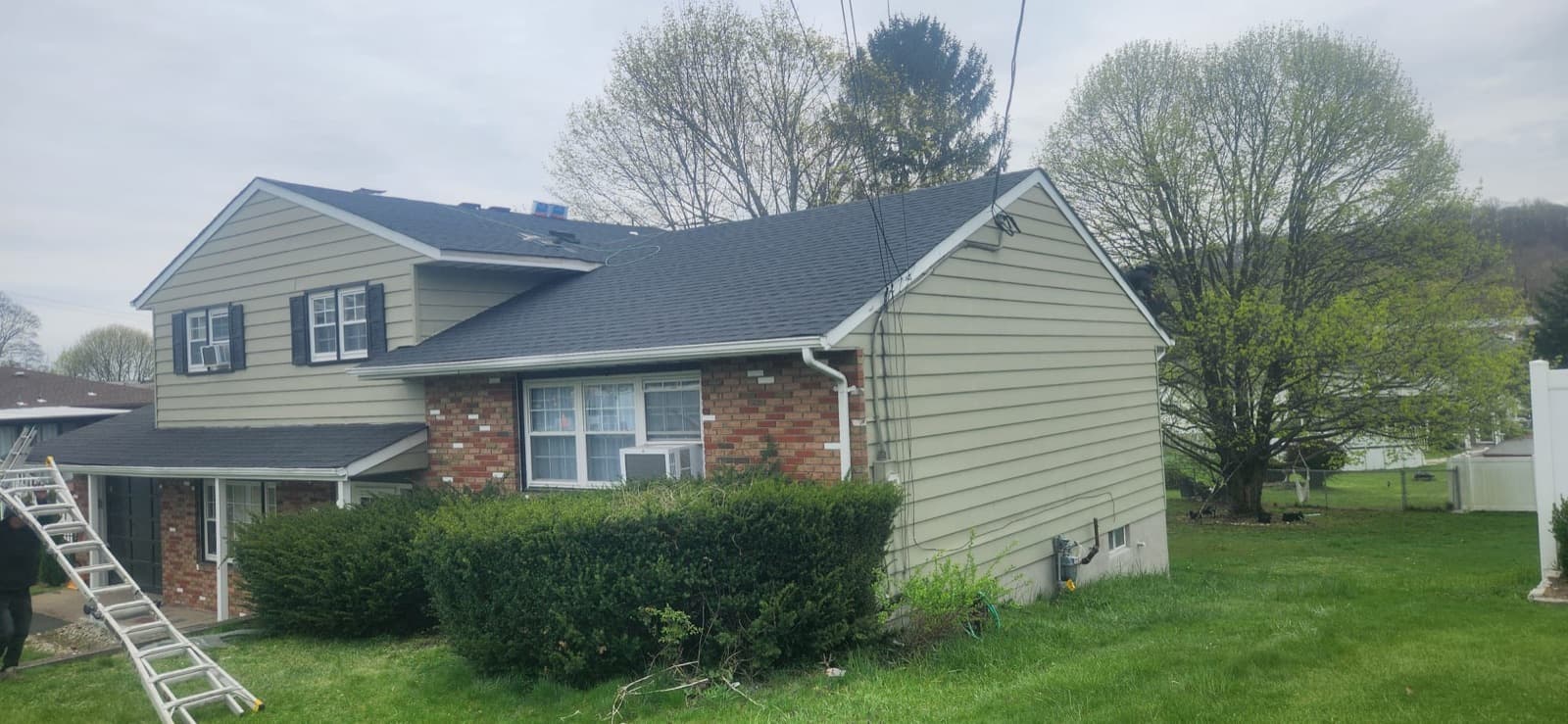
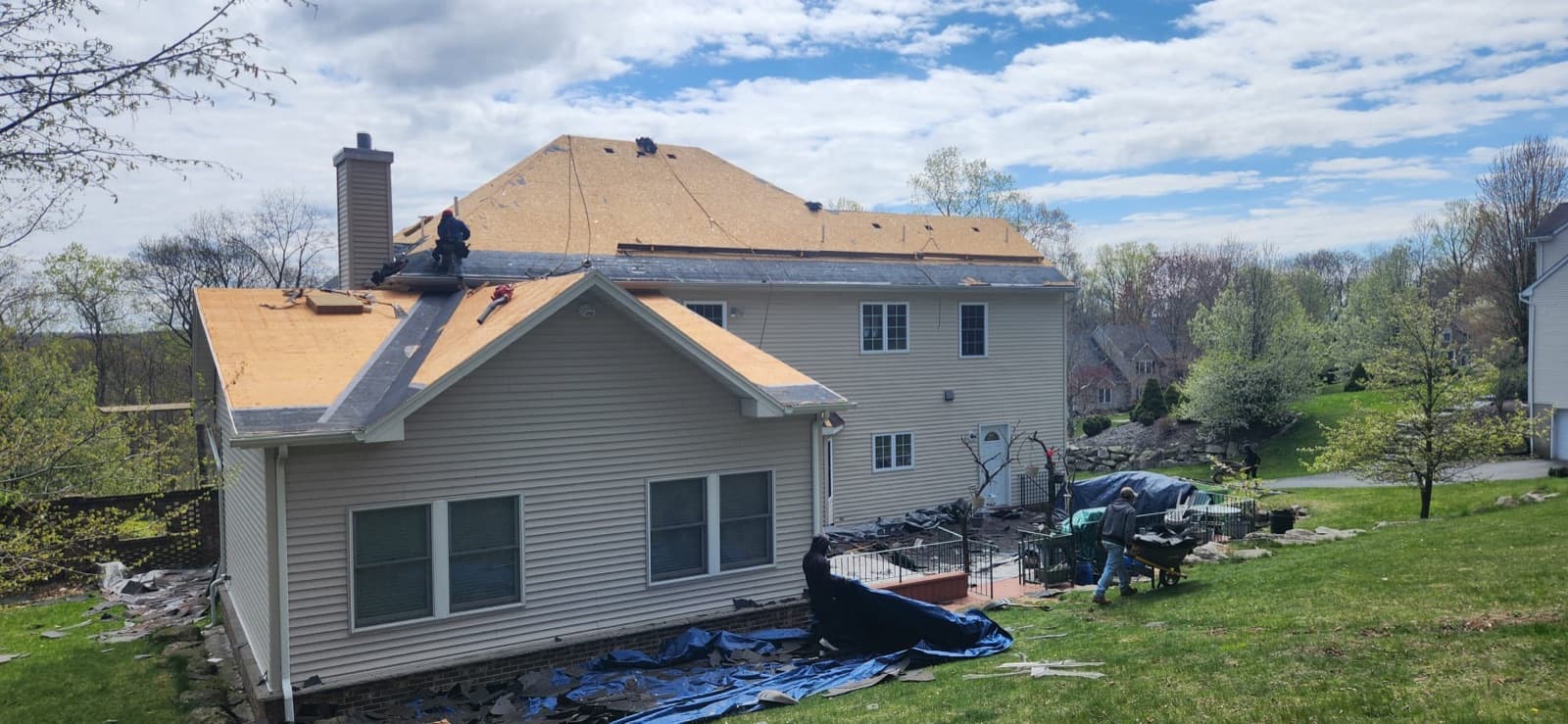
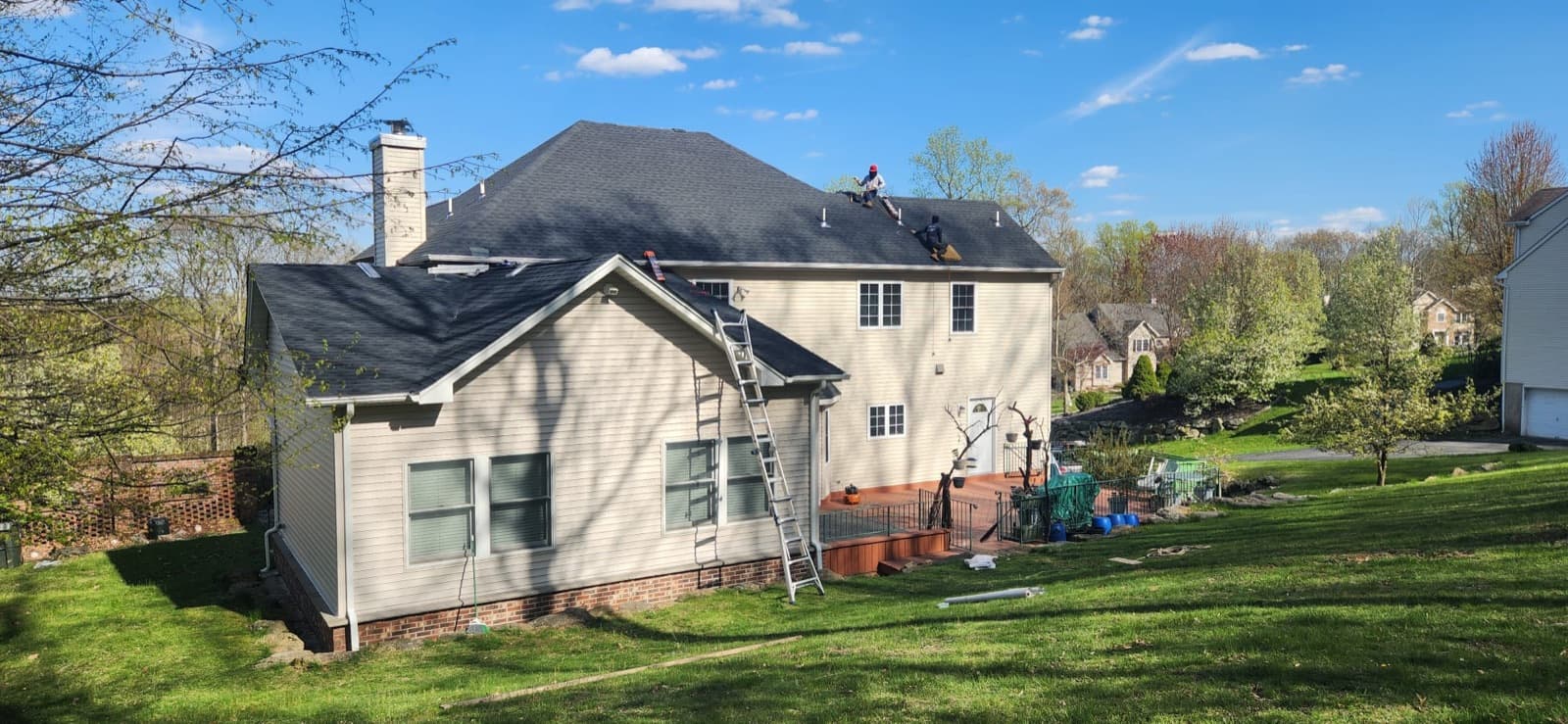
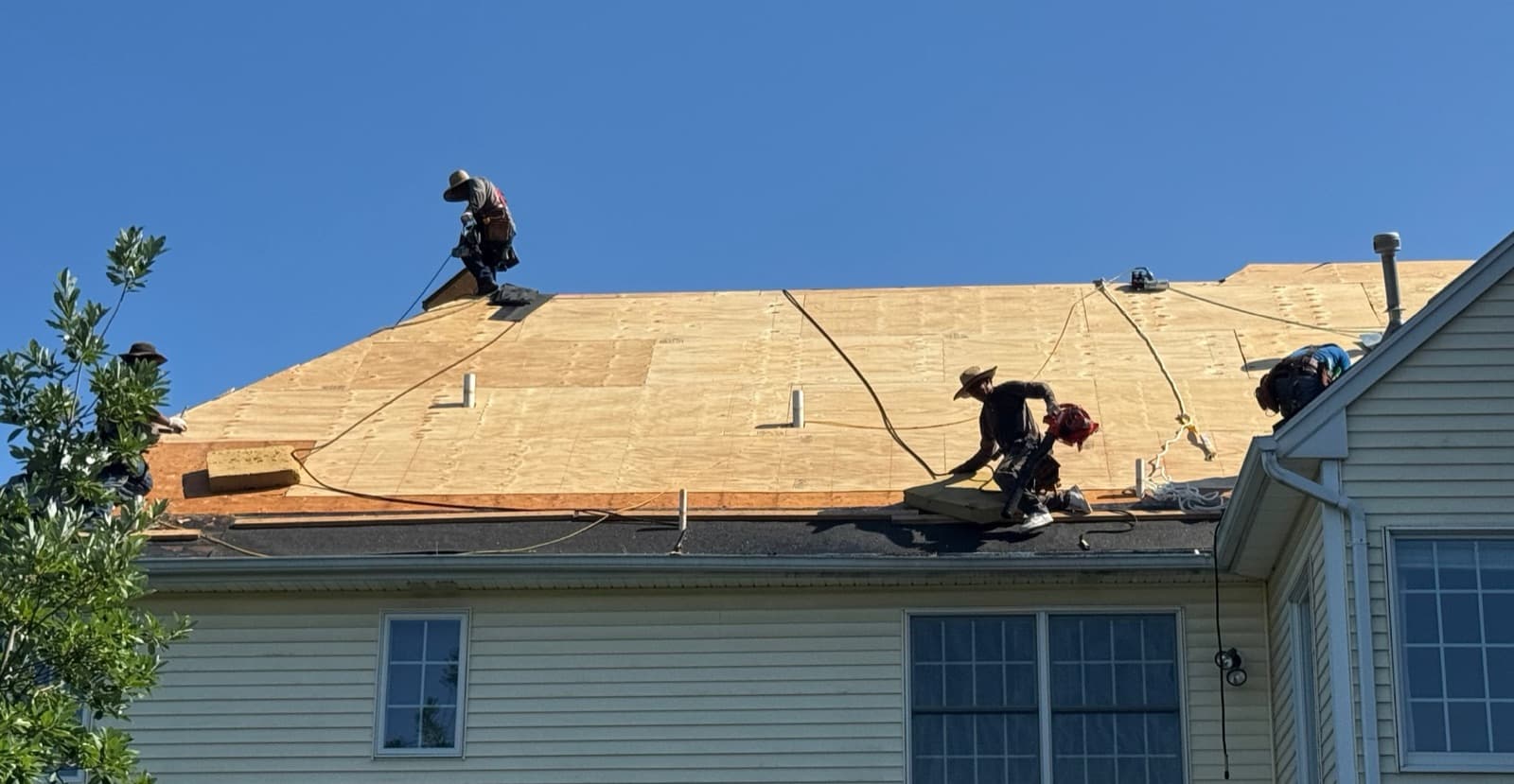
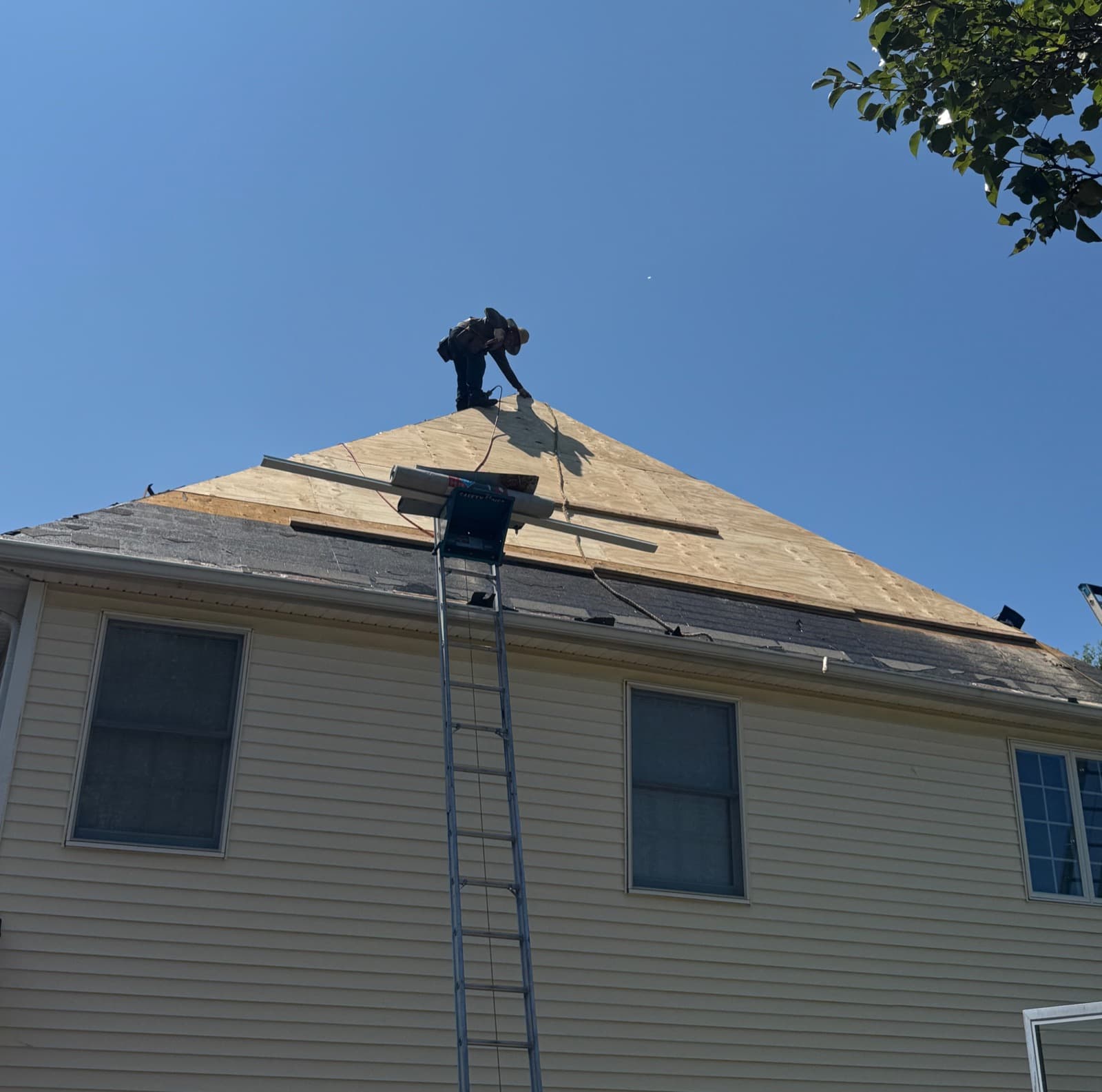
Why we almost always tear off
The cheapest way to put a roof on a house is to lay new shingles over the old ones. It's also, most of the time, the wrong call — and on a lot of North Jersey homes the code won't allow it. Under the NJ IRC (R908.4), you can't add a layer when the roof already carries two layers, when the deck or existing covering is water-soaked or deteriorated, or over slate, clay/cement tile, or asbestos-cement. Two layers total is the hard ceiling.
Even when an overlay is technically legal, it hides the two things that matter most: the condition of the wood deck underneath, and the flashing. A second layer buries deck rot instead of fixing it, traps heat that cooks the new shingles and shortens their life, and piles on roughly 200–250 lbs per square of dead weight — some 4,000–5,000 lbs on a typical 2,000-square-foot roof. We tear off to the bare deck, inspect and replace bad sheathing, and start the new assembly on a clean, sound surface. On the rare roof where an overlay genuinely makes sense, we'll say so — and show you exactly what you're giving up.
Architectural vs. 3-tab — and which one your roof wants
Two asphalt shingles cover almost every North Jersey roof. 3-tab is the old flat, single-layer shingle: lowest cost, a wind rating around 60–70 mph, and a real-world life of about 15–20 years. Architectural shingles (also called dimensional or laminate) are multi-layer and roughly 50% heavier per square, rated in the range of 110–130 mph for wind, with a 25–30 year life and warranties running up to limited-lifetime. Where hail or wind-blown debris is a concern, they're also available in impact-resistant lines tested to UL 2218 Class 4.
For a modest step up in price per square, architectural shingles are the sensible default for a Bergen or Passaic roof that sees nor'easters, summer downbursts, and the occasional hail — and they're what most manufacturers require to unlock their better warranty tiers. We'll still install 3-tab when a rental, a tight budget, or a low-visibility outbuilding calls for it. What we won't do is steer you toward the ticket that pays us more without walking you through the trade honestly.
Roof leaking right now? We answer 24/7.
The layers under the shingles — where NJ code lives
Shingles are the part you see; the roof is what's under them. New Jersey's 2024 IRC spells out an assembly most homeowners never hear about, and it's precisely where corners get cut on a cheap bid. On our quotes these show as separate line items so you can check them against any other estimate.
- Ice-and-water shield (R905.1.2): read this line closely on any bid you're comparing. DCA Bulletin 07-3 confines New Jersey's mandate to areas where the average daily temperature in January is 25°F or less — in this state, Sussex County — so outside Sussex nothing compels the barrier on a New Jersey roof, and a cheap bid can leave it off and still meet the code. We spec it on every install: a self-adhering barrier, or the code alternative of two cemented layers of underlayment, carried at least 24 inches inside the exterior wall line rather than a token strip along the roof edge, plus valleys and penetrations.
- Underlayment (R905.1.1): Code-grade means ASTM D226 Type II felt or an approved synthetic — not the bargain 15-lb felt that shows up on the cheapest jobs. On low slopes between 2:12 and 4:12, code requires doubled underlayment; asphalt shingles can't legally go below 2:12 at all.
- Drip edge (R905.2.8.5): Required at both eaves and rakes, lapped at least 2 inches and fastened every 12 inches — with the underlayment over it at the eave and under it at the rake. It's one of the most-skipped details on a fast job, and skipping it is why fascia boards and sheathing edges rot out early.
Intake and exhaust, actually balanced
A roof breathes or it bakes. NJ code (R806.2) requires a minimum of 1 square foot of net free vent area for every 150 square feet of attic — halved to 1/300 when intake and exhaust are properly balanced, with 40–50% of the venting up high within three feet of the ridge and the rest as low soffit intake. In plain terms: air has to come in at the soffits and leave at the ridge.
The most common ventilation failure we find isn't a missing ridge vent — it's blocked soffits, painted shut or stuffed with insulation, so the ridge vent has nothing to pull. That traps heat and moisture, cooks the shingles from below, shortens their life, and quietly voids the manufacturer's warranty. On every replacement we clear the intake, install continuous ridge venting where the roof geometry allows, and make sure the two work as a pair rather than fighting each other.
Roof leaking right now? We answer 24/7.
Where roofs actually leak
Here's the number that drives how we build: the large majority of roof leaks — the widely-cited industry figure is around 90% — start at flashing, penetrations, and transitions, not out in the open shingle field. That's the direct crossover from our window and water-intrusion work, and it's the part of the roof we won't rush to hit a number.
- Chimneys need step flashing woven into each shingle course, counter (reglet) flashing cut into the masonry, and a cricket or saddle on the up-slope side of anything wider than about 30 inches — three separate details, each of which can fail on its own.
- Pipe and vent boots fail when the neoprene collar cracks from UV — a couple-dollar part that ends in a ceiling stain. We set longer-life boots and check every one.
- Valleys carry the most water on the roof, so they get full ice-and-water underlayment and a proper metal or woven detail — not a smear of roof cement that lasts a season.
- Step flashing at walls and dormers gets replaced, never reused. Reused flashing is a leak waiting for the first driving rain.
What a tear-off actually looks like
Most single-family roofs are a one- to two-day job. We protect the landscaping and siding, tarp the ground, and tear off to the bare deck. Then we inspect the sheathing and replace any soft or rotted panels — noted and priced before we cover them, never sprung on you as a surprise add-on — lay the ice-and-water shield and underlayment, set the drip edge and new flashing, install the shingles from the eaves up, cap the ridge with venting, and run a magnet sweep across the whole property for stray nails.
You get a clean site at the end of each day and a walk-through at the finish. When the job needs a permit, we pull it under our registration (HIC reg.# 13VH13970900) and coordinate the municipal inspection, so you don't file anything with your town yourself.
Roof leaking right now? We answer 24/7.
Two warranties, one honest number
Every new roof carries two separate warranties, and homeowners routinely confuse them. The manufacturer's shingle warranty covers defects in the product — but it only stands if the roof was installed to spec, with balanced ventilation and code-grade underlayment, which is exactly why the details above aren't optional. Our workmanship warranty runs ten years and transfers with the house — it covers the installation itself: the flashing, the fasteners, the seams and transitions we're responsible for. Two warranties sit on a roof and they fail differently: the manufacturer's covers the shingle, ours covers the hands that put it on, and the second one is the one that actually gets called.
On price, we do the opposite of the 'sign today' roofing playbook. You get a free on-site measurement and a line-itemed written quote — tear-off, deck-repair allowance, underlayment, ice-and-water, flashing, shingles, ventilation, disposal, and any permit each shown on its own line — so you can compare it against any other bid item by item. What drives the number is real and knowable (see the factors below). For North NJ market ranges, read our roof replacement cost guide, then get measured for an actual figure on your roof.
What affects the cost
| Roof size and pitch | Roofing is priced by the square (100 sq ft). A steep pitch slows the crew and needs more fall protection, so it costs more per square than a walkable roof of the same size. |
|---|---|
| Tear-off vs. existing layers | Removing and disposing of one layer versus two changes both labor and dump fees. A legal overlay is cheaper up front but usually the wrong long-term call. |
| Shingle grade | 3-tab, architectural, and designer/impact-rated lines step up in material cost — and in wind rating, lifespan, and warranty length along with it. |
| Deck condition | Rotted or delaminated sheathing found at tear-off has to be replaced by the sheet. We price the allowance up front so it's never a surprise mid-job. |
| Roof complexity | Valleys, dormers, chimneys, skylights, and multiple pipe penetrations all mean more flashing and cut-in labor than a simple gable roof. |
| Access and stories | A three-story or tightly-sited home needs more staging, ladders, and hauling than a ranch a dump trailer can pull right up to. |
| Ventilation and flashing upgrades | Adding proper ridge and soffit ventilation, or rebuilding chimney flashing and crickets, adds material and skilled labor — but it's what prevents the premature failures that void warranties. |
We don't bundle a mystery number — you get a firm, free on-site quote, approved before any work starts.
Monthly payment options
We work with Hearth, which shops several lenders on a single application. See your personalized options in minutes — checking does not affect your credit score, and there is no commitment.
- Loan amounts up to $250,000
- Funding in as little as 1–3 days
- No prepayment penalties
- No home equity required
Financing is provided by Hearth's lending partners, not by Precision Windows & Roofing. Rates and terms depend on your credit and the lender making the offer, and all financing is subject to credit approval.
Common questions
Do I need a full tear-off, or can you just roof over my old shingles?
Often you legally can't overlay: NJ code (R908.4) bars a new layer when the roof already has two layers or the deck is deteriorated, and caps you at two layers total. Even when an overlay is allowed, it hides deck rot and old flashing, traps heat that shortens the new shingles' life, and adds thousands of pounds of dead weight. We almost always recommend tearing off to the deck — and if an overlay truly makes sense for your roof, we'll tell you and show you the trade-off.
Architectural or 3-tab shingles for a North NJ roof?
For most homes here, architectural. They're rated far higher for wind (roughly 110–130 mph vs. 60–70 for 3-tab), last about 25–30 years instead of 15–20, come in impact-resistant (UL 2218 Class 4) options, and unlock the stronger manufacturer warranties. 3-tab still has a place on rentals, tight budgets, and low-visibility outbuildings — we'll lay out the honest cost-versus-life math for your specific roof rather than defaulting you to one.
Is ice-and-water shield really required in New Jersey?
In one county, strictly speaking — and the citation chain matters, because nearly every contractor gets it wrong. The model text of IRC R905.1.2 names no temperature; it keys the barrier to a history of ice forming along the eaves. The 25°F figure is New Jersey's, added in adoption: under N.J.A.C. 5:23-3.21, DCA Bulletin 07-3 settles the question in two sentences — the barrier is required where the average daily temperature in January is 25°F or less, and for the State of New Jersey that area is Sussex County. (Detached accessory structures with no conditioned floor area are exempt regardless of location.) That is statewide and unambiguous: no inspector in Bergen or Passaic can require it of anyone, and no town can add it back. We install it on every roof we replace regardless, because 'not required' and 'not needed' are different sentences. Eaves ice up here, and when meltwater backs up under the shingles that membrane is the only thing between it and your sheathing. Our ice-dam page walks through how far up the roof it has to run and why.
How long does a roof replacement take?
Most single-family asphalt roofs are a one- to two-day job — tear-off, deck inspection and any repairs, underlayment and ice-and-water, flashing, shingles, ridge venting, and a full magnet sweep for nails. Larger or more complex roofs with lots of valleys, dormers, and chimneys take longer. We give you a realistic schedule with the quote, and we leave the site clean at the end of each day.
My roof was damaged in a storm — can you help with the insurance claim?
When damage comes from a sudden covered event — a windstorm, a fallen limb, hail — that's typically an insurance matter, and we help by documenting it thoroughly: dated photos, a measured report, and an itemized scope your adjuster can actually work from. We can't promise a carrier will approve a claim, and we won't push you to file one you don't have. But when there's real storm damage, solid documentation is what gets it evaluated fairly. See our storm-damage and insurance-claim page for how the process works.
Do you pull the permit, and does a new roof need one?
We pull it whenever one is required — but one is not always required. On a detached one- or two-family home a covering-only replacement is ordinary maintenance under N.J.A.C. 5:23-2.7(c)1x, with no permit, inspection or notice. Go past the covering into decking or framing, or work on anything that is not a detached one- or two-family, and it becomes permitted work. Where it does, we file directly under our registration (HIC reg.# 13VH13970900) and coordinate the municipal inspection — you don't file or pay the town separately. Working permitted and inspected also protects your manufacturer warranty and your home's record at resale.
Explore
Get your free roofing quote
Free, no-obligation on-site assessment anywhere in New Jersey — and we answer the phone 24/7.