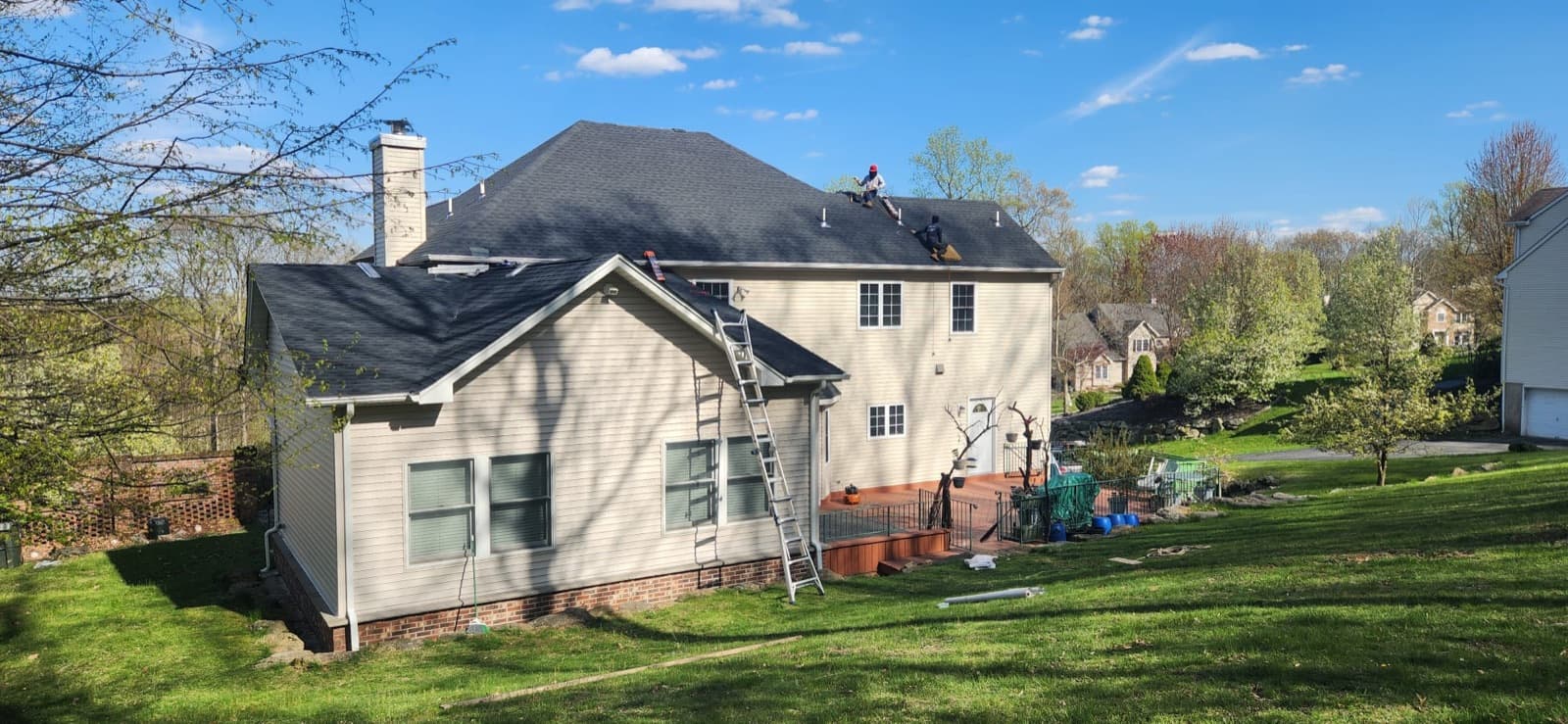
North New Jersey Roofing Contractor — Roofing, Gutters & Siding
The full exterior envelope — roof replacement, leak and flashing repair, gutters, and siding — across New Jersey. Dispatched from our Garfield shop with 24/7 emergency response, built to IRC-2021 code, quoted line-item so you can actually compare it. NJ-registered.
Precision Windows & Roofing built its name on one job: stopping water where it tries to get into a North Jersey home. For years that meant flashing, glass seals, and the openings around windows and doors. A roof is the same fight at full scale — so we now run a complete exterior line out of the same Garfield shop: roofing, gutters, siding, and leak repair, for the same New Jersey homes we've serviced for years.
Three things set us apart from the usual roofing contractor pitch. We quote line-item instead of one bundled number, so you see the shingle, the underlayment, the ice-and-water shield, the flashing, and the labor as separate, comparable lines. We handle storm and insurance-claim documentation straight — thorough paperwork and honest expectations, with no promise of an outcome that's the adjuster's call, not ours. And because leaks are our origin story, flashing is where we're sharpest: the valleys, wall joints, and penetrations where the large majority of roof leaks actually begin.
This page is the map to all of it — every service, what it covers, and the North Jersey code and climate reality behind the work. Not sure what you need? Call (201) 275-9185. We diagnose over the phone and quote on-site, free, before any work starts.
Recent work in New Jersey
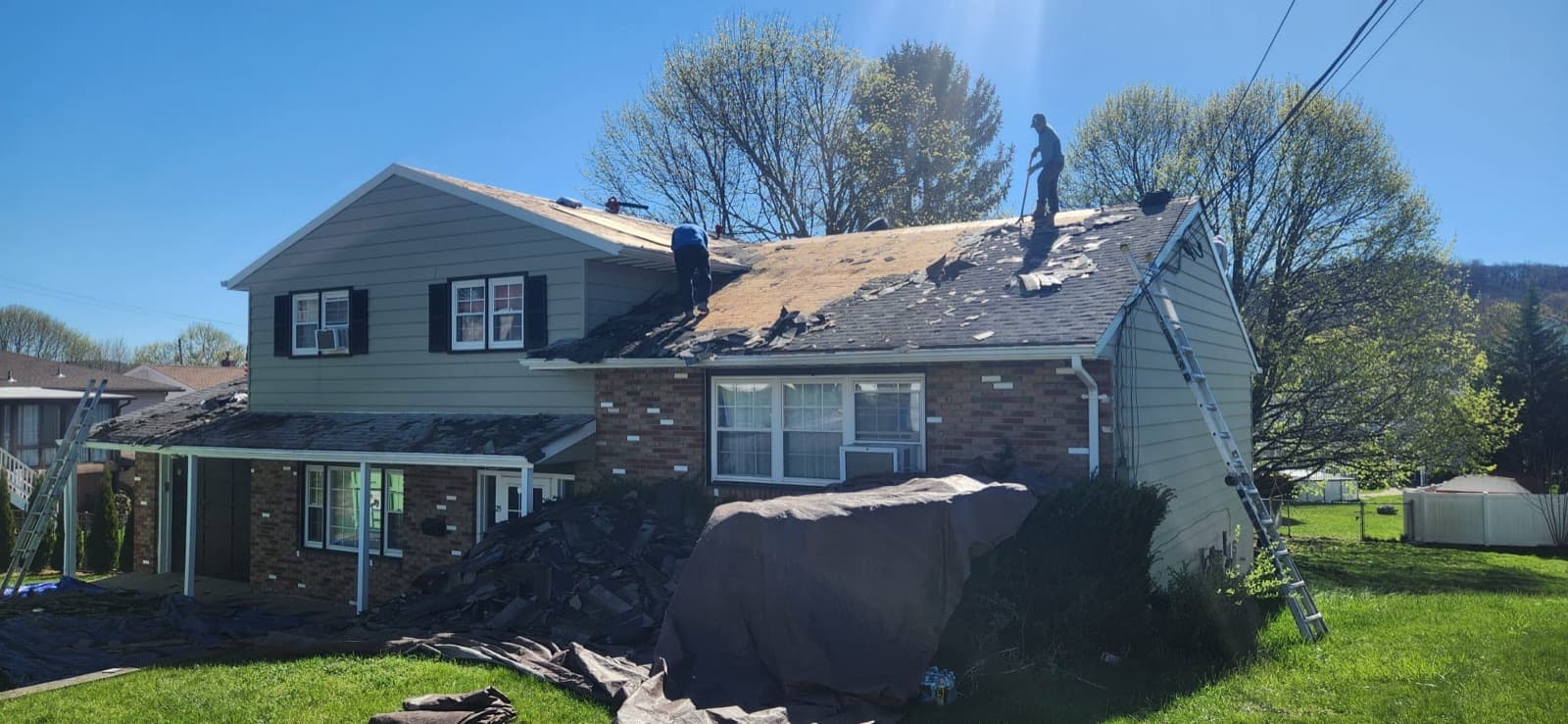
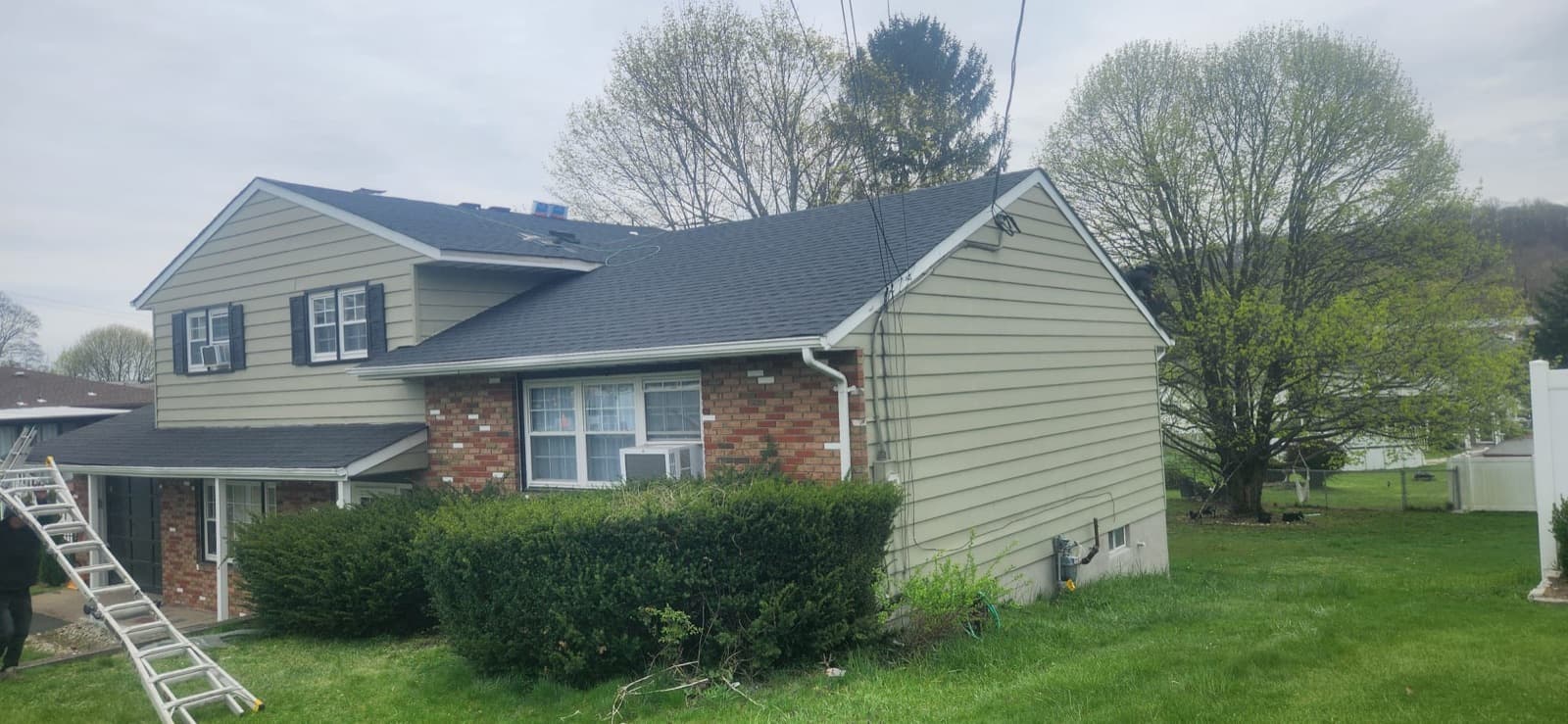
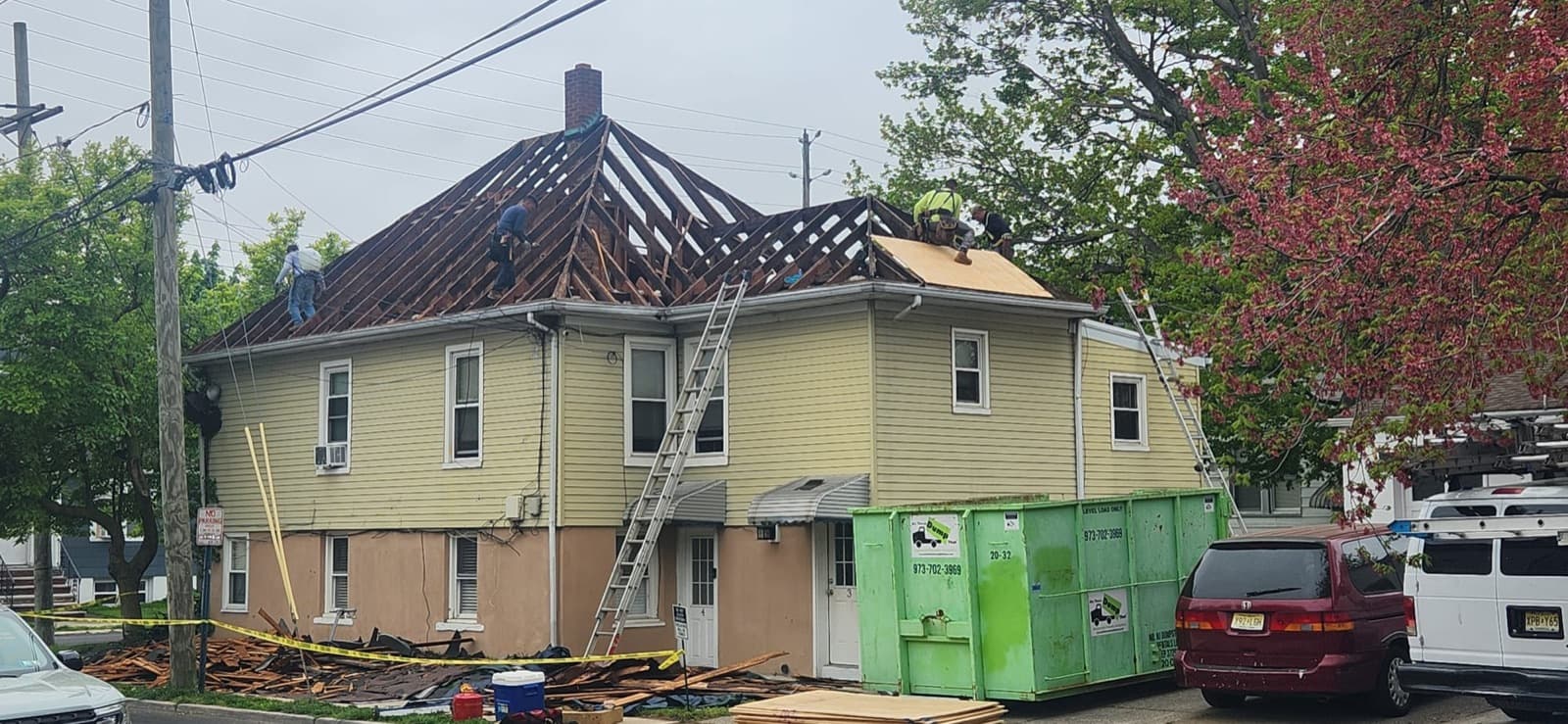
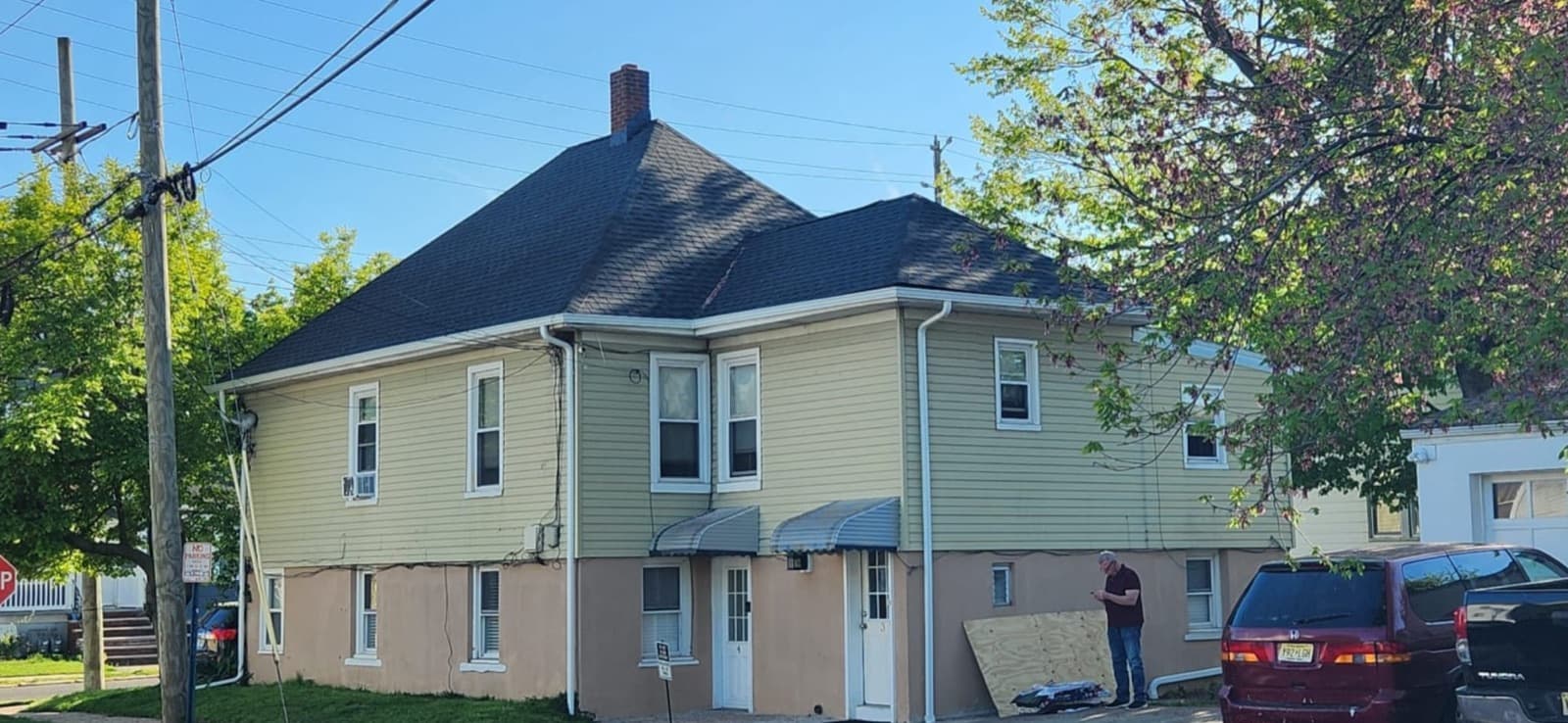
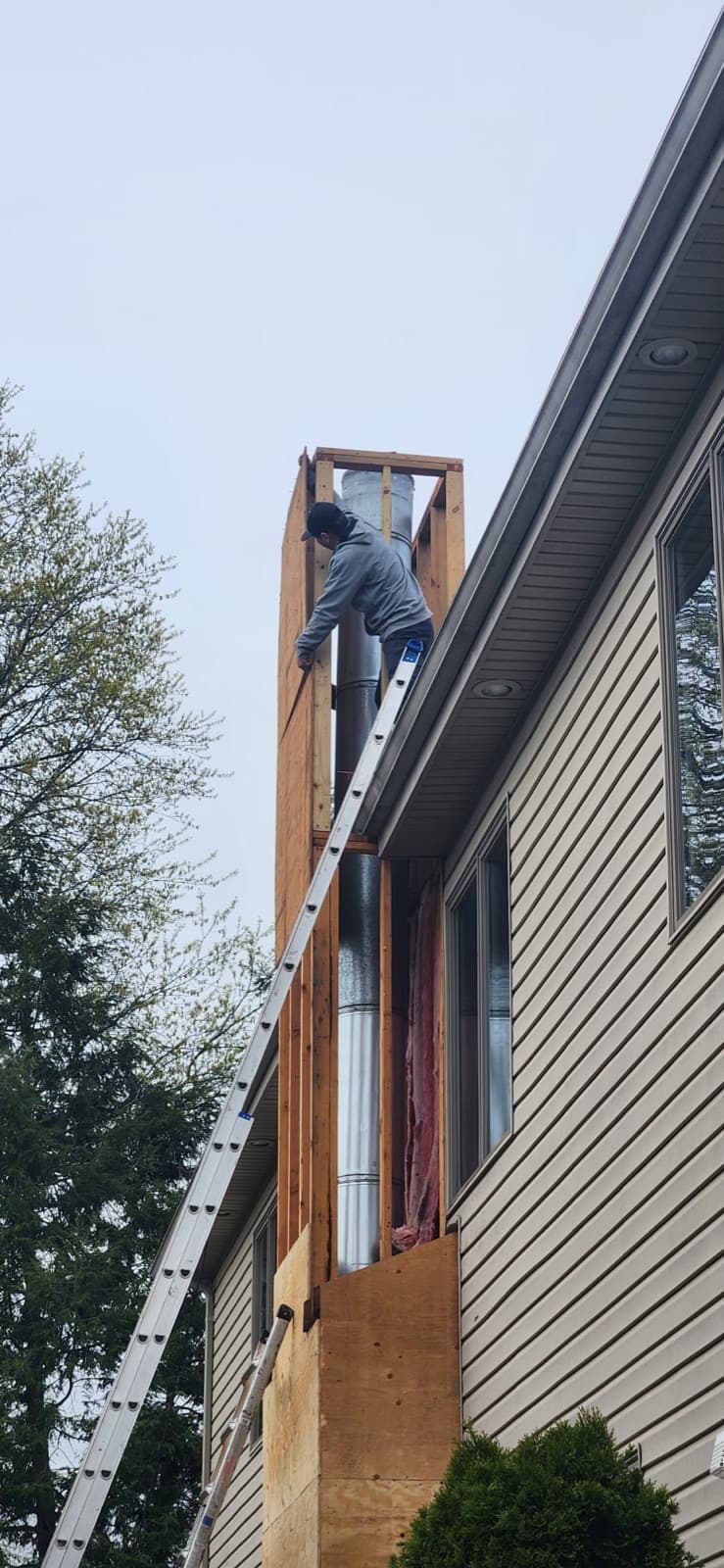
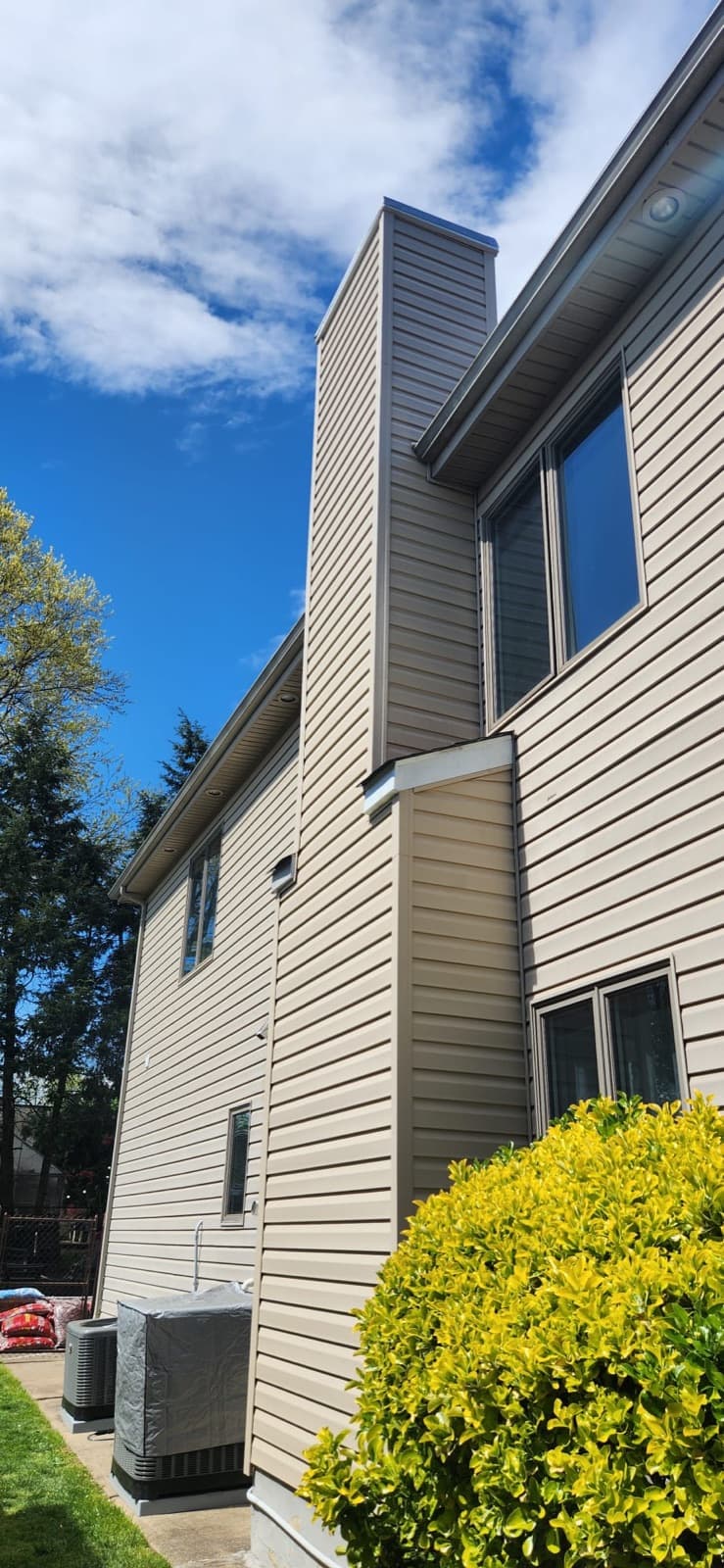
Roofing, gutters, siding, and leaks — one crew
Most homeowners who call about the roof end up needing more than shingles. Water that got past a failed flashing has usually stained a soffit, overrun a rusted gutter, and started working on the siding below. Running the whole exterior envelope in-house means we fix the cause and everything it touched on one project, one contract, one accountable crew — not three subcontractors pointing fingers at each other.
- Roof replacement — full tear-off and re-roof in architectural, 3-tab, or designer shingle, built to IRC-2021 code with new underlayment, drip edge, and flashing, plus the eave ice barrier we spec as standard.
- Roof repair — targeted fixes for wind-lifted or missing shingles, popped nails, cracked boots, and worn flashing before a small failure becomes a deck problem.
- Roof leak repair — our core strength: source-tracing an active leak back to the flashing or penetration it's really coming from.
- Gutters & downspouts — seamless aluminum gutters, guards, and correct downspout runoff, sized and pitched so the roof actually drains.
- Siding — vinyl, fiber-cement, and insulated siding, plus the wall flashing and house-wrap details that keep water out where roof meets wall.
- Storm damage & insurance — inspection, documentation, and honest claim support after wind, hail, or a nor'easter.
Where the large majority of leaks actually start
A roof rarely leaks through the open field of shingles — that's the part engineered to shed water. Leaks come from the interruptions: the chimney, the valleys where two roof planes meet, the step flashing along a dormer or wall, the plastic boots around plumbing vents, and the skylight curbs. Industry data attributes the large majority of roof leaks to flashing failures rather than the shingles themselves, which is exactly why re-shingling over bad flashing keeps leaking.
This is the same problem we've solved on windows for years — water finding the seam where two materials meet — just moved up to the roofline. We trace the leak to its true entry point instead of caulking the nearest stain, then rebuild the detail properly: new step flashing woven into the courses, a real chimney counter-flashing cut into the mortar, fresh vent boots, and sealed valleys. If the deck under the leak is soft, we open it, dry it, and replace the sheathing rather than roof over rot.
Roof leaking right now? We answer 24/7.
Storm damage and the claim, handled straight
North Jersey takes nor'easters, the remnants of tropical systems, and the occasional hail event, and wind is the usual culprit — lifted or creased shingles, torn ridge caps, and flashing peeled back by a gust. A lot of that damage isn't visible from the ground, so after a storm we do a full inspection and photograph what we find, whether or not it turns into a claim.
When it is a claim, we document the damage the way an adjuster needs to see it — dated photos, a measured scope, and a written summary — and we'll meet the adjuster on-site. What we won't do is promise your claim will be approved or tell you we can 'make insurance pay.' Coverage and approval are the carrier's decision, driven by your policy and the cause of loss; our job is to give you and the adjuster an accurate, well-documented picture so the process is fair. We say that plainly up front, because the contractors who guarantee approvals are the ones to be wary of.
A line-item quote, not a mystery number
The roofing industry runs on the round, bundled bid — one big number with nothing itemized, so you can't tell what you're actually paying for or compare two quotes honestly. We don't work that way. Every roof is measured on-site and quoted in squares, with the shingle, underlayment, ice-and-water shield, flashing, ridge vent, tear-off and disposal, and labor broken out as separate lines.
That means you can see exactly where the money goes — and where a cheaper bid quietly skipped the ice barrier or reused old flashing to hit a lower number. We publish real 2026 North NJ cost ranges on our roof-cost guide so you can sanity-check any estimate before you sign, but a range is not a quote: the only honest price is the one measured on your roof, and that measurement is always free.
Roof leaking right now? We answer 24/7.
Ice barrier, drip edge, and the layer rule
New Jersey builds residential roofs to the IRC 2024 (Chapter 9), adopted and amended at N.J.A.C. 5:23-3.21 — and one detail here gets misstated constantly. Contractors sell the eave ice barrier as a statewide mandate. It isn't one, and the citation chain is where almost everyone gets it wrong. The model text of R905.1.2 doesn't name a temperature at all; it conditions the barrier on a history of ice forming along the eaves. The number comes from New Jersey's own adoption: DCA Bulletin 07-3, issued under N.J.A.C. 5:23-3.21, sets the trigger at an average daily January temperature of 25°F or less and names the single area of the state that meets it — Sussex County. Every New Jersey county except Sussex sits outside the requirement entirely. We run the membrane anyway, on every roof we build — at the eaves, into the valleys, and around every penetration — because the trigger is a temperature table and the failure is a wet ceiling. Eaves ice up here every hard winter, and that membrane is what stops meltwater from being driven back up under the shingles. Skipping it is one of the most common corners cut on a bargain North Jersey roof, and it is perfectly legal to skip.
Drip edge is required at the eaves and rakes; proper attic ventilation — a balanced ridge-and-soffit system — is required to keep the deck dry and the shingles from cooking; and for wind, architectural shingles rated around 110–130 mph are the practical default here given nor'easter exposure, versus roughly 60–70 mph for flat 3-tab. Code also caps a roof at two layers of covering — a third means a mandatory full tear-off to the deck, no overlay allowed.
When a North NJ re-roof needs a permit
Since a 2018 update to the NJ Uniform Construction Code, replacing just the roof covering on a detached one- or two-family home is classified as 'ordinary maintenance' — generally no construction permit and no inspection required. That's genuinely simpler for most suburban re-roofs, though the exemption covers the covering only and never waives code compliance.
The moment the job touches structure — replacing rotted decking, sistering a rafter, any framing — a permit is back in play — N.J.A.C. 5:23-2.7(b)4 keeps any work affecting structural or fire safety outside ordinary maintenance. What a town cannot do is add a permit to work the state has already classified as ordinary maintenance: N.J.A.C. 5:23-2.7(c) says those items "shall be treated as such by every enforcing agency." That comes up far more in the older housing stock of Clifton, Passaic, Paterson, and Haledon, where original board decking often has to be replaced, than on a newer Wayne or Franklin Lakes home. We tell you which category your roof falls in before we start, and we pull the permit under our registration when one is needed.
Roof leaking right now? We answer 24/7.
HIC reg.# 13VH13970900 — and what it guarantees
Any contractor making or selling home improvements in New Jersey must register with the Division of Consumer Affairs, and that registration number — ours is HIC reg.# 13VH13970900 — has to appear on every contract, estimate, and ad; any home-improvement contract of $500 or more must also be put in writing. The registration isn't decoration: to hold it, a contractor must carry commercial general liability insurance of at least $500,000 per occurrence from a New Jersey-authorized carrier. We also carry workers' compensation coverage for our crews.
So when our crew is on your roof, you're covered — for the property and for the workers — and you're contracting with a registered business, not a truck-and-a-ladder outfit that vanishes when the first leak comes back. We're happy to hand you the certificate of insurance before we start.
What affects the cost
| Roof size and pitch | Roofs are priced by the square (100 sq ft); a steep pitch needs staging and slows the crew, both of which add labor. |
|---|---|
| Shingle grade | 3-tab, architectural, and luxury/designer shingles differ sharply in wind rating and lifespan — and in price per square. |
| Tear-off vs. overlay | Code caps a roof at two layers, so an existing two-layer roof forces a full tear-off plus disposal rather than an overlay. |
| Decking condition | Soft or rotted plywood or board sheathing found during tear-off adds material and can pull a permit into the job. |
| Flashing and penetrations | Chimneys, skylights, valleys, and vent boots each need new flashing; the more penetrations, the more skilled labor. |
| Ice barrier and ventilation | A self-adhering ice-and-water shield at the eaves, which we spec as standard, plus a balanced ridge-and-soffit vent system. |
| Layers and disposal | Dumpster and landfill fees scale with how many layers of old roofing have to come off. |
| Access and staging | High or steep roofs, tight lots, and gated or managed buildings all affect how the crew stages the work. |
We don't bundle a mystery number — you get a firm, free on-site quote, approved before any work starts.
Monthly payment options
We work with Hearth, which shops several lenders on a single application. See your personalized options in minutes — checking does not affect your credit score, and there is no commitment.
- Loan amounts up to $250,000
- Funding in as little as 1–3 days
- No prepayment penalties
- No home equity required
Financing is provided by Hearth's lending partners, not by Precision Windows & Roofing. Rates and terms depend on your credit and the lender making the offer, and all financing is subject to credit approval.
Common questions
Is this a windows company dabbling in roofing?
Fair question. Precision is a registered New Jersey home-improvement contractor whose specialty has always been water intrusion — stopping leaks at flashing, seals, and openings. Roofing is a direct extension of that, run by a dedicated roofing crew, not a side hustle. If anything, coming at roofs from a leak-and-flashing background makes us better at the part of roofing that actually fails: the flashing details, not the field of shingles.
What parts of New Jersey do you cover, and how fast?
It depends on which kind of call it is, and we'd rather be straight about that than promise the same turnaround for everything. A genuine emergency — a roof open to the weather, water actively coming into the house, storm damage, an ice dam running — is dispatched around the clock across New Jersey from our Garfield shop, and the first job is stopping the loss. Everything else gets looked at fast, usually within a few days, and then scheduled for conditions that let the work be done properly: flashing has to be woven into dry courses and shingles need a workable deck to seal. Full replacements and siding book on scheduled dates, statewide.
Do I need a permit to replace my roof in New Jersey?
Usually not, if it's just the covering on a DETACHED one- or two-family home. N.J.A.C. 5:23-2.7(c)1x uses that word, and it does the work: an attached row home or a three-family is outside the exemption from the start. Two limits, not one. The exemption is for the covering only, so the moment we replace decking or touch framing, 5:23-2.7(b)4 puts the job back under permit. Within those limits the answer is not a town-by-town question — 5:23-2.7(c) directs that these items "shall be treated as such by every enforcing agency." We check which side of those limits your roof falls on and pull the permit under our state registration when one applies.
My roof leaks but the shingles look fine — how?
That's the norm, not the exception. The shingle field is built to shed water; leaks come from the flashing around chimneys, skylights, valleys, wall joints, and plumbing-vent boots — the large majority of roof leaks trace back there. It's exactly why re-shingling over failed flashing keeps leaking. We trace the water to its real entry point and rebuild that detail properly.
Can you help with my insurance claim after storm damage?
Yes — we inspect, photograph, and document the damage the way an adjuster needs it, and we'll meet your adjuster on-site. What we won't do is promise your claim will be approved or claim we can 'get insurance to pay.' That's the carrier's decision, based on your policy and the cause of loss. Our role is accurate documentation so the process is fair — and be cautious of any roofer who guarantees an approval.
How many layers of shingles can I have before a full tear-off?
Two, maximum. New Jersey code bars a roof re-cover where two or more layers already exist, so a third roof requires a full tear-off down to the deck — no overlay allowed. Overlays are also prohibited where the existing roof is water-soaked or deteriorated. We'll tell you honestly whether your roof can take a repair, an overlay, or needs a tear-off.
Are you registered and insured?
Yes. We're a registered New Jersey Home Improvement Contractor, HIC reg.# 13VH13970900 — which by law requires at least $500,000 in commercial general liability coverage from a New Jersey-authorized carrier. We also carry workers' compensation for our crews. That number appears on every quote and contract, and we'll provide our certificate of insurance before work begins.
Explore
Get your free roofing quote
Free, no-obligation on-site assessment anywhere in New Jersey — and we answer the phone 24/7.