Roofing, Gutters & Siding in Passaic County, NJ
Roof replacement, leak and flashing repair, gutters, siding, and chimney work across Passaic County — the old plank-decked roofs of Paterson, Clifton, and Haledon, the flood-corridor homes of Wayne and Little Falls, and the wooded Highlands of West Milford. Dispatched from our Garfield shop, right across the river, with 24/7 emergency response. Every roof measured on-site and priced line by line, by a state-registered crew.
Want a range for your own house? Our Instant Roof Estimate finds your roof on New Jersey's aerial photos.
Get my Instant Roof EstimateDrive Passaic County from its southern city line up to its northwest corner and the roofs change under you the whole way — it's a gradient, not one market. The dense mill cities at the bottom — Paterson, Passaic City, Clifton, and Haledon — carry old silk-era housing, some of the oldest stock in North Jersey, built before plywood existed. Push north into the river-corridor suburbia of Wayne and Little Falls, split-levels and colonials on ground that floods hard. Keep climbing and you reach the Highlands — West Milford's oak-hickory forest, forty-some lakes, and custom homes on wooded acreage. One roofing playbook can't follow that whole climb.
Our shop is in Garfield, directly across the Passaic River from Clifton and Passaic City, so most of the county is a short run for us — and an emergency anywhere in the county, from Paterson, Clifton, Passaic, Wayne, Little Falls, and Haledon up to West Milford, gets a truck the same day. Routine work in West Milford runs on scheduled Highlands routes. Work that isn't an emergency gets looked at within a few days and then booked for weather it can actually be done in. We run the whole exterior envelope in-house: roof replacement and repair, leak and flashing tracing, gutters, siding, and chimney work, on one contract with one accountable crew.
Every roof is measured on-site and quoted line-item — sheathing, ice barrier, underlayment, flashing, and labor as separate lines you can actually compare — never a single bundled number. Not sure what your roof needs? Call (201) 275-9185 — describe the symptom and we'll narrow it down on the phone, then confirm it with a free on-site measurement before anything is priced.
Recent work in New Jersey
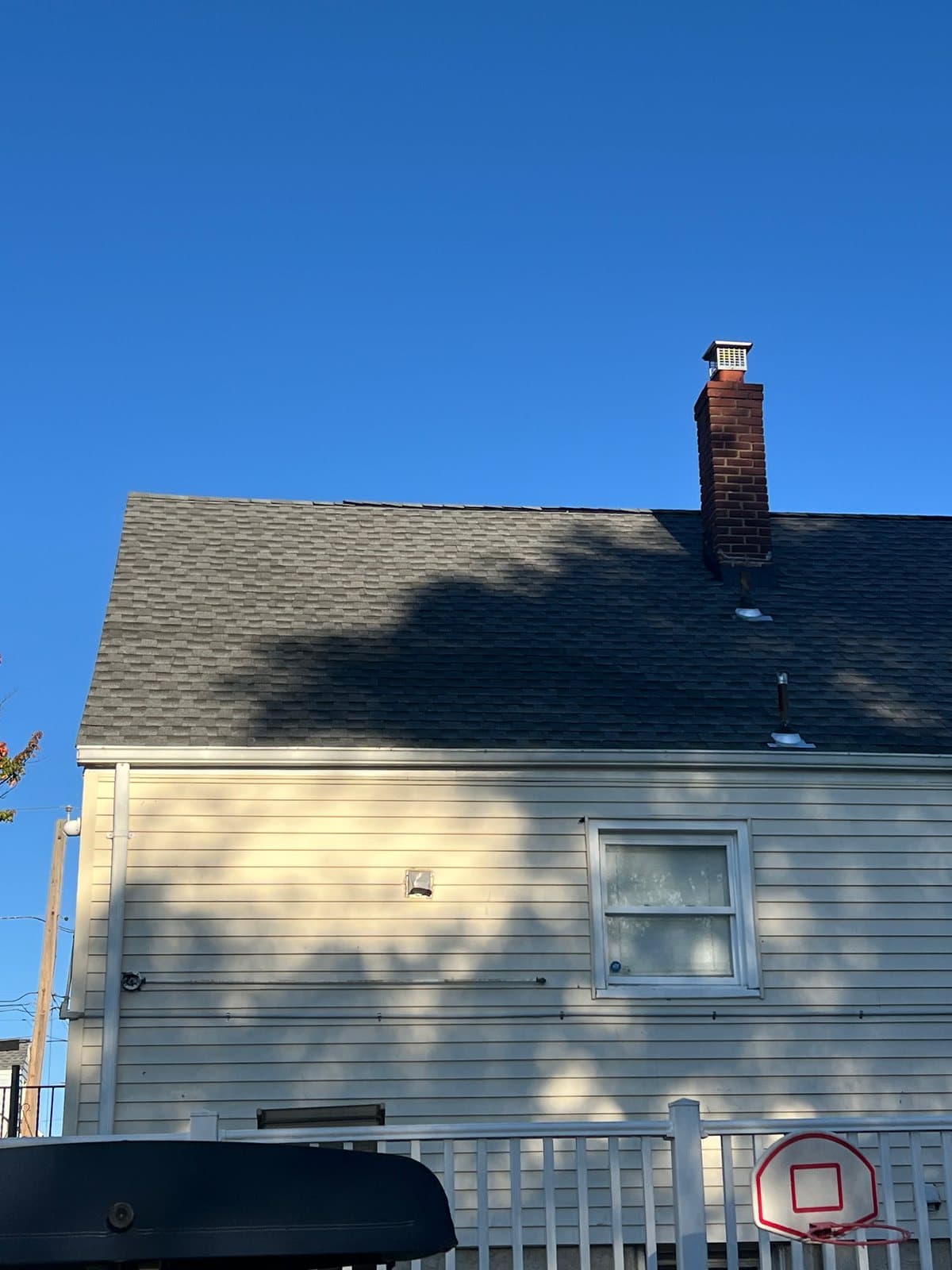
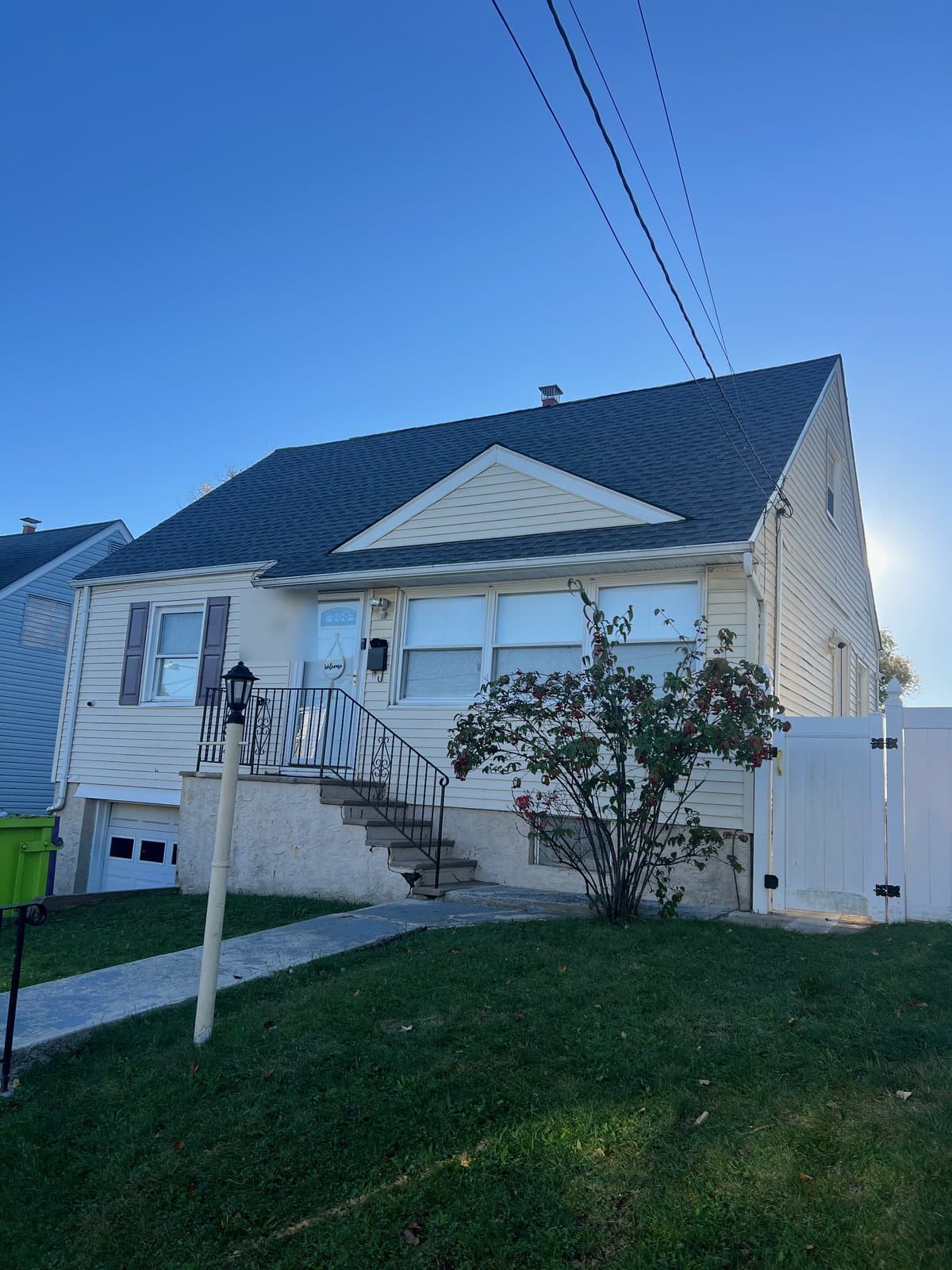
The board-deck roofs of the old mill cities
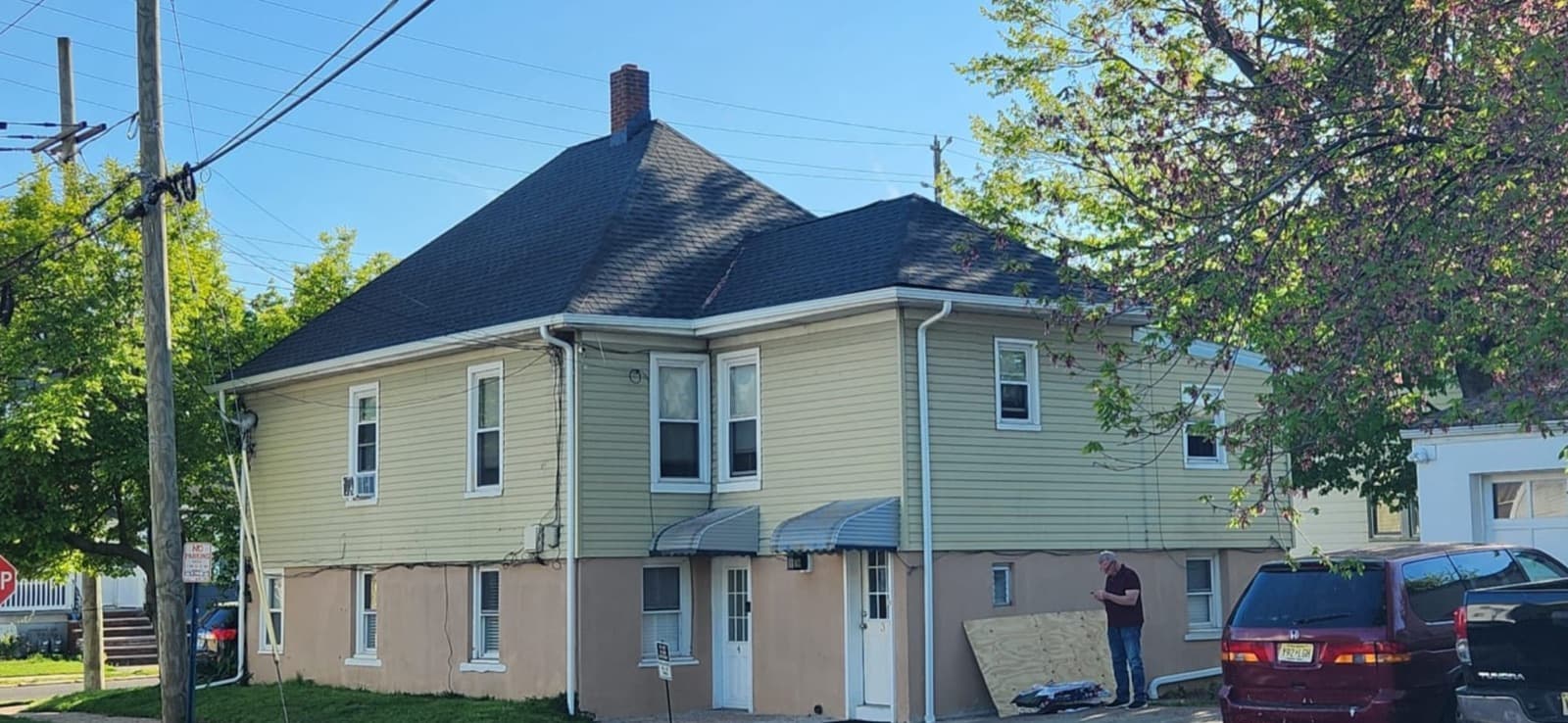
Passaic County's urban core went up around the looms. Paterson — the original Silk City — rebuilt much of its downtown in Beaux Arts and Art Deco styles after the Great Fire of 1902, and its side streets are full of steep-pitched Victorians and turn-of-the-century two- and three-families. Haledon's flatter blocks were laid out in small 25-by-100-foot lots for silk workers who wanted out of Paterson but still close to the mills; Clifton's Botany Village grew the same way, in Foursquares and Queen Annes around its own mills. Passaic City packed dense two- and three-families onto tight lots. Almost none of it was built with plywood.
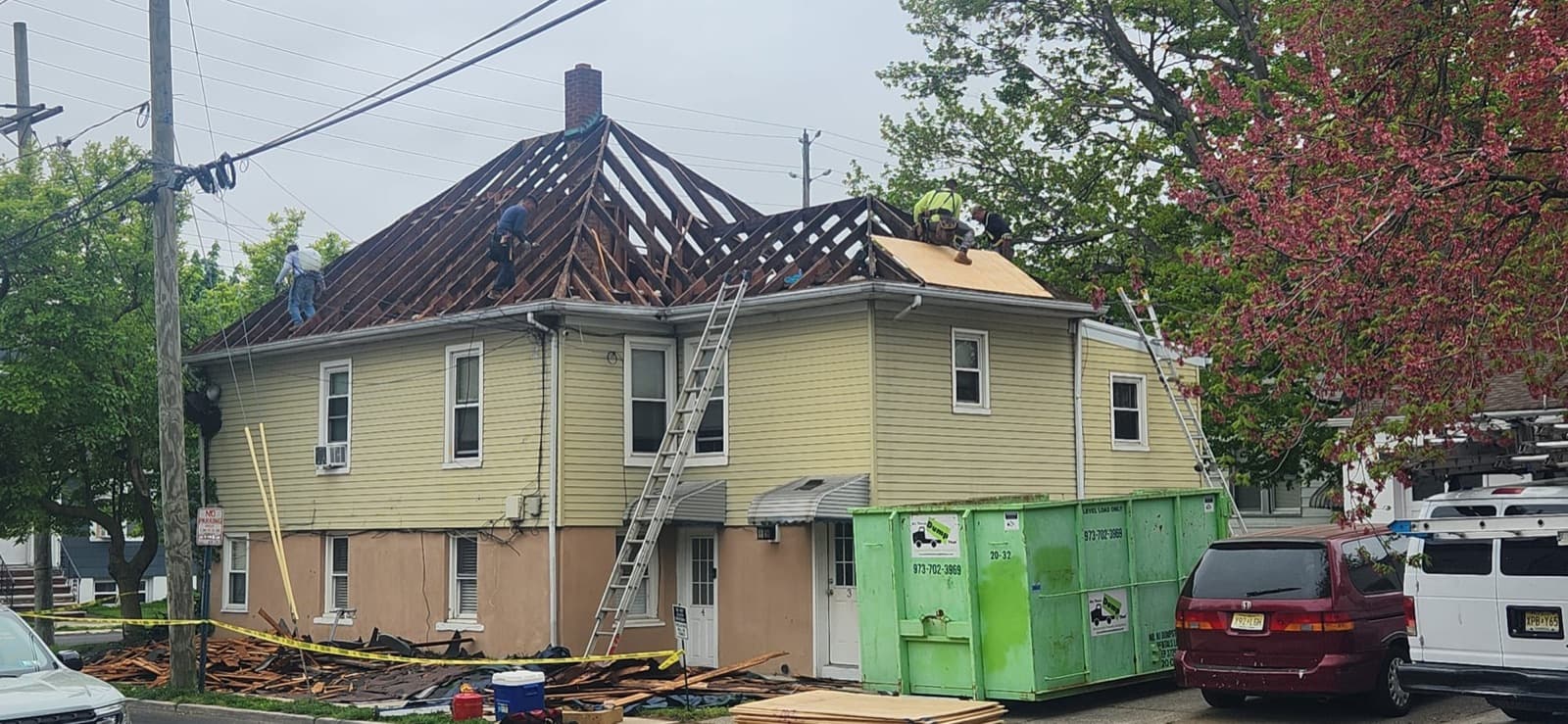
That is the fact that surprises homeowners at tear-off. These roofs are sheathed in solid wood plank — nominal 1x6 or 1x8 boards nailed with gaps between them — not the continuous panel a modern shingle needs. A century of heat dries the planks, the nails lose their grip, and boards split or spread. By current shingle-manufacturer specs a plank deck with gaps wider than roughly a quarter-inch has to be re-decked before new shingles go on, or the warranty won't hold and wind gets under the courses. We open the roof, tell you plainly what the deck looks like, and re-sheath in CDX where the boards can't take the nails — instead of shingling over a deck that won't hold them.
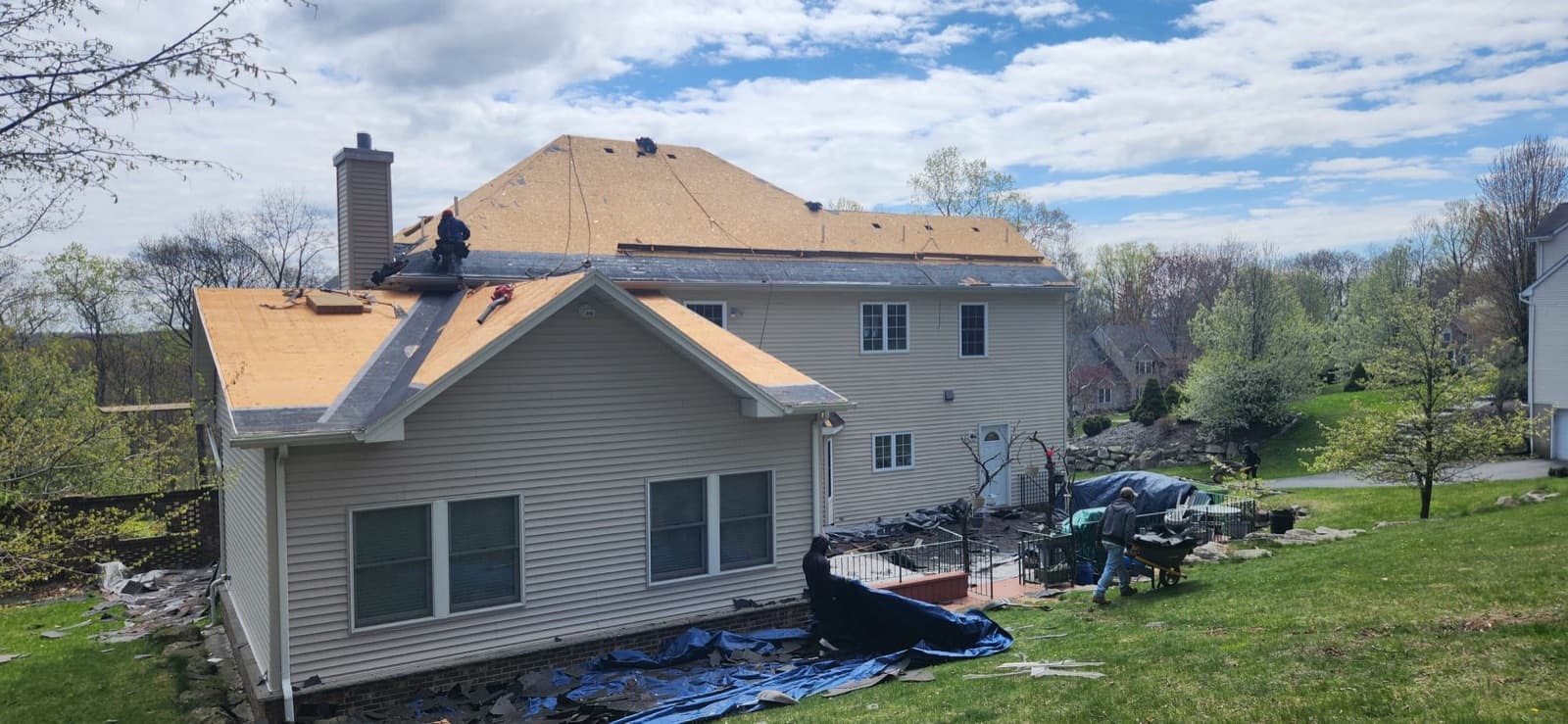
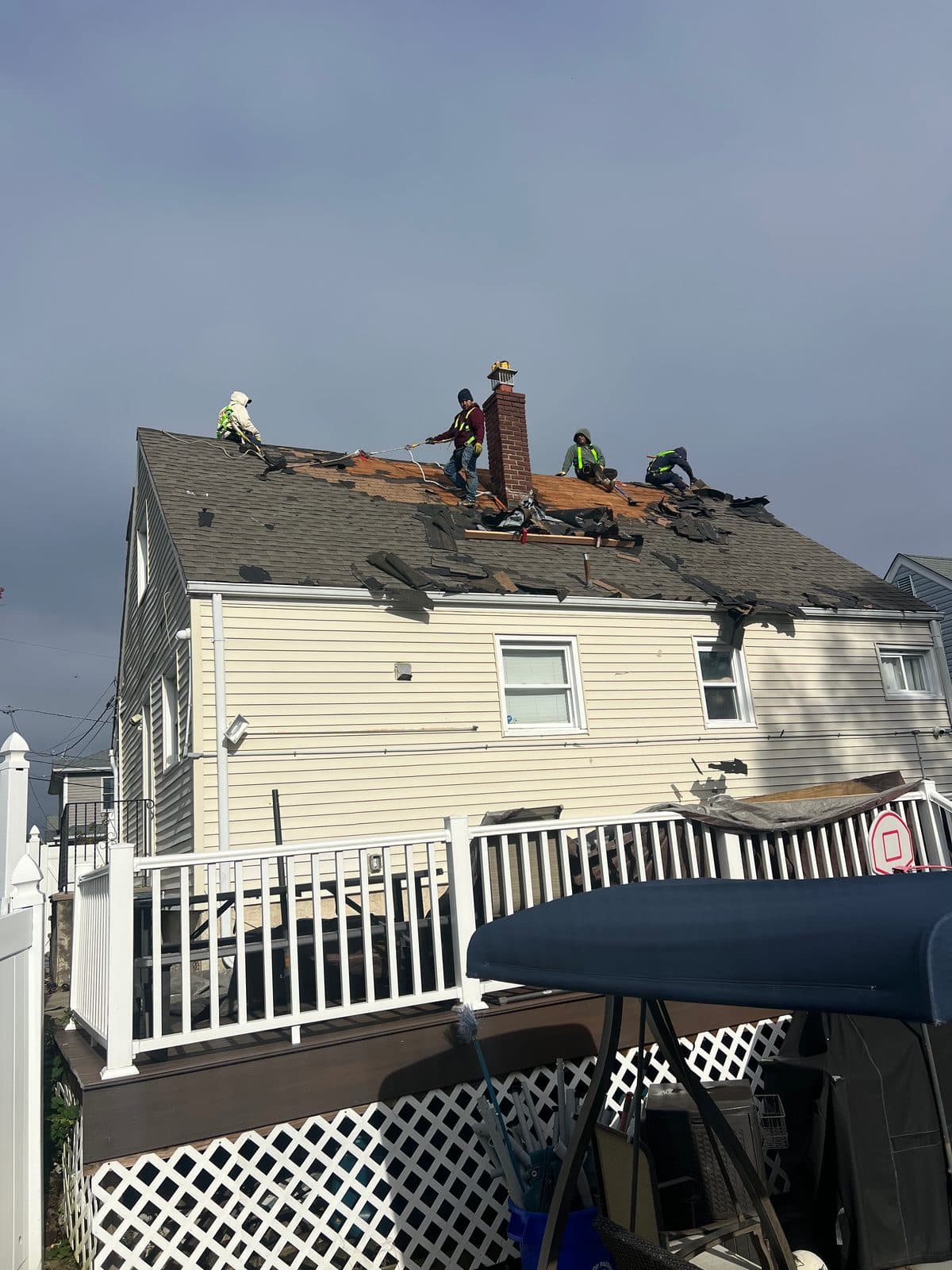
- Roof replacement — full tear-off on old plank-decked homes, with new CDX sheathing where boards are split or spread, eave ice-and-water shield, and code-correct underlayment and flashing.
- Roof repair — steep Victorian pitches and cut-up valleys fail first; we fix lifted courses, split vent boots, and worn valley metal before water reaches the deck.
- Roof leak repair — the second layer many of these old roofs carry hides the real entry point, so we trace the water rather than chase the ceiling stain.
- Layer check — New Jersey caps a roof at two layers; a home already carrying two coats needs a tear-off, not a third overlay.
Where the rivers converge, drainage has to keep up
Wayne sits at a choke point where the Passaic and Pompton rivers converge, and neighborhoods like Mountain View and Hoffman Grove have flooded so often the township has bought out hundreds of homes. Little Falls takes it from the Peckman and the Passaic both — the remnants of Hurricane Ida in 2021 put water through homes across the corridor. No gutter stops a river. But in this stretch of the county, the roof-and-gutter system is the line between shedding a hard downpour and letting it back up into the fascia, soffit, and wall.
Most of Wayne and the flatter parts of Little Falls are postwar suburban stock — split-levels and colonials from the 1950s and '60s, plus old riverside summer bungalows later winterized. Those long, low rooflines dump a lot of water fast. We fabricate seamless aluminum gutters to match that roof area, hang them on a pitch that keeps water moving to the leaders, and run the downspouts far enough out that a hard rain drains toward the street instead of pooling at the foundation — with guards wherever tree cover would choke them, so the water a Passaic County storm sheds off the roof has somewhere to go.
- Seamless gutters and downspouts, measured and pitched to the roof rather than cut to a standard length.
- Guards and correct runoff to move water away from the foundation on low-lying corridor lots.
- Roof-to-wall and fascia details that keep a wind-driven, sideways downpour out of the soffit.
- Storm documentation — dated photos and a measured scope after wind or a nor'easter, handled straight; whether a claim is covered is your carrier's call, not ours.
Roof leaking right now? We answer 24/7.
Trees, wind, and ice up in the Highlands
The northwest corner is a different world from the mill cities. West Milford runs to oak-hickory forest, more than forty lakes and ponds, and custom homes on wooded acreage — Upper Greenwood Lake, Pinecliff Lake, the lake communities climbing toward the Highlands. Roofs here live under a canopy. Falling limbs and wind-thrown branches puncture shingles, constant leaf and needle litter holds moisture on the deck and packs the gutters, and the higher, exposed elevations see harder wind and a longer ice-dam season than the valley towns down-county.
We build for that. It means heavier impact-rated architectural shingle — or standing-seam metal, which sheds snow and shrugs off limb strikes — a balanced ridge-and-soffit vent system to keep the deck cold and starve ice dams at the eave, and gutter guards rated for real leaf load, not the light-duty kind. On steep, wooded, hard-to-reach lots we stage the work to protect what's below and plan the drive: West Milford is a longer run from Garfield than Paterson, so we route Highlands jobs deliberately and still get a leaking roof seen fast.
On an old brick home, the chimney is usually the leak
On a mill-era Paterson, Passaic, or Clifton house the leak rarely comes through the open field of shingles — it comes down the chimney. These homes were built with tall brick chimneys, and after a hundred years the mortar joints open, the crown cracks, and whatever flashing is there has usually been face-caulked over instead of done right. Water runs the brick, slips behind the flashing, and surfaces as a ceiling stain three feet from where it actually got in.
The real fix is counter-flashing cut into the mortar joint and step-flashing woven into the shingle courses — not a bead of tar smeared over the gap. We rebuild cracked crowns, re-point where the mortar is gone, and set a proper cricket on the up-slope side of a wide chimney so it sheds snow and debris instead of damming them. Skylight curbs, valleys, and wall joints get rebuilt the same way. It is the same detail work whether the chimney sits on a Haledon two-family or a Wayne colonial.
- Counter-flashing cut into the mortar joint, not caulked across the face of the brick.
- Crown rebuilds and re-pointing on century-old masonry chimneys.
- Crickets and saddles so a wide chimney sheds snow instead of trapping it.
- Skylight, valley, and wall-joint flashing rebuilt to stop the leak at its source.
Roof leaking right now? We answer 24/7.
From mill-era two-families to Wayne colonials
Passaic County's walls run the full range: aluminum and old asbestos-cement shingle still on plenty of Paterson and Passaic two- and three-families, cedar and clapboard on the older Clifton and Haledon homes, and vinyl across the postwar Wayne subdivisions. On these tall houses — full of dormers, gables, and second stories — siding is a water-management layer as much as a finish, and the house-wrap and flashing behind it is what actually keeps the wall dry.
We install vinyl, insulated, and fiber-cement siding, including James Hardie, and we get the North Jersey details right: proper house-wrap, kick-out flashing where a roof edge dies into a wall, and sealed penetrations. On a full exterior job the roof, gutters, and siding go under one contract, so the roof-to-wall transition belongs to one crew from start to finish — nobody gets to call that seam 'the other guy's work' when it leaks a year later.
What affects the cost
| Decking condition | Old Paterson, Passaic, and Clifton roofs are sheathed in plank, not plywood; split or spread boards found at tear-off must be re-decked in CDX before shingles go on. |
|---|---|
| Pitch and roof complexity | Steep Victorian pitches and cut-up valleys on the old-city homes need more staging and slower, more skilled labor than a low suburban roofline in Wayne. |
| Layers and tear-off | New Jersey caps a roof at two layers, so a home already carrying two coats needs a full tear-off and disposal rather than an overlay. |
| Flashing and chimney count | Tall mill-era brick chimneys, dormers, and skylights each need their own flashing — the more penetrations, the more hand-work involved. |
| Access and staging | A tight Passaic City lot, a hillside Haledon street, and a wooded West Milford acre each stage differently and change how the crew's time is spent. |
| Tree and leaf load | Canopy over Highlands and older-neighborhood roofs drives the gutter-guard choice and how often the drainage system needs clearing. |
We don't bundle a mystery number — you get a firm, free on-site quote, approved before any work starts.
Monthly payment options
We work with Hearth, which shops several lenders on a single application. See your personalized options in minutes — checking does not affect your credit score, and there is no commitment.
- Loan amounts up to $250,000
- Funding in as little as 1–3 days
- No prepayment penalties
- No home equity required
Financing is provided by Hearth's lending partners, not by Precision Windows & Roofing. Rates and terms depend on your credit and the lender making the offer, and all financing is subject to credit approval.
Common questions
Will my old Paterson roof need new plywood when you tear it off?
Maybe — it depends on the deck, and we won't know for certain until the old roof is off. Most pre-plywood homes in Paterson, Passaic, and Haledon are sheathed in solid wood plank, and once boards dry out, split, or spread past about a quarter-inch, shingle manufacturers require re-decking before new shingles go down. We re-sheath in CDX only where the boards can't hold the nails, we show you the deck, and it's a separate line on the quote — never a surprise add-on.
Do I need a permit to reroof my house in Passaic County?
In Passaic County it usually turns on the decking. Under New Jersey's statewide code, replacing just the covering on a detached one- or two-family home has counted as ordinary maintenance — no permit — since 2018. The word detached is in N.J.A.C. 5:23-2.7(c)1x and it decides a great many Paterson and Passaic buildings. But the moment we replace plank decking or touch framing, which is common on these old-city roofs, a construction permit is required — and no town can add a construction permit for the covering alone, because N.J.A.C. 5:23-2.7(c) binds every enforcing agency. So on a Passaic reroof the question really turns on the deck: covering-only stays exempt, but the day the plank comes off, the answer flips. We confirm which side of that line your building and scope fall on and, when a permit is triggered, file it under our state registration before the tear-off starts.
My Wayne (or Little Falls) home flooded after Ida — can roofing help?
It's important to be clear about what roofing does and doesn't do. Roofs and gutters manage water from above — rain, wind-driven rain, and roof runoff — and we can make sure yours sheds a storm cleanly and document any wind or water-from-above damage for a claim. What we cannot fix is a river backing up from below; that's flood, foundation, and grading work, not roofing. We'll tell you honestly which problem you have.
Do you cover West Milford and the northwest part of the county?
Yes. West Milford and the Highlands are a longer drive from our Garfield shop than the down-county cities, so routine work runs on scheduled Highlands routes — but a roof that is open, water coming in, or storm damage is an emergency call and gets dispatched the same day. Wooded, steep lots also get staged carefully to protect what's below the work.
How fast can you reach Passaic County from Garfield?
Fast — Garfield sits directly across the Passaic River from Clifton and Passaic City. Storm response and any roof that is open with water coming in get dispatched the same day, anywhere in the county, from Paterson, Clifton, Passaic, Wayne, Little Falls, and Haledon to West Milford. Inspections and non-emergency leak diagnosis are usually within a few days, with the repair itself set for a dry roof. Routine work in West Milford runs on scheduled Highlands routes. Full replacements and siding are booked on scheduled dates countywide.
Are you registered to work in Passaic County?
Yes. Our New Jersey Home Improvement Contractor registration, HIC reg.# 13VH13970900, is a statewide credential — it's valid in Paterson, Clifton, Wayne, West Milford, and every other Passaic municipality, so you're never stuck with a contractor licensed for the wrong town. That registration carries a mandatory $500,000 commercial general liability minimum, and we run workers' compensation on top of it. You'll see the number on the quote, on the written contract New Jersey requires for any job over $500, and on the certificate of insurance we hand over before the crew starts.
Explore
Get your free roofing quote
Free, no-obligation on-site assessment anywhere in New Jersey — and we answer the phone 24/7.