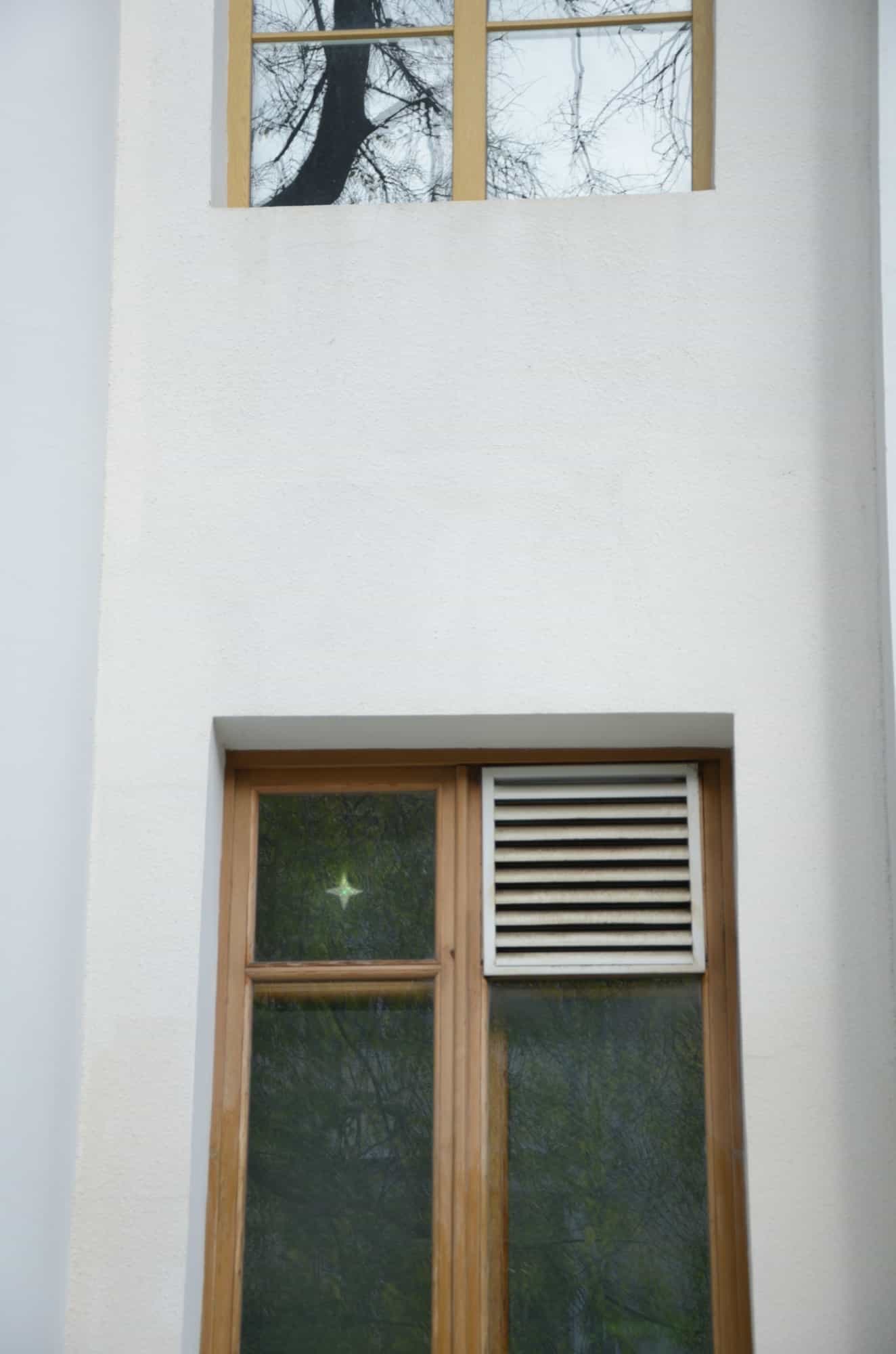
Casement & Awning Windows
Crank-out windows with the tightest seal of any operating window.
Casement & Awning Windows
Maximize ventilation and unobstructed views. Casement and awning windows crank open to catch breezes and provide a tight seal against the elements when closed.
Casement and awning windows are the workhorses of the modern NJ home. Casements crank out on a side hinge, awnings on a top hinge, and both seal against the frame as the cam-action lock pulls the sash tight to the weatherstripping. That compression seal is why a properly specified casement out-tests every double-hung on the market for air infiltration — under 0.01 cfm/ft² is common on a new Marvin or Andersen casement, versus 0.30 for a typical double-hung. In a Bergen County colonial getting battered by January wind off the Palisades, that difference shows up on your gas bill.
We install casements and awnings across every NJ market we serve, but the spec changes hard depending on where the house sits. A Cape May Victorian one block off the beach needs 316 stainless hardware or it'll be seized with white salt corrosion in three winters. A Madison center-hall colonial inside a historic district needs simulated divided lite (SDL) bars and an exterior color that matches the HPC certificate of appropriateness. A Manahawkin lagoon-front bedroom needs to clear the egress opening minimums so a firefighter in turnout gear can pull a child through it. We size, spec, and order accordingly — not from a catalog default.
Egress: the rule that drives bedroom casement sizing in NJ
Every sleeping room needs at least one emergency escape and rescue opening. In new construction that comes from the one- and two-family dwelling subcode (the IRC as adopted at N.J.A.C. 5:23-3.21, with New Jersey's own amendments); in an existing house it comes from the Rehabilitation Subcode, N.J.A.C. 5:23-6. The rehabilitation numbers are the ones that govern a retrofit: operable, sill no more than 44 inches above the finished floor, at least 20 inches of width, at least 24 inches of height, and at least 5.7 sq ft measured from head to sill and from side to side. Note the measurement basis — the rehabilitation rule sizes the framed opening, where new construction sizes the net clear opening with the sash open. We design to the net clear figure anyway, because it is the harder of the two to hit and it is what a buyer's inspector will measure. There is no reduced grade-floor allowance in the rehabilitation rule, so we do not design to one.
Clear opening area is where double-hungs fail and casements win. A 32x48 double-hung gives you roughly 2.6 sq ft of clear opening because only half the sash slides up. A casement of the same RO swings the whole sash out and clears closer to 6.0 sq ft — comfortably above the 5.7 threshold. That's why every bedroom remodel we do in NJ that needs egress gets quoted with a casement first.
Watch the hinge type. Standard butt hinges only swing the sash 90 degrees and steal ~3 inches of clear width on a 24-inch sash. Egress hinges (4-bar hinges with a slide track) let the sash slide away from the jamb as it opens, recovering that 3 inches and giving you a true 20+ inch clear width on smaller units. Marvin calls them 'Egress' hinges; Andersen calls them 'Wash Mode'; the spec sheet matters more than the marketing name.
Hardware: Truth, Roto, Amesbury, and what fails first
Three companies make most of the operating hardware inside North American casements and awnings: Truth Hardware (Owatonna, MN — owned by Tyman), Roto North America (made in Chesterfield, MI), and Amesbury Truth (the merged entity that now produces most OEM hardware for Andersen, Marvin, Pella, and the major vinyl brands). Knowing which is on your window matters because replacement parts are not cross-compatible.
On a 15-20 year old window the cam-action lock handle is usually the first thing to fail — the zinc casting cracks at the cam. Truth Encore and Maxim handles are stocked items we carry on the truck. Roto X-Drive operators are slightly trickier; we order them as needed. The crank operator (the actual gear box you turn) usually outlasts the handle but is the second failure point, typically at the 20-25 year mark. We rebuild the operator with the original hardware brand when possible — replacing a Truth dyad with a Roto Series 50 means re-drilling the sash, which we avoid.
Hinges are the third failure. Standard steel 4-bar hinges rust at the pivot pins, especially on south- and west-facing elevations. We replace with stainless equivalents — Truth 16.10 stainless or Amesbury Truth Maxim stainless — sized to the original sash weight. On Shore properties we never reinstall plated steel hinges; they'll fail again inside the warranty period.
Salt-air spec for Shore and barrier-island installs
The wind off the Atlantic carries chloride aerosol several miles inland. Anywhere east of the Garden State Parkway in Atlantic, Cape May, Ocean, and Monmouth counties, we treat the install as marine environment. Standard zinc-plated hardware will show rust bloom within 12 months and seizure within 36.
Marine spec: 316 stainless steel hardware (not 304 — 304 will still pit in chloride), stainless fasteners throughout, marine-grade weatherstripping (TPE rather than EPDM for better salt resistance), and an exterior finish on the sash that's either fluoropolymer (Kynar 500/Hylar 5000 PVDF) for aluminum-clad or a marine-grade vinyl formulation. We spec Andersen 100 Series (Fibrex) or ProVia Endure with the marine hardware upgrade.
Screws into the frame anchor go in with stainless or hot-dipped galvanized — never zinc-plated. We bed every anchor in butyl or PowerHouse sealant so the fastener shaft never sees standing salt water. On the interior side, hardware boxes for the operator get a thin film of marine-grade dielectric grease at install. None of this is overkill at the Shore; it's the difference between a 25-year window and an 8-year window.
Where casements vs awnings each make sense
Casements: bedrooms (egress), kitchens over the sink (the crank lets you operate without reaching across a hot range), home offices (full sash opens for ventilation), and any opening where you want maximum glass area with a clean sightline. Casements perform best on east and west elevations where the sash can be tilted to scoop or shed prevailing breezes.
Awnings: bathrooms (privacy with the sash open in rain), basements above grade (when the sill is too high for a casement to be operable from inside), high transom windows above fixed picture units, and stacked configurations where you want ventilation at the top of a tall window wall. Awnings shed rain naturally when open and are the right choice on any elevation that takes wind-driven precipitation.
Combination units — fixed picture with flanker casements, or a fixed center with awning transoms — are how we hit modern open-concept window walls without sacrificing operable area or egress. We mull these in-shop with structural mullion covers and warranty the combined assembly as a single unit.
Our Process
- 1Site measure and egress verificationWe measure every opening at three points and confirm rough opening dimensions. For any bedroom, we calculate the required clear opening against the subcode that actually governs the job — the Rehabilitation Subcode on a retrofit, the dwelling subcode on new construction or an addition — and size the casement (and hinge type) to meet it. If existing RO is undersized for egress, we discuss whether to enlarge the opening or accept a non-egress designation for the room.
- 2Spec selectionBrand, frame material (vinyl, fiberglass, aluminum-clad wood), glass package (Low-E2, Low-E3, argon vs krypton, laminated for STC), grille pattern (none, GBG, SDL), hardware finish, and color. We provide NFRC labels with the quote so you can verify U-factor and SHGC against IECC 2024.
- 3Order and lead time trackingStandard Andersen 100 Series and Marvin Essential: 4-6 weeks. ProVia Endure: 5-7 weeks. We confirm production status weekly and lock the install date once the units ship from the factory.
- 4Removal and installOld sash and frame removed, sill and jamb inspected for rot or insect damage (we quote any repair before proceeding), new unit set in level/plumb with shims, flashed with self-adhered membrane at head and jamb, sealed with low-expansion foam between frame and rough opening, and trimmed inside and out.
- 5Final operation and walkthroughWe exercise every operator and lock, verify even compression of the weatherstrip, demonstrate crank-out cleaning position to the homeowner, and register the manufacturer warranty in your name. Hardware bag with crank handles, install date label, and warranty card stays with you.
Materials We Use
The Precision Difference
About Casement & Awning Windows in NJ
Does my bedroom window have to be a casement?+
Which casement brand performs best in NJ humidity?+
Can I get a casement to look like the original wood window in my historic home?+
How long do casement operators last?+
Do I need impact glass on a casement at the Jersey Shore?+
What if my rough opening is too small for an egress casement?+
Are you NJHIC registered and insured for casement window installs?+
Casement or double-hung — which window is better for my home?+
Where does the screen go on a casement window?+
Guides on this
- Double-hung vs casement for NJ's climate
Air-infiltration numbers, egress math, and which style holds up better through a Jersey freeze-thaw cycle.
Serving All 21 New Jersey Counties
We service Atlantic County, Bergen County, Burlington County, Camden County, Cape May County, Cumberland County, Essex County, Gloucester County, Hudson County, Hunterdon County, Mercer County, Middlesex County, Monmouth County, Morris County, Ocean County, Passaic County, Salem County, Somerset County, Sussex County, Union County, Warren County. From our Garfield, NJ shop we cover the entire state, same-day in Bergen County, and elsewhere depending on the job and how booked we are that day.
Explore More
STANDARD WINDOW INSTALLATION
Professional installation of double-hung, single-hung, and slider windows.
DetailsENERGY EFFICIENT REPLACEMENTS
Low-E and argon-filled windows that lower heating and cooling bills.
DetailsWINDOW HARDWARE UPGRADES
New locks, cranks, handles, weatherstrip & sweeps to restore function and stop drafts.
DetailsHISTORICAL SASH RESTORATION
Preserve the character of your historic home with sash restoration.
Details