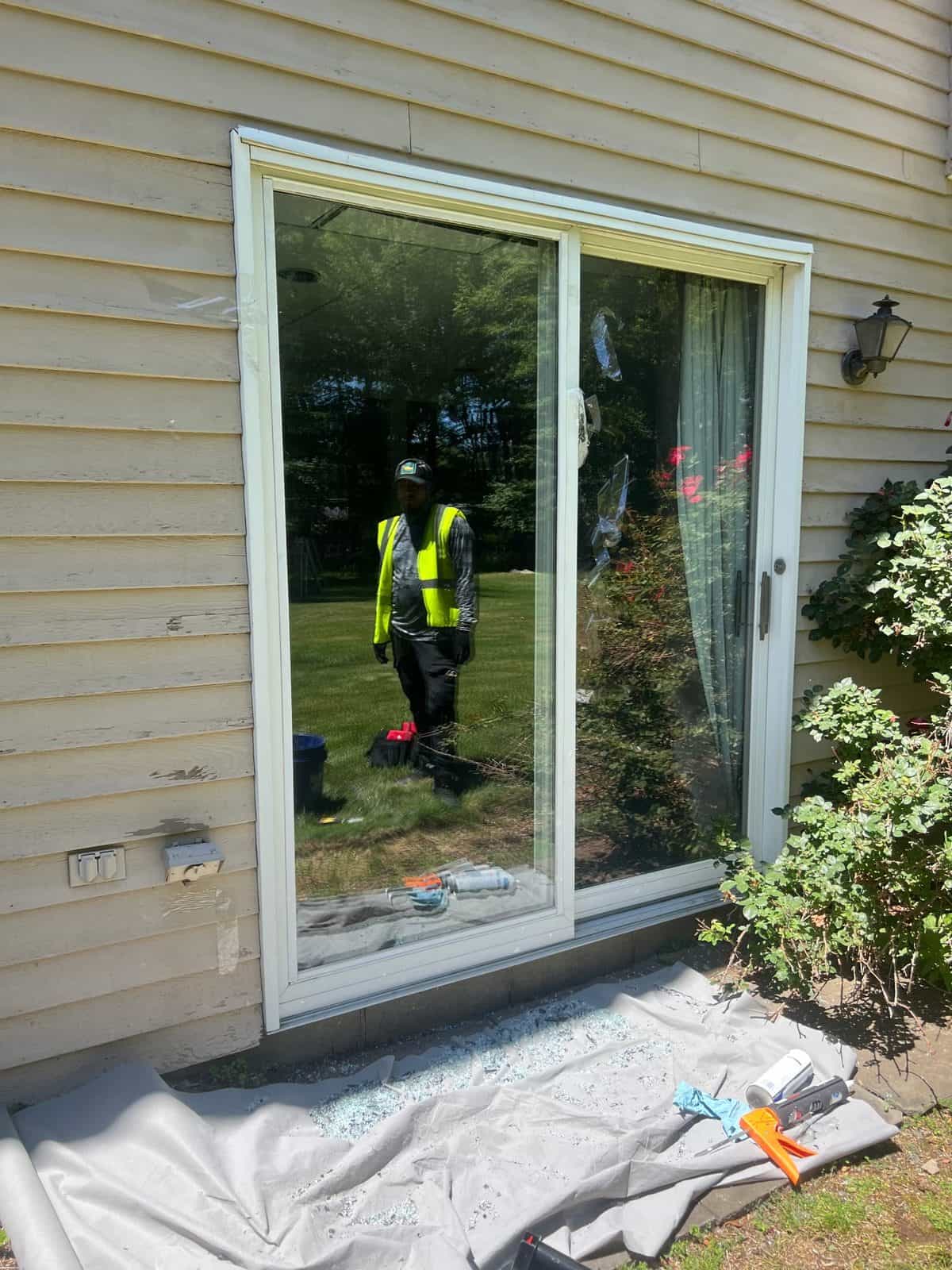
Patio doors are a meaningful exterior upgrade — they're often the largest single glass area in a house and dramatically affect both energy performance and how the home connects to outdoor living space. The two main choices for NJ homes are sliding glass doors and French doors (hinged double doors). They look similar on paper but operate very differently, have different energy profiles, and require different floor-space plans. This guide walks through the honest 2026 NJ comparison.
Sliding patio doors — strengths + weaknesses
Sliding doors have two large glass panels that slide horizontally past each other on tracks. One panel is typically fixed; the other operates. Standard sizes run 5'-9' wide. Most common patio door style in modern NJ residential.
Best for: tight floor-plan rooms where door swing would block furniture or walking paths; small decks where outward-swinging doors would conflict with railings; modern + contemporary architecture; budget-conscious projects.
- Pros: Lower cost in every material grade (see the cost comparison below); space-efficient (no swing radius needed); modern aesthetic; large continuous glass area
- Cons: Lower air-seal performance than French doors (track + meeting stile inherently leaks more); narrower clear opening (typically 30-36" vs 56-72" on French doors); rollers wear out + need lubrication every 2-3 years; harder to make ADA-accessible
French doors — strengths + weaknesses
French doors are hinged double doors with mostly-glass panels. Both doors operate (typically with an active/inactive configuration — one door always operates, the other unlocks for full opening). Standard sizes run 5'-8' wide. Traditional aesthetic; classic NJ Colonial + Tudor architectural fit.
Best for: traditional architectural styles (Colonial, Tudor, Federal); rooms with adequate floor space for the swing radius; entertainers who want to open the full opening for indoor-outdoor flow; high-end aesthetic priorities.
- Pros: Higher air-seal performance (no track; doors pull tight into frame); wider clear opening when both doors open; better architectural fit on traditional NJ housing; better ADA-accessibility when both doors open
- Cons: Higher cost than a slider (see the cost comparison below); requires floor space for swing radius (typically 24-36" interior swing + exterior swing); outward-swinging design vulnerable to wind damage; hinges + multi-point locks wear out faster than slider rollers
2026 NJ installed cost comparison
Real 2026 North NJ ranges for replacing one 6' patio door in the same opening, including frame, glass, hardware, install labor, removal of the old door, and standard interior trim:
- Vinyl sliding door (6'): $1,800–$3,800 installed
- Vinyl or fiberglass French door (6'): $3,000–$6,500 installed
- Fiberglass sliding door (6'): $2,500–$5,500 installed
- Aluminum-clad wood sliding door (6'): $4,500–$9,000 installed; premium architectural lines run higher
- Aluminum-clad wood French door (6'): $5,500–$10,000 installed; premium architectural lines run higher
- Pricing varies with width (8' costs more than 6'), glass package (impact-rated glass for the coast costs more), grille pattern, and hardware finish
Which to choose by NJ scenario
Honest recommendations by typical NJ situation:
- Suburban Colonial or Tudor with 12'+ patio space: French door — better architectural fit + better thermal performance
- Cape Cod or Ranch with small deck: Sliding door — space-efficient + matches simpler architectural style
- Coastal NJ shore property: Sliding door with impact-rated glass — outward-swinging French doors are vulnerable to wind damage in nor'easters
- Townhouse or condo with tight floor plan: Sliding door — no swing radius needed
- High-end estate Colonial (Alpine, Saddle River, Princeton): French door, aluminum-clad wood — aesthetic matters more than cost
- Rental property or budget rehab: Sliding door, vinyl — best cost-per-functional-square-foot