Fireplace safety before the first holiday fire comes down to four checks: the damper opens and closes, you can see up the flue and the firebox is intact, the smoke and carbon monoxide alarms work, and nothing goes on the fire except seasoned firewood. If the first fire of the year is a Thanksgiving or Christmas fire, it gets lit with a full house, so find the problem on a quiet afternoon instead.
This is the homeowner's side: a five-minute look, what smoke in the room means, New Jersey's alarm rules, what never goes in the fire (wrapping paper and the tree included), where ashes go, and when to stop and call. It is written for wood-burning fireplaces, with a short note on gas logs and inserts. It does not replace a professional sweep and inspection.
The five-minute look before the first fire
Do this in daylight, fireplace cold, flashlight in hand. It screens for obvious trouble; a flashlight cannot see past a bend in the flue or judge the liner. The U.S. Fire Administration's fireplace card says to have the chimney inspected and cleaned each year by a professional, and this list does not replace that.
- Damper. Open it fully and close it again; it should move freely. The New Jersey State Fire Marshal's fireplace sheet says to check that the damper is open before lighting, because otherwise smoke and carbon monoxide can build up in the home.
- Up the flue. Look for leaves, debris, a nest, or no daylight where there should be some.
- Firebox. Cracked or missing brick, gaps in the mortar, or pieces of flue tile on the hearth mean do not light it until someone has looked.
- Screen. The USFA card says to keep a glass or metal screen in front of the fireplace so embers and sparks cannot jump out, and the State Fire Marshal's sheet recommends tempered glass. Check that it stands upright with no gap at the sides.
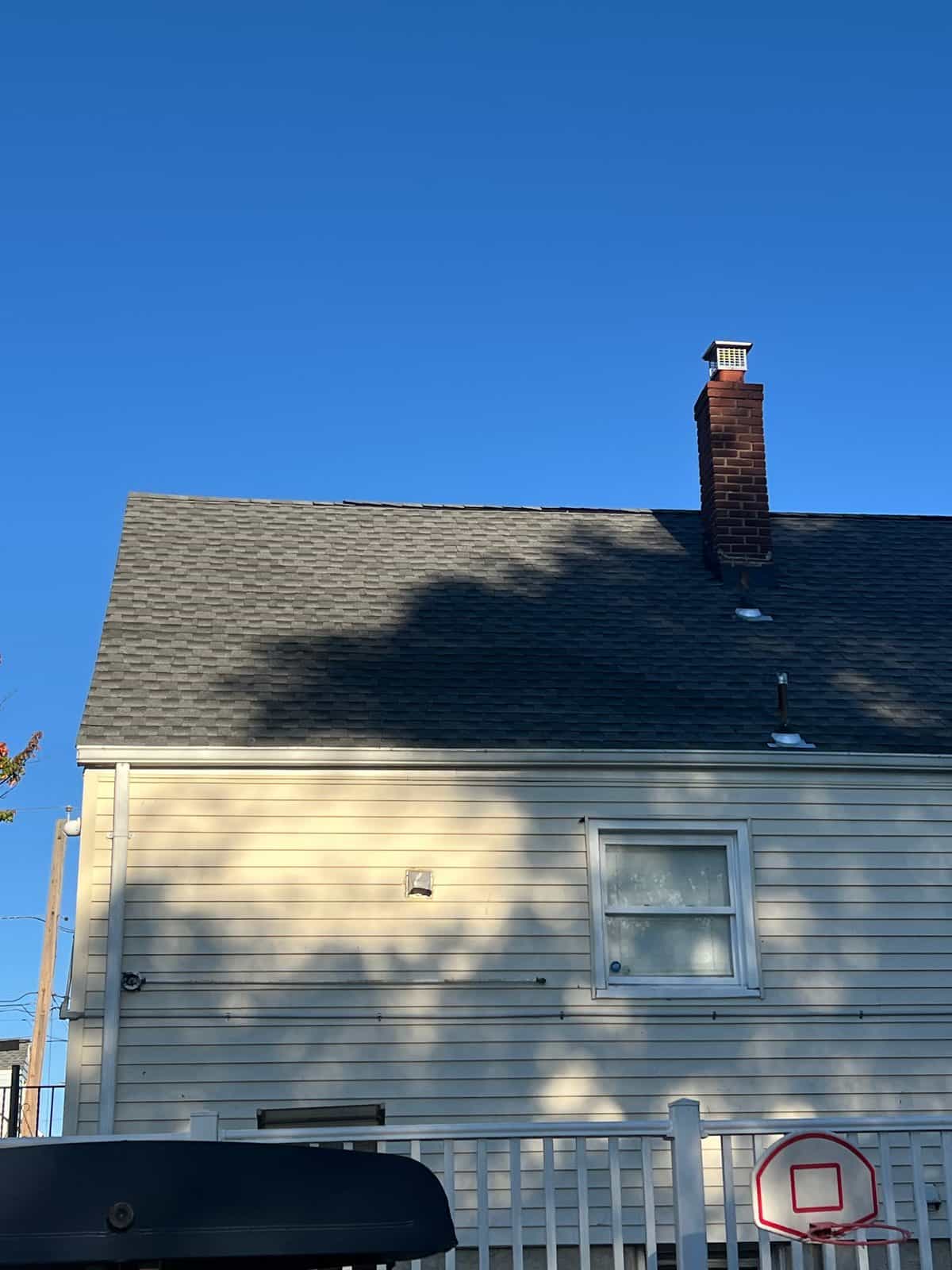
- The top, from the yard. The cap should be in place, the crown (the slab around the flue opening) should not be broken or crumbling, and nothing should be growing from it. Chimney cap and crown repair explains what fails up there.
Smoke in the room on the first fire: what it means
Start with the damper. The State Fire Marshal's sheet ties a closed damper to smoke and carbon monoxide building up in the home, and one stuck partway open is the first thing to rule out.
If smoke keeps coming into the room with the damper fully open, do not shut the damper to stop it. The same sheet says not to close it until the fire has died out and the embers are cold, and the Division of Fire Safety warns that closing a damper over hot ashes forces carbon monoxide into the house. Let the fire burn down, open a window, and do not light the next one.
Treat a smoky fireplace as a symptom. The Division of Fire Safety lists fireplaces among the sources of carbon monoxide, which it says can kill before you know it is there and at low levels can feel like the flu: nausea, fatigue, headaches, dizziness. A chimney inspection finds out whether the flue is blocked, the cap clogged or the buildup heavy.
Smoke and carbon monoxide alarms: what New Jersey requires
General information, not legal advice; your town's fire official can confirm what applies to your house.
Carbon monoxide. Division of Fire Safety Bulletin 2017-1 says a one- or two-family house that contains a fuel-fired appliance or has an attached garage needs CO alarms in the vicinity of the bedrooms, battery-operated, plug-in or hard-wired, and dates the fire code's extension to all such buildings to September 3, 2017. A house with a gas or oil furnace, boiler or water heater falls under it. For new construction the building subcode names fireplaces too, and DCA Bulletin 99-3 says CO alarms must be listed and labeled to UL 2034.
Smoke alarms. A state rule effective January 1, 2019 requires 10-year sealed-battery smoke alarms in one- and two-family homes built before January 1, 1977, met before a sale or change of occupancy. Newer homes fall under the construction code's hard-wired alarm requirement instead.
Beyond the legal minimum, the state advises:
- Where: inside and outside sleeping areas and on every level of the home, including the basement.
- Label: each smoke and CO alarm should carry the label of a recognized testing laboratory.
- Test at the clock change. The state calls the twice-yearly time change a good time to check alarms; this fall's is November 1.
- A chirp: if an alarm chirps for a low battery, replace the entire alarm right away.
- Age: replace smoke and CO alarms every 10 years.
- If a CO alarm sounds: if anyone feels ill, leave and call 911 from outside. If no one does, turn off appliances, open windows and doors, and have a qualified service person check the heat source.
What goes in the fire, and what never does
The EPA's Burn Wise guidance says wood burns best below 20 percent moisture, which a wood moisture meter will tell you, and should be seasoned at least six months. The State Fire Marshal's sheet says never to use lighter fluid or another flammable liquid. The holiday problem is that the fireplace looks like an easy way to get rid of things.
- Wrapping paper and boxes. The USFA card says not to burn paper in your fireplace. The Division of Fire Safety warns against excessive paper and roaring fires, saying overbuilding a fire can ignite creosote in the chimney. The EPA lists cardboard and the colored ink on boxes and wrappers among trash that does not belong in a wood fire.
- The Christmas tree. The U.S. Forest Service, quoted by the Division of Fire Safety, says never to burn one in a fireplace or wood stove; evergreen oils may add to creosote and risk a chimney fire. While it is up, USFA says to keep it at least three feet from a fireplace. When it comes down, use your town's recycling program.
- Treated, painted or glued wood. The EPA says no to coated, painted or pressure-treated wood, plywood, particle board, any wood with glue on or in it, and wet, rotted or moldy wood.
- Charcoal. The state says never to burn it indoors; it can give off lethal amounts of carbon monoxide.
Ashes: where they go, and why not the garage
The USFA card says to put ashes in a metal container with a lid, outside, at least 10 feet from your home. Its ash pictograph adds: pour water on them, keep the container tightly covered and 10 feet from other buildings too, and never empty ashes straight into a trash can. The State Fire Marshal's sheet says never to leave an ash container inside the home. Ten feet rules out the porch, the deck and the garage.
In a November 2012 release, the Division of Fire Safety cited a Connecticut fire the year before that killed a family of five after bagged hot ashes were left in the home's mudroom. There is no cooling time to count on, so treat ashes as hot until they have been wetted and left to sit outside.
Fireplace safety with a house full of guests
Keep the screen closed whenever the fire is lit, and keep anything that can burn at least three feet away, as the USFA card says. That includes the mantel: the Division of Fire Safety says to keep flammable materials off it because a spark can ignite them, so stockings and garland hang elsewhere while a fire is going. The State Fire Marshal's three-foot rule covers children and pets too.
Keep the fire modest rather than roaring, and put it out before bed or before leaving the house, as USFA says. If the house will sit empty over the holidays, the risk shifts to the plumbing; see our guide to frozen and burst pipes.
Signs to stop and call
Any of these is a reason not to light the next fire. If a chimney fire is happening, get everyone out and call 911.
- Smoke that keeps coming into the room with the damper fully open and the fire established.
- Black, tar-like buildup on the flue walls or smoke shelf. The State Fire Marshal's sheet describes creosote this way and says it can cause a chimney fire. A chimney sweep removes it with brushes and a vacuum.
- A broken crown, missing cap or cracked chimney top, which can let water into the masonry. See chimney repair.
- Loose or cracked brick, mortar or flue tile in the firebox.
- A smell of smoke or dampness when the fireplace is not in use, which can point to a draft problem, a leak or a blockage.
Gas logs, inserts, and who to call for what
A gas log set or insert is an appliance, and its manual governs use and service. The Division of Fire Safety recommends yearly service and inspection of appliances that burn propane, natural gas or oil, and USFA says to keep the on switch and remote out of children's reach. Before adding or swapping one, ask your town's construction office whether the work needs a permit.
Changing the appliance or fuel is a reason to have the flue looked at; chimney liner replacement explains the fix when a flue no longer suits what is connected to it. The appliance and its gas line go to the trade that services them; our side is the chimney.
We sweep, inspect, repair and reline chimneys in Bergen, Passaic, Essex and Hudson counties. If a smoky first fire or a cracked crown has you unsure, call (201) 275-9185 (HIC reg.# 13VH13970900). If it is a clogged flue or a bad cap, that is what we will quote.
Sources (read October 20, 2026)
Every specific fact above comes from one of these.
- USFA, Fireplace and Wood Stove Safety card: https://www.usfa.fema.gov/downloads/pdf/publications/fireplace_woodstove_safety_card.pdf
- USFA, Discard Ashes Safely pictograph: https://www.usfa.fema.gov/gallery/pictographs/pictograph43.html
- USFA, Holiday Fire Safety: https://www.usfa.fema.gov/prevention/home-fires/prevent-fires/holiday/
- NJ State Fire Marshal, Fireplace and Chimney Safety: https://www.nj.gov/dca/divisions/dfs/pdf/firefocus/fs_facts_fireplace_chimney.pdf
- NJ Division of Fire Safety, Smoke and Carbon Monoxide Alarms Save Lives: https://www.nj.gov/dca/divisions/dfs/pdf/fsfacts/fs_facts_carbon_monoxide.pdf
- NJ Division of Fire Safety, Bulletin 2017-1, December 12, 2017: https://www.nj.gov/dca/divisions/dfs/alerts/bulletins/bulletin_2017-1_carbon_monoxide.pdf
- NJ DCA, Bulletin 99-3, rev. September 2019: https://www.nj.gov/dca/codes/publications/pdf_bulletins/b_99_3.pdf
- NJ DCA, 10-year sealed battery smoke alarm release, 2019: https://nj.gov/dca/divisions/dfs/pdf/10%20year%20sealed%20battery%20smoke%20alarm%20press%20release.pdf
- NJ DCA, alarm reminders, March 5, 2026 and November 3, 2023: https://www.nj.gov/dca/news/news/2026/20260305.shtml and https://www.nj.gov/dca/news/news/2023/approved/20231103.shtml
- NJ DCA, Prompt Removal of Christmas Trees, January 6, 2021: https://nj.gov/dca/news/news/2021/approved/20210106.shtml
- NJ DCA, alternative heating precautions, November 5, 2012: https://nj.gov/dca/news/news/2012/approved/20121105.html
- U.S. EPA, Burn Wise, Best Wood Burning Practices (archived January 2025): https://19january2025snapshot.epa.gov/burnwise/best-wood-burning-practices