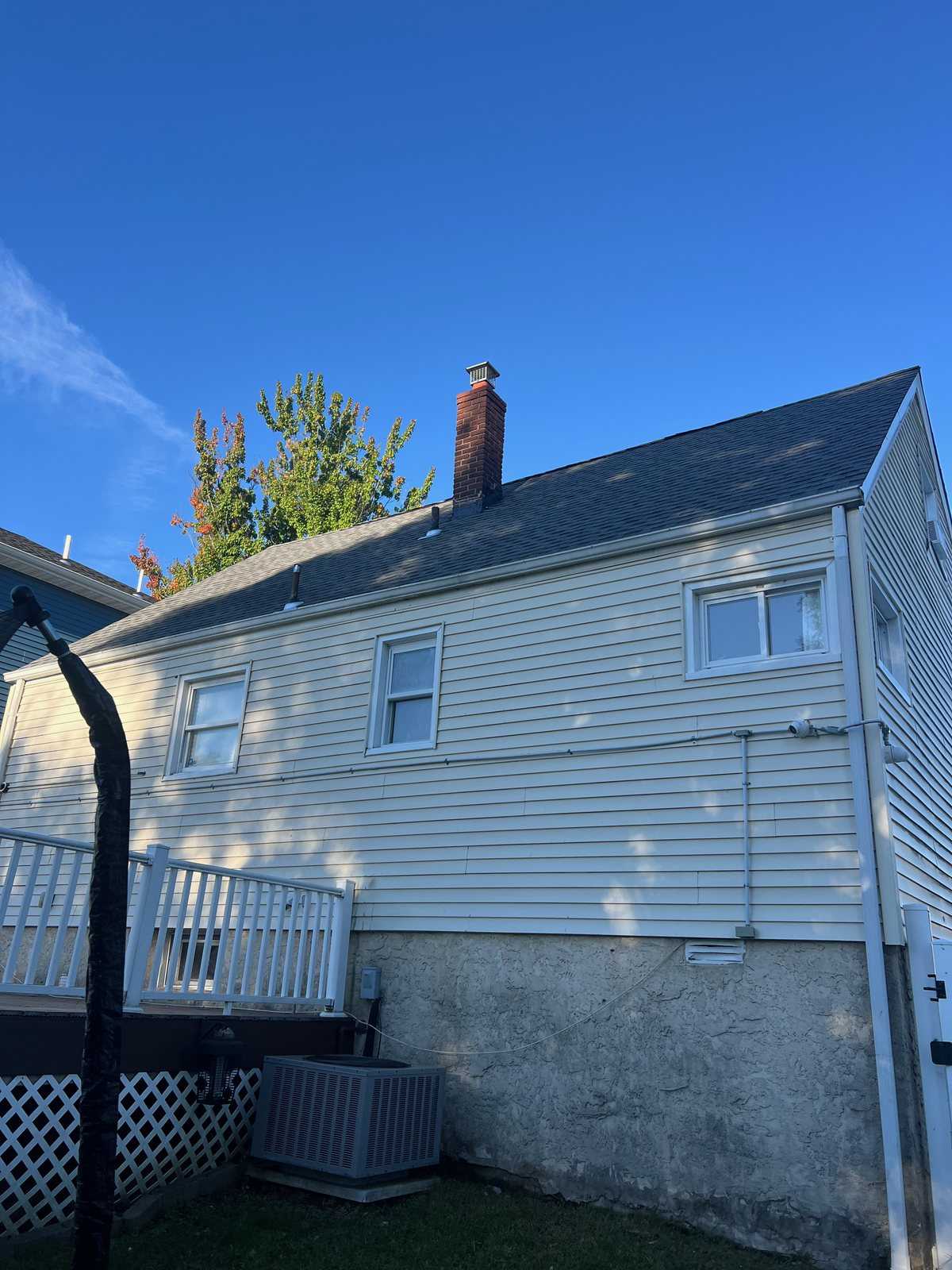
If your furnace, boiler or water heater has been shut off and the chimney is the reason, you are not alone. Sometimes PSE&G shuts it off; sometimes it shuts itself off. We get this call often, usually between November and March. What we usually find is one of two things, and both build up slowly, over years: soot and debris collect inside the chimney until it clogs, or the clay tiles that line it shift and send the exhaust back into the house. Nobody can see either one happening, and both can be fixed. A clogged chimney can be swept clear, and one with shifted tiles can be relined with a flexible stainless steel liner, a metal tube that runs up the inside of the chimney.
If a carbon monoxide alarm is sounding or you smell gas, get everyone out and call 911 first; PSE&G's emergency line is 1-800-880-7734. If you smell gas, PSE&G says to leave without touching light switches or using a phone inside, and to call once you are at least 350 feet away. The rest of this post is for afterwards. The short version: leave the appliance off, call us about the chimney at (201) 275-9185, and call a licensed heating contractor or plumber about the appliance. If it shut itself off and nobody has told you why, start with the heating contractor: the chimney is one possible cause, not the only one.
We are Precision Windows & Roofing, an independent chimney and roofing contractor in Garfield. We sweep, inspect, repair and reline chimneys across New Jersey, and calls within about 50 miles of our Garfield shop come first. We are not affiliated with PSE&G and do not speak for it: what we say about PSE&G comes from its own published pages and terms of service, listed at the end. We do no plumbing or gas work. Our part is the chimney.
No heat because of the chimney: what to do first
- Make two calls. Us for the chimney, at (201) 275-9185, and a licensed heating contractor or plumber for the appliance. We treat a shut-off with no heat as an emergency. We put the chimney right; reconnecting and testing the appliance afterwards is plumbing or heating work, which we do not do. If nobody has told you the chimney is the cause, we can rule it in or out with a camera. Tell us which appliance is off and what PSE&G or the heating contractor told you or left with you. If you rent, tell your landlord right away.
- Leave the appliance off. Do not relight it, reset it, work around the shut-off or remove anything a technician put on it. If it keeps starting again by itself, turn it off at the thermostat or its power switch until a heating contractor has looked at it. With a chimney problem the risk is carbon monoxide, which you cannot see or smell. A water heater on the same chimney usually has no safety switch for backed-up exhaust and keeps venting into that flue whenever it heats, so ask your gas company or heating contractor before you keep using it.
- Do not heat the house with the oven. PSE&G's carbon monoxide page says never to use a gas oven or range to heat a room. Whether it is safe to stay in the house or use your other gas appliances is the gas company's call, not ours; for PSE&G customers that is its customer service line, 1-800-436-7734. If the house gets too cold for the people in it, stay somewhere else until the heat is back.
- Keep whatever a technician left. If PSE&G was there, photograph any tag or notice. Everyone who comes afterwards works from it.
- Test your carbon monoxide alarms. Press the test button on each one. PSE&G recommends alarms in central locations on every level and outside sleeping areas, and New Jersey requires them near the bedrooms in one- and two-family homes with an appliance that burns gas, oil or another fuel. If there is none near the bedrooms, get one today.
- If an alarm sounds or anyone feels ill, get out. PSE&G's carbon monoxide page says to get everyone out, pets included, call 911, get medical help for anyone with symptoms, and call its emergency line, 1-800-880-7734, to have the appliances inspected. The symptoms it lists include flu-like symptoms, a minor headache, nausea and vomiting, fatigue, weakness or drowsiness, light-headedness and mental confusion, and it says to seek emergency medical attention if they do not quickly improve and not to go back in until the problem is corrected and the house is determined to be safe. For a gas smell, PSE&G says to leave without touching light switches or using a phone inside.
- Protect the pipes. A house without heat in a cold snap has a second problem, the plumbing. Our guide to frozen and burst pipes covers what to do.
No heat because of the chimney? We answer 24/7.
Same-day service is standard in Bergen County; elsewhere it depends on the job and how booked we are that day.
Two ways the heat gets shut off
- PSE&G shuts it off. A PSE&G technician finds the appliance or its chimney unsafe and shuts off the appliance, or the gas. Many people call that a red tag. What it means, and who can turn the gas back on, is covered further down.
- It shuts itself off. Many furnaces and boilers have a safety switch that shuts the burner off when exhaust backs up instead of going up the chimney. PSE&G's home safety page says of sidewall vents that a blocked vent "could shut down heating equipment or draw in exhaust fumes containing carbon monoxide", and a blocked or failing chimney can do the same. A furnace or boiler that keeps shutting itself off has many other possible causes, and finding which is a licensed heating contractor's job. If yours vents through plastic pipe out the side of the house, the chimney is not the cause.
How common is a shut-off because of the chimney?
Common, in our experience, but we cannot give you a number. PSE&G does not publish how many appliances it shuts off for chimney and exhaust problems, and we know of no count of the ones that shut themselves off.
It can happen in any house where a brick chimney carries the exhaust from a gas furnace, boiler or water heater, and nothing has to look wrong from the outside. New Jersey's construction code office has written about chimneys that serve heating equipment in its newsletter in 2015, 2016, 2019 and again in 2026: a problem that keeps coming up, not bad luck at your house.
The two causes we find most often
The flue is the passage inside the chimney that carries the exhaust out of the house. When it is blocked or narrowed, the exhaust comes back inside instead: the trade calls that spillage, most people call it backdraft, and it is how carbon monoxide builds up indoors. A camera run up the flue after a shut-off usually shows one of two things.
- Soot and debris built up over years. Soot and loose material from the chimney itself collect inside the flue year after year, and unswept, the opening shrinks the way a drain clogs, until the exhaust has nowhere to go. A gas flame burning properly makes very little soot, so in an older house much of it can be left over from years of oil or coal heat. Fresh black soot on or around a gas appliance is different: the burner is not burning properly, and that is one for your heating contractor. PSE&G's carbon monoxide page adds leaves and bird and squirrel nests to the things that can block a vent.
- Flue tiles that have shifted. Many older chimneys are lined with clay tiles stacked one on another, with mortar between them. Moisture is what moves them: rain that gets in at the top of the chimney, and the dampness in the exhaust itself, wear that mortar away winter after winter until a tile cracks or slides out of line. A tile out of line narrows the passage, the draft weakens, and exhaust that should rise spills back into the house.
Why nobody caught it sooner
Nothing you did, and nothing you would have known to look for. Indoors you see a metal pipe going into the chimney; outdoors, brick. Everything in between happens in the dark, and the exhaust from a gas appliance is not smoke you can watch: PSE&G describes the carbon monoxide in it as colorless, odorless and tasteless. As long as the heat came on and the water ran hot, nothing told you to look.
A fireplace chimney gets attention because people sit in front of it. The flue behind the furnace or boiler works every day of the winter and almost never gets looked at.
How the heat comes back on, in order
The sequence is the same whatever the cause: the chimney is put right and documented, your heating contractor or plumber puts the appliance back in service, and where PSE&G turned off the gas, PSE&G restores it. Each step is what the next person asks to see.
- 1. The inspection. We run a camera up the flue and put what we found in writing, with images from the scan, so your heating contractor, your plumber and the town are all reading the same thing.
- 2. The chimney repair. Clearing a blockage or sweeping a dirty flue is one job. A stainless steel liner is a separate job, sized to what vents into it.
- 3. The permit, when a liner goes in. We file it with your town under our New Jersey home improvement contractor registration, HIC reg.# 13VH13970900, and the town inspects. The job does not have to wait for the permit: New Jersey's code office treats replacing a chimney liner in a one- or two-family house as minor work, so the town is told before the work starts and the application follows within five business days. In an emergency the work may start before the town is told; the town is then told as soon as it reasonably can be, and the application is due within 72 hours. The rule does not say whether a no-heat call counts, so we ask your town's construction office.
- 4. The appliance. New Jersey's construction code requires a contractor doing plumbing or heating work to be licensed for it, and reconnecting a furnace, boiler or water heater is that kind of work. We do not do plumbing or gas work, so that part belongs to your plumber or heating contractor.
- 5. The gas, if PSE&G turned it off. If PSE&G turned off the gas to the house, not only the one appliance, the last call is yours to PSE&G's customer service line, 1-800-436-7734; we do not get involved in PSE&G's turn-on. PSE&G publishes no checklist for what it wants to see after a chimney repair, so ask when you call, and have the town's approval and our written findings ready.
What fixing the chimney involves
What your chimney needs depends on what the camera finds: one or more of the four below, and sometimes no liner at all. We tell you what needs to be done, and you decide. The camera inspection is paid work, like the rest; each page linked gives the whole-job price range, and you get our price in writing before anything starts. Not in our price: the appliance work. PSE&G says it does not charge for gas-leak investigations and other safety-related services; under its terms of service, other repairs to your own appliances are yours to pay for.
- A camera inspection with written findings. This is how the cause gets found and put on paper. See chimney inspection.
- Clearing and sweeping. Enough on its own when the blockage is the whole problem and the flue behind it is sound. See chimney sweeping.
- A flexible stainless steel chimney liner. The fix when the tiles have shifted or cracked, when the flue was never lined, or when it is the wrong size for what now vents into it. It is sized to the appliance or appliances that vent into it and carries our 10-year transferable workmanship warranty. See chimney liner replacement.
- A cap on top. It keeps rain, leaves and nests out afterwards. See chimney cap and crown repair.
If PSE&G shut it off: what that means, and who can turn the gas back on
A PSE&G shut-off over the chimney is a safety shut-off, not a billing one. PSE&G's terms of service, which it files with the state Board of Public Utilities and calls its gas tariff, allow it to hold back or stop service when it finds a customer's gas piping or appliances unsafe or a hazard to life or property. So PSE&G can keep the gas off until the cause is repaired.
The same terms say that only PSE&G's authorized employees or agents may turn gas back into piping where the use of gas had been discontinued, and that PSE&G does not have to supply gas until the customer's installation has been approved by the authorities having jurisdiction. The terms do not say who that is for a chimney repair. For work done under a permit, we take it to be your town's construction office.
Many people call this a red tag, the name homeowners and the trades use, though your technician may not have used it. PSE&G's public pages set out no red-tag procedure for chimneys. The one PSE&G document we found that names a red tag is its Overheated Boiler Fact Sheet, dated October 2011: when its technicians find a boiler or furnace has overheated, they issue a Class 1 Red (Violation) Tag to show it has overheated, is defective and must be replaced. That sheet is about overheating, not chimneys, so do not read it as saying your appliance has to be replaced.
Other chimney problems behind a shut-off
Soot and shifted tiles are the two we find most, not the only two. Three more are worth knowing about.
- A flue with no liner. Plenty of older chimneys were built with no liner at all, which leaves the exhaust working directly on brick and mortar it can condense on and seep through.
- A flue the exhaust itself wore out. The exhaust from a gas appliance is damp. In a cold brick chimney that damp turns into a weak acid that slowly eats the mortar and the clay tile from the inside, until pieces fall and block the flue or the exhaust leaks through the cracks.
- A water heater left alone in a big flue. When a furnace or boiler is replaced with a high-efficiency model that vents through the wall, the water heater is left on its own in a flue built for both. On its own it often cannot keep a large flue warm, least of all on an outside wall, so its exhaust cools and does not rise the way it should. New Jersey's code office has written that when equipment is replaced or removed, the chimney has to be resized as needed for what is left on it; in 2015, that an existing exterior chimney "should raise a flag" that a liner would be required; and in 2016, that a natural-draft water heater, the ordinary kind that vents up a chimney, can use an existing chimney if it is sized properly, already lined and in good shape.
Keeping it from happening again
- Have the flue looked at on a schedule. PSE&G's home safety page says to keep the chimney and vent piping clean, to have them inspected regularly, and to have them cleaned by a professional when necessary.
- Keep a cap on it. PSE&G says chimneys and vents should be protected with an approved cap or screen to keep animals and insects out. A cap also keeps out the rain that works on the joints between the tiles.
- Have the flue checked whenever an appliance is replaced. That is the moment a chimney can end up the wrong size for what is left on it, as with the water heater above.
- Keep the alarms working. A working carbon monoxide alarm is the warning you get between inspections. PSE&G says to check the batteries at least every six months.
Where we take these calls
Anywhere in New Jersey. Calls within about 50 miles of our Garfield shop come first, and farther jobs are scheduled around them. That radius takes in Bergen, Passaic, Essex, Hudson, Union and Morris counties and reaches into Middlesex, Somerset, Sussex and Monmouth.
Close to home we have a chimney page for each of these towns: Garfield, Lodi, Elmwood Park, Saddle Brook, Wallington, Hasbrouck Heights, Fair Lawn, Clifton, Passaic and Woodland Park. Our service area page lists New Jersey towns by county.
Sources (read November 17, 2026)
Every statement above about PSE&G or New Jersey's code comes from one of these. Common questions, including how long you may be without heat, follow this list.
- PSE&G, Carbon Monoxide Safety: https://nj.pseg.com/safetyandreliability/gassafety/carbonmonoxidesafety
- PSE&G, Gas Home Safety Tips: https://nj.pseg.com/safetyandreliability/gassafety/gashomesafety
- PSE&G, Gas Appliance Safety: https://nj.pseg.com/safetyandreliability/gassafety/appliancesafety
- PSE&G, I Smell Gas: https://nj.pseg.com/outageandgasleaks/ismellgas
- PSE&G, Overheated Boiler Fact Sheet, October 24, 2011: https://nj.pseg.com/-/media/pseg/global/gathercontentdocuments/5-4-5floodsafety/overheated_boiler_fact_sheet_-_10_24_11_final__english-spanish-(2).ashx
- PSE&G gas tariff, B.P.U.N.J. No. 17 Gas, effective October 1, 2026, Standard Terms and Conditions 6.4, 7.6, 7.7 and 11.1: https://nj.pseg.com/-/media/pseg/public-site/documents/current-gas-tariff/gas-tariff-17-iap-bgss-balancing-cip-usf-effective-20261001.ashx
- PSE&G news release, Warm, Safe, and Ready: PSE&G's Winter Appliance Tips For Your Home, December 1, 2025: https://nj.pseg.com/newsroom/newsrelease471
- NJ DCA, N.J.A.C. 5:23-2, Uniform Construction Code, 2.14(b)3 (emergency work), 2.15(b)2 (licensed trades) and 2.17A (minor work): https://www.nj.gov/dca/codes/codreg/pdf_regs/njac_5_23_2.pdf
- NJ DCA, Construction Code Communicator, Fall 2015 (Volume 27, Number 3), page 13, which is page 35 of the linked file, Chimney Liner Requirement - Rehab: https://nj.gov/dca/codes/publications/pdf_ccc/2015_v27.pdf
- NJ DCA, Construction Code Communicator, Fall 2016, page 4, Chimney Liners - Required or Not Required: https://www.nj.gov/dca/codes/publications/pdf_ccc/CCC_Fall%202016.pdf
- NJ DCA, Construction Code Communicator, Spring 2019, page 18, Installation of Chimney Liners in an Existing Structure: https://www.nj.gov/dca/codes/publications/pdf_ccc/CCC_Spr_2019.pdf
- NJ DCA, Construction Code Communicator, Summer 2026, pages 11 and 12, Existing Chimney Inspections: https://nj.gov/dca/codes/publications/pdf_ccc/summer_2026_ccc.pdf
- NJ Division of Fire Safety, Bulletin 2017-1, Carbon Monoxide Detection Installation - All Use Groups, December 12, 2017: https://www.nj.gov/dca/divisions/dfs/alerts/bulletins/bulletin_2017-1_carbon_monoxide.pdf
Questions on This Topic
Why does my furnace or boiler keep shutting itself off?+
Can a blocked chimney shut off a furnace or boiler?+
Is it common for PSE&G to shut off a furnace or boiler because of the chimney?+
What does it mean when the gas company red-tags a furnace or water heater?+
Can I turn the appliance back on myself, or take a red tag off?+
Who can remove a red tag and turn the gas back on?+
Does a shut-off mean I need a new chimney liner?+
Why was my water heater shut off right after a new furnace or boiler went in?+
How long will we be without heat or hot water?+
Is Precision Windows & Roofing part of PSE&G?+
No heat because of the chimney? We answer 24/7.
Same-day service is standard in Bergen County; elsewhere it depends on the job and how booked we are that day.