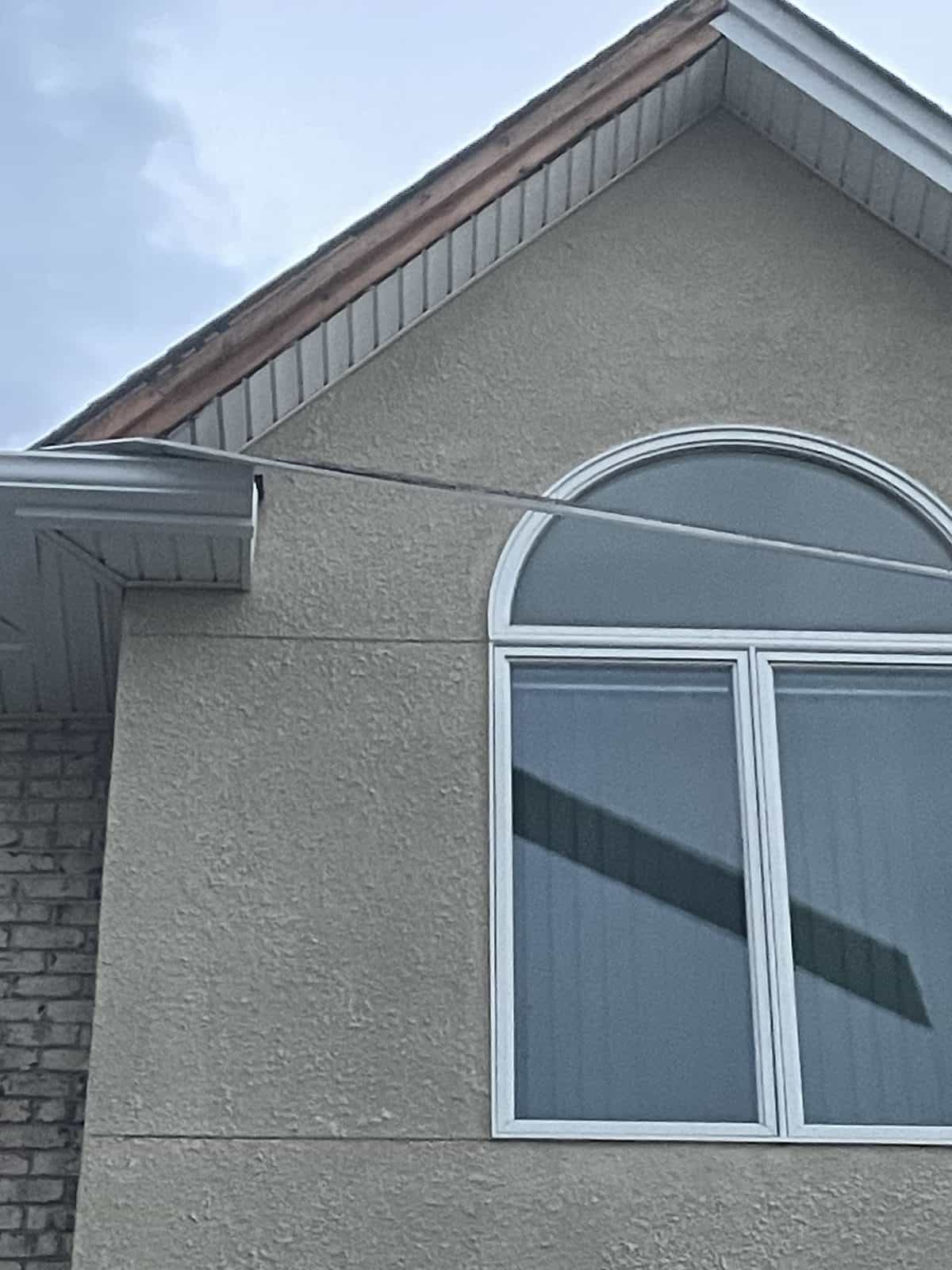
Architectural Specialty Shapes
Custom-shaped windows from circles and arches to trapezoids and octagons.
Architectural Specialty Shapes
From circles and arches to trapezoids and octagons. We design and install custom-shaped windows that add unique architectural character to your home.
Architectural specialty shapes are the windows that don't come out of a catalog. Half-rounds and full-rounds, eyebrows, ellipses, octagons, trapezoids, custom Gothic arches, true segmented Palladians with curved muntins — all the shapes that NJ's older housing stock requires when the original windows fail. We fabricate and install specialty shapes weekly: a 1920s Tudor in Maplewood needs a true eyebrow replacement, a Princeton Victorian needs a half-round transom over a curved-top entry, a Cape May beach house needs a custom octagonal window in a gable end. None of these are off-the-shelf and all of them require precision templating, accurate fabrication, and historically-appropriate detailing.
The work splits into two categories. Custom new units fabricated to match a specific opening — what most of our specialty-shape work is. And historic restoration where the original window has rotted out and the replacement has to match not just the shape but the original muntin profile, glazing detail, sash construction, and operation. Restoration work is significantly more demanding and significantly more expensive — but in historic districts like Cape May, Princeton, Lambertville, and Madison, it's often the only option.
Common specialty shapes and where they appear
Half-round (semicircle): the most common specialty shape. Appears as transoms above entry doors, above rectangular windows in Georgian and Federal-style homes, as standalone gable-end windows in colonials. Typical sizes 24-72 inches wide. Standard fabrication, available from Andersen, Pella, Marvin in stock and custom sizes.
Full-round (circle): less common but used as accent windows in gables, stairwells, and ornamental applications. Range 18-48 inches diameter typical. Fabrication straightforward — circular cut tempered glass in custom-formed frame.
Eyebrow (elliptical low arc): the signature window of Shingle Style, Queen Anne, and Tudor Revival architecture. Low-rise elliptical curve over a rectangular base. Tricky to fabricate because the curve is non-circular — has to be templated from the actual opening or specified with precise rise/span dimensions. Common in NJ on homes from 1890-1930.
Gothic arch (lancet, pointed arch): pointed-top arch with vertical sides. Common on Gothic Revival homes (1840-1900) and on churches throughout NJ. Fabrication requires custom-bent frame components — we partner with specialty fabricators for the arch top assembly.
Palladian/Venetian: tripartite window with a central arch-top section flanked by rectangular side sections. The full assembly is mulled. Common on Georgian Revival homes in Princeton, Madison, and Summit. Either factory-mulled by Andersen or Marvin for new construction or field-assembled for historic restoration.
Octagonal: 8-sided geometric shape. Used as accent windows in gable peaks and stairwells. Stock sizes from most major manufacturers; custom sizes require fabrication to match the existing opening.
Trapezoidal: 4-sided shape with non-parallel top and bottom (or sides). Used in gable peaks, attic windows, and contemporary architecture. Always custom-fabricated to the specific opening angle.
Custom irregular: anything that doesn't fit a standard geometric description. We've fabricated kidney-shaped windows for Art Nouveau renovations, asymmetric pentagons for modernist additions, and custom radius matches for restoration where the original opening was hand-cut decades ago.
Fabrication and lead times
Stock specialty shapes from major manufacturers: half-rounds, full-rounds, octagonals in standard sizes from Andersen 400 Series, Pella Reserve, Marvin Elevate. Lead times 4-6 weeks. Limited size and configuration options but well-priced and quick.
Custom specialty shapes from major manufacturers: same product lines in custom sizes and configurations. Lead times 8-12 weeks. The manufacturer fabricates the frame to your template and ships ready to install. Wider size range and configuration options than stock, and dearer than stock.
True custom from specialty fabricators: Reilly Windows & Doors, H Window Company, Marvin Modern, and a handful of NJ-area specialty millwork shops fabricate true custom geometry. Used when major-manufacturer options don't fit the opening or the historic profile match isn't achievable with manufacturer products. Lead times 12-20 weeks; cost 2-5x major-manufacturer custom.
Historic restoration with hand-fabricated wood sash: a different category entirely. NJ has a handful of restoration carpentry shops that hand-fabricate wood sashes to match original profiles — Old House Authority in Cape May, Architectural Restoration Co in Burlington County, and several smaller artisan shops in the northwest counties. Lead times 16-30 weeks; cost is by-the-job and runs into five figures for major historic windows.
Standard rectangular windows ship in 4-6 weeks. Add 2-4 weeks for stock specialty shapes. Add 6-10 weeks for custom manufacturer. Add 8-16 weeks for true custom fabrication. Add 12-26 weeks for historic restoration. Customers need to plan their renovation schedules around these lead times — there's no expediting custom glass fabrication.
Templating for specialty shapes
Rectangular windows are measured with a tape and you're done. Specialty shapes require physical templating — a paper or cardboard pattern cut to the exact opening, verified to fit the opening, and shipped to the manufacturer along with the order.
Our standard templating process: lay heavyweight kraft paper or pattern board (a stiffer cardboard product) against the rough opening from the interior. Trace the perimeter using a fine marker, follow the actual edge contour. Cut the template along the trace line. Test-fit by holding the template back against the opening. Mark interior/exterior orientation, opening dimensions, and the home address and customer name on the template. Photograph the template against the opening. Ship to manufacturer.
For eyebrows and ellipses we specify rise and span instead of pure template — the manufacturer prefers a mathematical description. Rise: vertical distance from the highest point of the arc to the chord line. Span: horizontal distance across the chord line. From these two dimensions the manufacturer reconstructs the elliptical curve.
For Gothic arches and Palladians we template the full opening. For curved muntin patterns in restored Palladians the templating is even more critical — we template each individual muntin segment separately and verify the assembly fits the opening exactly before final fabrication.
Digital templating for high-end work: Faro arm or photogrammetry capture for sub-millimeter accuracy on irregular openings. Used on restoration projects where the original opening is hand-cut and slightly asymmetric — the digital scan captures the actual geometry rather than approximating with a paper template. It costs more than paper templating, but on a one-off curved or restored opening it removes the fit risk on a window that can't be returned or recut.
Matching historic profiles
Original 1880-1940 wood sashes have distinctive features that modern stock windows don't replicate. Muntin profiles are typically 7/8" or 1" wide with a putty-glazed bevel, compared to modern aluminum or vinyl muntins at 5/8" with snap-in profiles. Sash construction is true divided light (each pane is individually glazed in its own muntin pocket) rather than simulated divided light (a single piece of glass with muntin grilles applied to the surface).
True divided light is available from Marvin (authentic divided lites on the Ultimate line) and Andersen (TDL on E-Series); Pella Reserve – Traditional offers Integral Light Technology grilles that replicate the look of true divided lights. It costs substantially more than simulated divided light. For historic district work that is often worth it — historic preservation commissions sometimes require TDL for certificate-of-appropriateness approval.
Restoration glass — period-appropriate glass with subtle waviness, slight imperfections, and the characteristic 'sparkle' of pre-1940s float glass production. Available from Bendheim Restoration Glass in their Restover, Restoration, and Reamy products. Used when the visual character of the glass itself matters, not just the muntin pattern. Premium cost (2-4x modern float glass) but visually transformative for historic restoration.
Putty glazing rather than glazing tape: original wood sashes used linseed-oil putty (Sarco Type-M or Aborganic equivalent) tooled to a triangular bead on the exterior face. Modern windows use glazing tape and rubber gaskets, which read as wrong on a historic restoration. We can spec putty glazing on custom wood sashes for restoration work — adds labor but matches original appearance.
Hardware: original lift weights, sash locks, and brass hardware aren't compatible with modern weatherstripped windows. For true restoration we either restore original hardware (typically possible) or source period-correct reproductions from Eastlake Co, Liberty Brass, or similar restoration hardware suppliers.
Wind-load and structural considerations
Specialty shapes don't get a pass on structural requirements. A 60-inch-wide half-round transom over an entry door has to meet the same DP rating as a rectangular window of equivalent area. The curved top distributes load differently than a flat top, which affects glass thickness requirements — typically requiring slightly thicker glass than a rectangular equivalent.
Mulled assemblies with specialty shapes — a Palladian with rectangular sides and an arched center — concentrate stress at the mullion joints between the curved and straight sections. Structural mullions need to be sized for the assembly load, not just the individual unit load.
Coastal applications require impact-rated glass for any opening in the wind-borne debris zone. Custom-curved impact glass is more expensive than rectangular impact glass and has longer lead times — typically 14-20 weeks vs 8-10 for rectangular. We've fabricated coastal-rated half-rounds, octagonals, and full-rounds for Cape May, LBI, and Stone Harbor properties.
Historic restoration in coastal zones is a special challenge. Original 1890s wood sashes don't meet modern impact code, but the historic district may require their preservation. The solution is often a custom storm panel — a removable impact-rated panel that's installed in front of the original sash during storm season and removed at other times. We coordinate with the historic preservation commission on these solutions.
Our Process
- 1Initial consultationWe visit the site to assess the existing opening, identify the architectural style and era, photograph existing conditions, and discuss the customer's preference for restoration accuracy vs cost. For historic district work we coordinate with the local Historic Preservation Commission before quoting.
- 2TemplatingPhysical or digital templating of the opening, with verification fit before manufacturer order. Templates shipped to manufacturer along with the order. For complex restoration work the templating visit may take 2-4 hours.
- 3Manufacturer selection and quoteWe match the right manufacturer to the project: stock major-manufacturer for budget jobs, custom major-manufacturer for most residential, true custom specialty fabricators for unique geometry, restoration carpentry shops for historic preservation. Quote within 1-2 weeks for stock products, 2-3 weeks for true custom.
- 4Historic district approval (when applicable)For homes in NJ historic districts, we submit drawings to the Historic Preservation Commission and obtain certificate of appropriateness before fabrication. Approval timelines vary by municipality — 2-6 weeks for Princeton, Cape May, Madison, Lambertville.
- 5FabricationStock manufacturer: 4-6 weeks. Custom manufacturer: 8-12 weeks. True custom: 12-20 weeks. Restoration: 16-30 weeks. We track production weekly and update the customer on schedule changes.
- 6Pre-install opening prepDay before install: verify rough opening dimensions match template, install or verify flashing details, prep sill, confirm structural framing is sound. Any framing remediation happens before glass arrives.
- 7InstallationSpecialty shapes typically install in 2-6 hours per opening depending on size and complexity. Multi-piece assemblies (Palladians, large historic restorations) can take a full day. We use shims at appropriate load-bearing locations and seal with high-performance silicone.
Materials We Use
The Precision Difference
About Architectural Specialty Shapes in NJ
How long does it take to get a custom-shape window made?+
Can you match the windows on my historic home?+
Do I need approval from my historic district before replacing windows?+
How do you measure for a curved or irregular window?+
Can a specialty-shape window be impact-rated for coastal installation?+
What's the difference between true divided light and simulated divided light?+
Can you restore my original wood windows instead of replacing them?+
What's the cost difference between stock and custom specialty windows?+
Serving All 21 New Jersey Counties
We service Atlantic County, Bergen County, Burlington County, Camden County, Cape May County, Cumberland County, Essex County, Gloucester County, Hudson County, Hunterdon County, Mercer County, Middlesex County, Monmouth County, Morris County, Ocean County, Passaic County, Salem County, Somerset County, Sussex County, Union County, Warren County. From our Garfield, NJ shop we cover the entire state, same-day in Bergen County, and elsewhere depending on the job and how booked we are that day.
Explore More
STANDARD WINDOW INSTALLATION
Professional installation of double-hung, single-hung, and slider windows.
DetailsGLASS INSTALLATION
Full-service glass installation across New Jersey — residential, commercial, and architectural. Cut, tempered, laminated, and insulated glass installed to NJ Uniform Construction Code.
DetailsENERGY EFFICIENT REPLACEMENTS
Low-E and argon-filled windows that lower heating and cooling bills.
Details