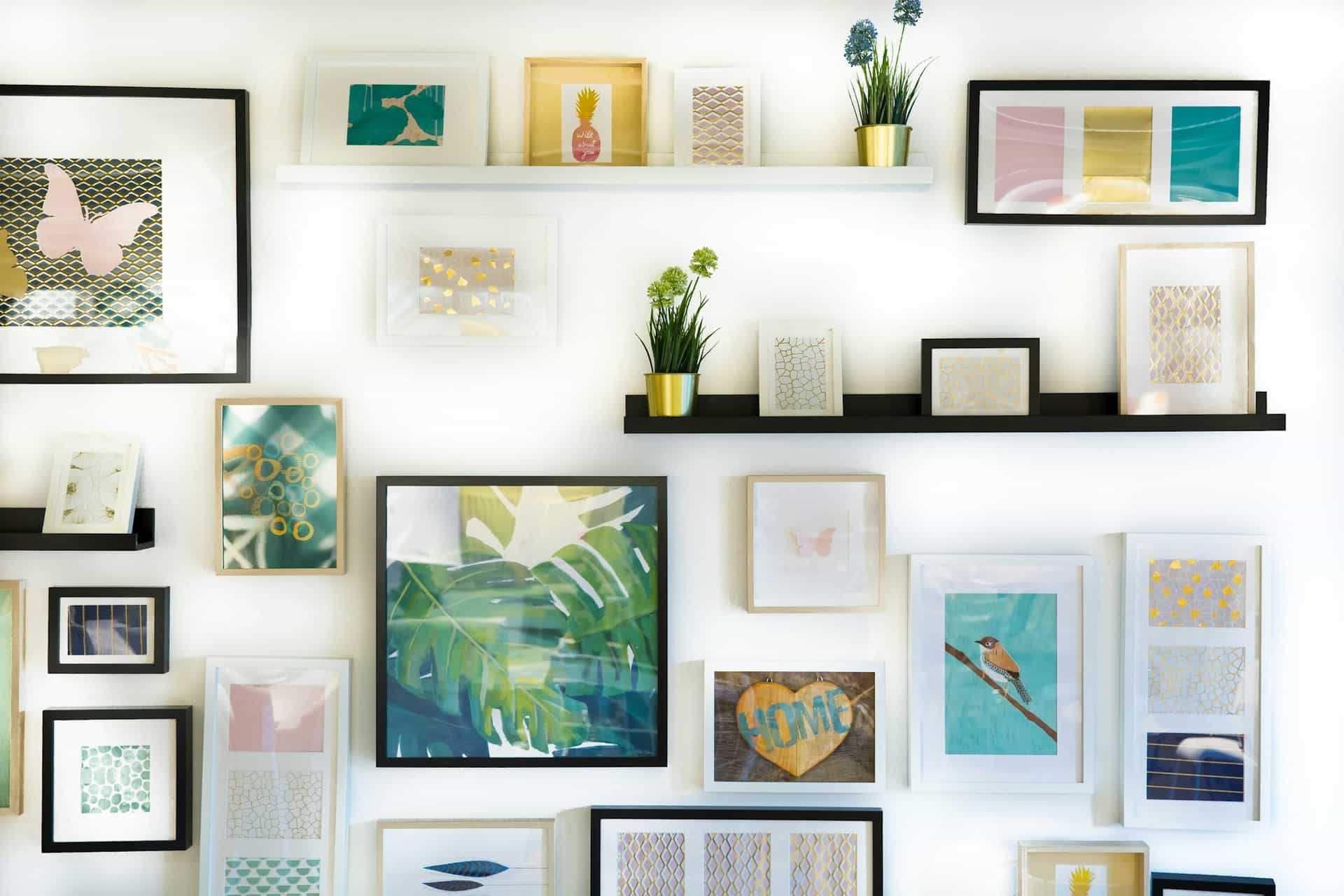
Decorative & Art Glass
Patterned, textured, and colored decorative glass.
Decorative & Art Glass
Add artistic flair to your home with patterned, textured, and colored decorative glass. Ideal for cabinet inserts, entry doors, and accents.
Decorative glass covers an enormous range — from a leaded transom over an entry door in a Victorian in Cape May to a textured cabinet insert in a modern Hoboken kitchen to a 1920s art-glass church window in Newark that needs frame restoration and a few replacement panels. The skill set crosses traditional craft (lead came work, copper foil, restoration glass sources) and modern fabrication (CNC pattern cutting, kiln-formed glass, digital ceramic frit). We do both because most NJ projects need both — a historic restoration almost always includes some modern energy-efficient glazing, and a contemporary cabinet job often needs a vintage-style textured glass to match the home's character.
The decorative glass market is full of stock products from big-box suppliers — Spectrum, Bendheim, Walker — and full of small specialty fabricators making true custom work. We work with both, sourcing stocked patterns when the customer wants budget-friendly and turning to artisan studios when the project demands one-of-a-kind. We've worked with Bendheim Wallingford for restoration glass, Conservation Glass in PA for stained-glass repair supplies, and several individual NJ stained-glass artists for full custom design work.
Stained glass repair — what's salvageable, what's not
Stained glass deteriorates predictably. The lead came (the H-shaped metal channel that holds the glass pieces together) oxidizes, fatigues, and eventually fails — typically 80-120 years of service life. The solder joints at panel intersections crack from thermal cycling and panel sag. The glass itself rarely fails — it's the metal that gives out.
Repair vs full restoration is the first question. If the lead came is sound but a few solder joints are cracked, we re-solder in place with a 60/40 tin-lead solder and oleic acid flux — the panel can be repaired in 1-2 hours per joint without removing it from the frame. If the came is fatigued throughout (visible buckling, panel sag, multiple cracks), the entire panel needs to be re-leaded — that's a shop job, typically 60-120 hours of labor per panel depending on complexity.
Broken glass pieces are sourced from one of three places. (1) Bendheim Restoration Glass — they reproduce period-appropriate patterns from the 1880s-1940s with original mold tooling. (2) Conservation Glass and a handful of other specialty distributors carry Tiffany-era opalescent and Lambert's German mouth-blown antique glass. (3) For unique patterns that aren't in current production, we either custom-paint and fire to match (slow and expensive) or source from architectural salvage dealers — Black Dog Salvage, Olde Good Things, and several NJ-area salvage yards.
We've done stained-glass restoration on Victorian homes in Cape May, Princeton, and Madison; on churches in Newark, Jersey City, and Trenton; and on synagogues in Bergen and Essex counties. Most of the church work is 1890-1930 vintage from major studios — Tiffany, La Farge, Frederick Wilson, Connick — and the restoration values run into five and six figures for major panels.
Cabinet glass — patterns, function, and sizing
Cabinet inserts are the largest decorative glass volume we do — usually 4-12 panels per kitchen, sized to fit existing cabinet door rabbets. The aesthetic ranges from contemporary clean (Starphire low-iron in seedy or rain pattern) to traditional (reeded glass, English antique, leaded muntin patterns).
Common patterns we stock or source quickly: Reeded glass (vertical fluted texture, very popular in 2024-2026 kitchen design), Rain glass (irregular vertical texture, traditional look), Seeded glass (small air bubbles trapped in the glass, vintage character), Frosted/acid-etched (privacy panel for translucent obscuring), Pattern 62/Granite (irregular ice-cube texture, common in mid-century cabinets), Cathedral textures from Spectrum (dozens of patterns from contemporary to traditional).
Sizing: most cabinet doors have a rabbet that holds the glass — we measure the rabbet size and subtract 1/8" on each dimension for thermal movement and installation tolerance. The glass is typically held in with wood quarter-round molding (we replace if it's old and brittle) or with rubber retainer strips on more modern cabinet construction.
Tempered or annealed? Cabinet inserts typically don't require tempered glass per code (they're not at floor level and not adjacent to doors). We default to annealed for cost savings unless the customer prefers tempered for child-safety reasons in lower cabinets.
Vintage pattern reproduction and sourcing
Many of the patterns from the 1890-1960 era are out of production. When a customer wants to match an existing decorative glass pattern in a historic home, we follow a hierarchy: (1) Check Bendheim's restoration line, which reproduces 25+ historical patterns; (2) Check Spectrum's current catalog and Bullseye for similar contemporary patterns; (3) Source from architectural salvage if a discontinued pattern is available; (4) Custom etch or sandblast to reproduce a unique pattern.
Bendheim Restoration Glass is the gold standard for historic reproduction. Their pattern library includes Florentine, Granite, Hammered, Reamy, Restoration Stipple, and dozens of others — all produced on original cylinder-glass blowing equipment or accurate roller-textured glass that matches period output. Lead times run 6-10 weeks but the match is genuinely indistinguishable from original.
Acid etching for custom patterns: we use hydrofluoric acid masking (in a controlled commercial environment with proper PPE — not for site work) or sandblasting through vinyl stencil masks for custom patterns. Used for monograms, custom motifs, and architectural details where stock patterns won't match.
Kiln-formed and slumped glass: for truly custom decorative panels, we partner with NJ artisan studios — including a few in Bergen County and Essex County — that do warm-glass work. Kiln-formed textures, dichroic accents, and custom color slumped panels for accent windows, dividers, and feature walls.
Leaded glass and entryway transoms
Leaded glass transoms over Victorian and Craftsman entry doors are a signature feature of NJ historic housing — particularly in Princeton, Madison, Cape May, Lambertville, and the residential streets of Maplewood, Montclair, and Glen Ridge. Restoring or reproducing them is regular work for us.
True leaded glass uses H-channel lead came (typically 1/8" to 3/16" face width) soldered at intersections to hold individual glass pieces. The labor is high — a simple geometric transom might be 40 hours of layout, cutting, leading, and soldering. A figural or pictorial transom can run 200+ hours.
Copper foil (Tiffany method) is an alternative for smaller, more detailed work — wraps each glass piece in adhesive copper foil tape and solders the joints to create a thinner more sculptural line. Used for smaller panels, suncatchers, and detailed figural work.
Modern alternatives: Encapsulated leaded glass — a true leaded panel sealed between two pieces of tempered safety glass to create a single IGU-style unit. Combines traditional aesthetic with code-compliant safety glazing and energy performance. Used when a historic transom needs to be code-upgraded but the original aesthetic must be preserved.
Specialty applications
Restaurant and bar dividers — etched, sandblasted, or back-painted glass partitions for hospitality projects in Hoboken, Jersey City, and Asbury Park. Custom logos and graphics integrated into the glass.
Religious institution work — we've restored panels at synagogues, churches, and one historic mosque in NJ. Coordination with congregation leadership, lead times of 3-6 months for major panel restoration, and documentation for insurance and historical record.
Residential entryways — custom-designed leaded or art glass for sidelights, transoms, and door inserts. Typically 8-12 weeks design-through-install for original custom work.
Furniture and decorative accents — kiln-formed glass tops, etched cabinet inserts, decorative shelf inserts. Smaller scope but high-craft work.
Our Process
- 1Initial consultation and design discussionFor restoration work we visit the site to document existing conditions, photograph the panel, and identify the era and original maker if possible. For new custom work we discuss aesthetic direction, sketches, and material options.
- 2Sample sourcing and pattern matchingFor pattern matches we order samples from Bendheim, Spectrum, and other suppliers — typically 5-10 business days to have samples in hand. Customer signs off on the chosen pattern before fabrication.
- 3Design and shop drawing (for custom work)Custom leaded or stained-glass panels get a full-size cartoon (paper layout) for customer approval before glass is cut. This is the design freeze point — changes after this point require new layout.
- 4FabricationCabinet inserts in stocked patterns: 5-10 business days. Restoration glass replacement: 6-10 weeks (Bendheim lead time). Custom leaded panel: 6-16 weeks depending on size and complexity. Major stained-glass restoration: 3-6 months.
- 5InstallationCabinet inserts: 1-3 hours per kitchen on site. Transom and sidelight installations: 4-8 hours per opening. Stained-glass restoration: variable based on whether the panel is removed for shop work or repaired in place.
- 6Aftercare and warranty5-year warranty on leaded came work, lifetime warranty on solder joints (we'll re-solder failed joints at no charge). Care guide provided — most decorative glass is low-maintenance but periodic cleaning and inspection is recommended.
Materials We Use
The Precision Difference
About Decorative & Art Glass in NJ
Can you repair my Victorian stained-glass window without replacing the whole panel?+
Where do you source replacement glass for vintage patterns?+
How long does stained-glass restoration take?+
What's the difference between leaded glass and stained glass?+
Can you make leaded glass code-compliant for modern construction?+
What kind of decorative glass works best for kitchen cabinets?+
How do I clean and care for decorative glass?+
Do you do completely custom stained-glass design?+
Serving All 21 New Jersey Counties
We service Atlantic County, Bergen County, Burlington County, Camden County, Cape May County, Cumberland County, Essex County, Gloucester County, Hudson County, Hunterdon County, Mercer County, Middlesex County, Monmouth County, Morris County, Ocean County, Passaic County, Salem County, Somerset County, Sussex County, Union County, Warren County. From our Garfield, NJ shop we cover the entire state, same-day in Bergen County, and elsewhere depending on the job and how booked we are that day.
Explore More
GLASS INSTALLATION
Full-service glass installation across New Jersey — residential, commercial, and architectural. Cut, tempered, laminated, and insulated glass installed to NJ Uniform Construction Code.
DetailsARCHITECTURAL SPECIALTY SHAPES
Custom-shaped windows from circles and arches to trapezoids and octagons.
DetailsCUSTOM SHOWER ENCLOSURES
The whole shower built in glass — steam, curbless and multi-panel enclosures.
DetailsSTANDARD WINDOW INSTALLATION
Professional installation of double-hung, single-hung, and slider windows.
Details