Window Tinting & UV Protection Film
Window tinting and UV film — block 99% of harmful UV rays without replacing the glass.
Window Tinting & UV Protection Film
Professional window tinting for New Jersey homes and commercial buildings. Our 3M and LLumar films block 99% of harmful UV rays, cut glare, and reject solar heat on the glass you already have — from nearly clear films that leave the window looking untreated to darker solar-control tints for west and south elevations. Safety, security and privacy film is a different film family and has its own page.
Window tinting — solar-control and UV film applied to the interior face of glass you already own — is the cheapest way to extend the useful life of hardwood floors, leather furniture, oil paintings, and pharmaceutical inventory in a NJ building. A properly-specified film blocks essentially all of the UV — 3M publishes more than 99.9% rejection across its Prestige series (ASTM E903) — rejects a substantial share of the total solar energy, and costs a fraction of replacing the glass with a Low-E IGU. We've installed film on everything from single south-facing bay windows in Princeton colonials to 40,000 sq ft of curtain wall on Class A office towers in Jersey City. Tint level is a specification, not a look you're stuck with: the premium multilayer films run from nearly water-clear up to genuinely dark, and the number in the product name is the visible light they pass.
We're authorized dealer/installers for 3M Window Films and LLumar (Eastman Chemical). That distinction matters because only authorized installers can register the manufacturer warranty — which on premium films covers the film itself, the labor to remove and replace it, AND the glass underneath if the film causes thermal shock breakage. Unauthorized installers can sell you the same physical product but cannot register the warranty, leaving you with the film roll's pro-rata only and zero glass coverage.
Film categories and what each one does
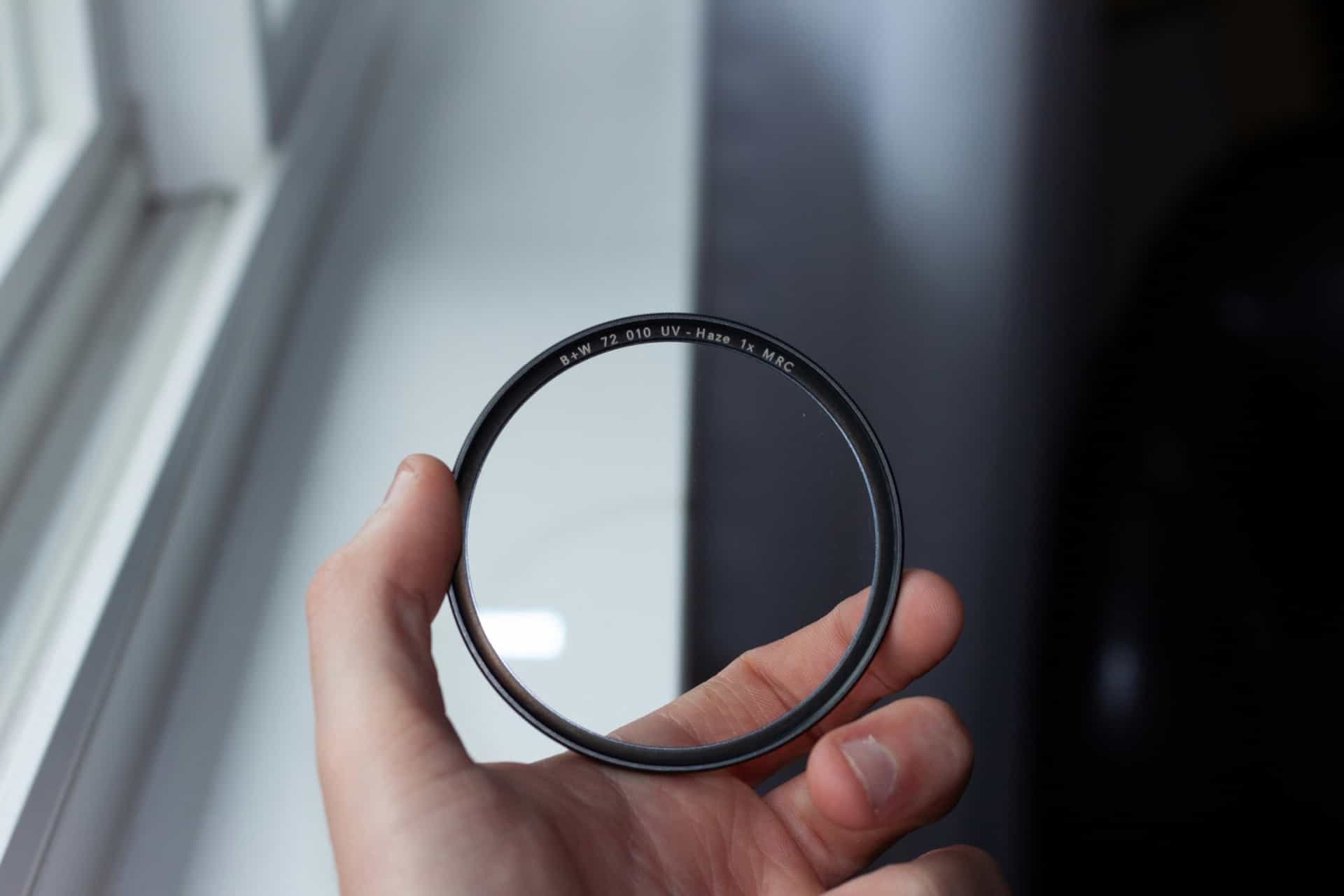
UV-blocking clear film (3M Prestige Series UV, LLumar Vista V70). More than 99.9% UV rejection on 3M's published table (ASTM E903), covering UVA and UVB to 380nm, and substantially blocks 380-400nm visible-violet that fades dyes), nearly water-clear appearance (3M publishes 68% visible light transmission for Prestige 70), low interior reflectance. The default for residential applications where the homeowner wants fade protection without changing the look of the glass.
Solar control film (3M Prestige 40/50/60/70 multilayer optical film, LLumar Vista Spectral). Combines more than 99.9% UV rejection with Total Solar Energy Rejection of 50-59% at normal incidence, rising to 59-66% at a 60-degree angle — 3M's published table, ASTM E903. Reduces summer heat gain materially while keeping visible light between 39% and 68%. The number after the product name is a nominal visible-light transmission rather than the measured one: 3M rates Prestige 70 at 68% and Prestige 40 at 39%. Specified for west and south elevations where solar load is the problem and AC bills are climbing.
Safety and security film and decorative and privacy film are the other two families we install, and they are not what this page is about. They do a physical job rather than an energy one — holding a broken pane in its opening, or changing what can be seen through the glass — they get specified against different criteria, and on a security job they need an attachment system that a solar film never does. Our security and privacy window film page carries them in full.
Anti-graffiti film (3M Anti-Graffiti). 4-mil sacrificial layer on storefronts and transit-adjacent retail. When tagged, we peel and replace the film instead of replacing the glass. A peel-and-replace costs a small fraction of replacing the glass.
Why NFRC ratings matter for film specification
Window films are rated by the National Fenestration Rating Council (NFRC) using standard 1/4" clear annealed glass as the substrate. The label shows TSER (Total Solar Energy Rejection), VLT (Visible Light Transmission), Glare Reduction, UV Block, and SHGC (Solar Heat Gain Coefficient) after film. These numbers let you compare films apples-to-apples regardless of manufacturer marketing.
For NJ commercial work, NFRC-rated film is what an energy consultant or LEED reviewer will demand. The film's contribution to the building envelope SHGC has to be documented for ASHRAE 90.1 compliance modeling or LEED EAc1 credits.
Practical caveat: the NFRC rating is on clear glass. If your existing glass is already Low-E (visible blue or bronze tint on one surface), the actual TSER after film will be different from the label. We model the as-installed performance using the film manufacturer's calculator and the glass IGU spec, and deliver a project-specific performance memo for any commercial job over 1,000 sq ft.
Thermal shock — the one risk we engineer around
Solar control films absorb solar energy and re-radiate part of it back into the glass. On certain glass/film combinations, that extra absorbed heat causes thermal stress concentrated at the cooler edges of the glass (the edges hidden in the frame's glazing pocket). If the stress exceeds the glass's edge strength, the glass breaks in a characteristic 'thermal shock' pattern — a slow-developing curving crack from edge to edge.
We never install film without thermal stress analysis. The 3M and LLumar engineering portals require glass type, edge condition (clean-cut, seamed, ground), glazing system (single pane, IGU), elevation orientation, shading, and selected film. The tool returns 'Acceptable / Marginal / Not Recommended.' We follow the tool's recommendation without exception — and that's part of what triggers the manufacturer warranty coverage of the glass.
Glass types most prone to thermal shock from film: 1/4" annealed clear over a dark interior color (heat-trap), wired glass (cannot be filmed at all per most manufacturer guidance), heat-absorbing tinted glass (bronze, gray) already loaded with solar absorption, and old single-pane glass with edge damage from prior glazing work.
Where film is the right answer in NJ
Historic homes where IGU replacement would require removing original wood sash — Princeton, Cape May, Madison, Morristown. Film keeps the original glass intact while delivering modern UV and solar performance.
Top-floor commercial offices on west and south elevations in Newark, Jersey City, and Edison where afternoon solar load overwhelms the existing HVAC. Solar control film cuts that solar heat gain, and the cooling load that comes with it, without a curtain-wall retrofit.
Retail and gallery spaces protecting inventory or artwork from fade — leather goods, framed prints, fabric merchandise, food displays. UV-blocking film extends product life and is itself a tax-depreciable improvement.
Medical and lab facilities where photosensitive equipment, samples, or pharmaceuticals are exposed to indirect sunlight. UV film prevents degradation without changing daylighting.
Pool and hot-tub enclosures where the combination of UV, humidity, and chlorine creates aggressive conditions for furnishings and finishes. Film with chlorine-resistant adhesive is specified for these environments.
Our Process
- 1Site visit and glass assessmentWe inventory all openings to be filmed: glass type, IGU vs single-pane, dimensions, elevation orientation, existing shading. We bring sample books so the homeowner or facility manager can see the actual product before specifying.
- 2Thermal stress analysisEvery selected film is run through the 3M or LLumar engineering portal against the actual glass spec. We won't quote a film that the manufacturer flags as 'Not Recommended' — full stop.
- 3Performance modeling and quoteWithin 48 hours: written quote listing exact film SKU per opening, NFRC performance ratings, projected energy savings if commercial, warranty terms, and total install duration. For commercial jobs over 1,000 sq ft we include a project-specific performance memo.
- 4InstallationCrews arrive with the rolled film, slip solution (water + mild surfactant), squeegees, and trim blades. Each window is cleaned with isopropyl, the film is wet-applied to the glass interior, squeegeed flat, and edge-trimmed. Each opening averages 20-40 minutes for residential, 30-60 minutes for large commercial lites.
- 5Cure and warranty registrationFilm cures over 30-60 days as residual installation moisture evaporates through the film. Minor haze or water pockets during this period are normal and self-resolve. We register the warranty with 3M or LLumar within 5 business days and email the homeowner the registration confirmation.
Materials We Use
The Precision Difference
About Window Tinting & UV Protection Film in NJ
Does UV film actually block almost all the UV — or is that marketing?+
Will film make my windows too dark?+
What's the warranty on 3M and LLumar films?+
Can I install film on my Low-E or insulated glass windows?+
Will film interfere with my low-E coating?+
How long does film last in NJ weather?+
Are there NJ tax credits or rebates for window film?+
Serving All 21 New Jersey Counties
We service Atlantic County, Bergen County, Burlington County, Camden County, Cape May County, Cumberland County, Essex County, Gloucester County, Hudson County, Hunterdon County, Mercer County, Middlesex County, Monmouth County, Morris County, Ocean County, Passaic County, Salem County, Somerset County, Sussex County, Union County, Warren County. From our Garfield, NJ shop we cover the entire state, same-day in Bergen County, and elsewhere depending on the job and how booked we are that day.
Explore More
SECURITY & PRIVACY WINDOW FILM
Safety, security, privacy and decorative window film — 3M and LLumar, installed on the glass you already have.
DetailsGLASS INSTALLATION
Full-service glass installation across New Jersey — residential, commercial, and architectural. Cut, tempered, laminated, and insulated glass installed to NJ Uniform Construction Code.
DetailsCOMMERCIAL WINDOW LEAK REPAIR
Forensic water-intrusion diagnosis and permanent leak repair for commercial windows, storefronts, and curtain-wall systems across NJ. We find the actual source — sealant, flashing, or framing — and fix it once.
Details